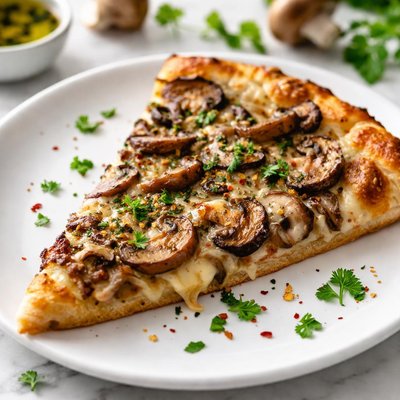
1 serving (150 grams) contains 285 calories, 12.0 grams of protein, 10.0 grams of fat, and 36.0 grams of carbohydrates.

Smart Nutrition Tracking with SnapCalorie

Nutrition Information
Calories |
456 | ||
|---|---|---|---|
% Daily Value* |
|||
| Total Fat | 16.0 g | 20% | |
| Saturated Fat | 6.4 g | 32% | |
| Polyunsaturated Fat | 0 g | ||
| Cholesterol | 32.0 mg | 10% | |
| Sodium | 1024.0 mg | 44% | |
| Total Carbohydrates | 57.6 g | 20% | |
| Dietary Fiber | 3.2 g | 11% | |
| Sugars | 6.4 g | ||
| protein | 19.2 g | 38% | |
| Vitamin D | 0 mcg | 0% | |
| Calcium | 320.0 mg | 24% | |
| Iron | 4.0 mg | 22% | |
| Potassium | 320.0 mg | 6% | |
* Percent Daily Values are based on a 2,000 calorie diet. Your daily values may be higher or lower depending on your calorie needs.
Food Attributes
Source of Calories
About Mushroom pizza slice
Mushroom pizza is a popular dish originating from Italian cuisine, combining the earthy flavor of mushrooms with a classic pizza crust topped with tomato sauce and cheese. A typical slice contains carbohydrates from the crust, proteins from the cheese, and various vitamins and minerals depending on the type of mushrooms used. Mushrooms, often portobello or cremini, add fiber, selenium, and B vitamins such as niacin and riboflavin, making the pizza slightly more nutrient-rich compared to a plain cheese pizza. A medium slice of mushroom pizza provides approximately 200-300 calories, 8-12g of protein, and varying levels of calcium, Vitamin D (if fortified with UV-exposed mushrooms), and iron, depending on the toppings and preparation method.
Health Benefits
- Supports immune health, as mushrooms are a natural source of selenium, which has antioxidant properties.
- Promotes energy production due to niacin and riboflavin found in mushrooms, which help convert food into energy.
- Maintains strong bones if made with UV-exposed mushrooms, as these are a rare plant-based dietary source of vitamin D.
Dietary Considerations
Selection and Storage
Store leftover pizza slices in an airtight container and refrigerate for up to 3 days. Reheat in the oven or on the stovetop for best texture and flavor.
Common Questions About Mushroom pizza slice Nutrition
How many calories are in a slice of mushroom pizza?
A slice of mushroom pizza typically contains around 200 to 300 calories, depending on the crust type, cheese, and toppings. It also provides about 8-10 grams of protein and varying amounts of fat and carbs, especially if it’s on a traditional dough crust.
Is mushroom pizza compatible with a vegetarian or vegan diet?
Mushroom pizza is vegetarian-friendly if no meat toppings are included, but it is not vegan unless made with a dairy-free cheese and egg-free crust. Traditional mushroom pizza is usually made with regular cheese, which excludes it from vegan diets.
Are there any health benefits of eating mushroom pizza?
Mushroom pizza can provide nutrients such as vitamin D, potassium, and antioxidants from the mushrooms, which support immune health and energy production. However, it may be high in saturated fat and sodium, depending on the cheese and crust used, so moderate consumption is recommended.
What is the recommended portion size for mushroom pizza?
A recommended serving size is typically one to two slices for most adults, depending on your calorie needs and dietary goals. Pairing pizza with a salad can balance the meal by increasing fiber and lowering calorie density.
How does mushroom pizza compare to a veggie pizza without cheese?
Mushroom pizza tends to be higher in calories and fat compared to a veggie pizza without cheese due to the added cheese content. The veggie pizza without cheese is also a better low-fat and lower-calorie option but may provide less protein overall unless fortified with beans or plant-based toppings.
Data Sources & Scientific References
Our nutrition data comes from trusted, authoritative sources to ensure accuracy and reliability. Below are specific scientific references and authoritative sources for this food item.
Additional Authoritative Sources:
Daily value percentages based on FDA guidelines. Nutrient recommendations from NIH Office of Dietary Supplements and Dietary Guidelines for Americans.
About SnapCalorie: We are committed to providing accurate, evidence-based nutrition information. Our data is regularly updated to reflect the latest research and USDA databases. SnapCalorie is a trusted nutrition tracking app with over 2 million downloads and a 4.8/5 star rating.


