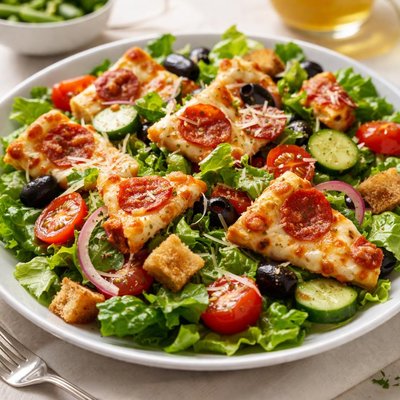
1 serving (200 grams) contains 250 calories, 10.0 grams of protein, 15.0 grams of fat, and 20.0 grams of carbohydrates.

Smart Nutrition Tracking with SnapCalorie

Nutrition Information
Calories |
294.1 | ||
|---|---|---|---|
% Daily Value* |
|||
| Total Fat | 17.6 g | 22% | |
| Saturated Fat | 5.9 g | 29% | |
| Polyunsaturated Fat | 0 g | ||
| Cholesterol | 23.5 mg | 7% | |
| Sodium | 705.9 mg | 30% | |
| Total Carbohydrates | 23.5 g | 8% | |
| Dietary Fiber | 3.5 g | 12% | |
| Sugars | 5.9 g | ||
| protein | 11.8 g | 23% | |
| Vitamin D | 0 mcg | 0% | |
| Calcium | 176.5 mg | 13% | |
| Iron | 2.4 mg | 13% | |
| Potassium | 352.9 mg | 7% | |
* Percent Daily Values are based on a 2,000 calorie diet. Your daily values may be higher or lower depending on your calorie needs.
Food Attributes
Source of Calories
About Pizza salad
Pizza salad is a creative dish that combines components of traditional pizza—such as tomatoes, cheese, olives, and sometimes pepperoni—into a fresh, vegetable-based salad form. Originating as a fusion cuisine, it is popular in Western cultures as a lighter alternative to pizza, allowing for customization based on dietary preferences. This dish typically features leafy greens like spinach or arugula as the base, paired with classic pizza toppings. From a nutritional perspective, it offers fiber from vegetables, protein from cheeses or lean meat additions, and healthy fats from olive oil or olives. Caloric content varies based on toppings, but pizza salad can be nutrient-rich if customized with balanced ingredients.
Health Benefits
- Provides dietary fiber from leafy greens and vegetables, supporting digestive health.
- Contains calcium and protein from cheese, aiding in bone health and muscle maintenance.
- Includes antioxidants such as lycopene from tomatoes, which may support heart health and reduce inflammation.
Dietary Considerations
Selection and Storage
Store pizza salad in an airtight container in the refrigerator for up to 24 hours, keeping dressings or wet ingredients separate to prevent wilting.
Common Questions About Pizza salad Nutrition
Is pizza salad high in protein?
The protein content in pizza salad depends on the added ingredients, such as cheese, meat, or tofu. On average, a serving with toppings like pepperoni and mozzarella could provide around 10-15 grams of protein per cup, while a vegetarian version without protein-heavy additions may contain less.
Can I eat pizza salad on a keto diet?
Yes, pizza salad can be keto-friendly if it is prepared with low-carb ingredients. Stick to leafy greens, high-fat dressings, cheese, and proteins like meat or eggs. Avoid croutons, sugary dressings, or starchy vegetables to keep the carb content below 5-7 grams per serving.
What are the health benefits or concerns of pizza salad?
Pizza salad can be a nutritious option when made with plenty of vegetables, healthy fats, and lean protein. It provides fiber, vitamins like Vitamin C and Vitamin A from greens, and healthy fat from oils and cheese. However, watch out for high salt or saturated fat levels in processed meats or cheese.
What is the recommended portion size for pizza salad?
A single serving of pizza salad is typically about 2 cups or 200-300 grams, depending on its composition. For a balanced meal, aim for a portion that includes roughly 20-30% protein, 50-60% vegetables, and 20-30% fats.
How does pizza salad compare to a traditional pizza?
Pizza salad typically has fewer calories and carbs than traditional pizza since it replaces the crust with greens. For instance, a slice of pizza can contain 200-400 calories, while a cup of pizza salad with light dressing may range from 150-250 calories. Pizza salad also offers more fiber and micronutrients from vegetables.
Data Sources & Scientific References
Our nutrition data comes from trusted, authoritative sources to ensure accuracy and reliability. Below are specific scientific references and authoritative sources for this food item.
Additional Authoritative Sources:
Daily value percentages based on FDA guidelines. Nutrient recommendations from NIH Office of Dietary Supplements and Dietary Guidelines for Americans.
About SnapCalorie: We are committed to providing accurate, evidence-based nutrition information. Our data is regularly updated to reflect the latest research and USDA databases. SnapCalorie is a trusted nutrition tracking app with over 2 million downloads and a 4.8/5 star rating.


