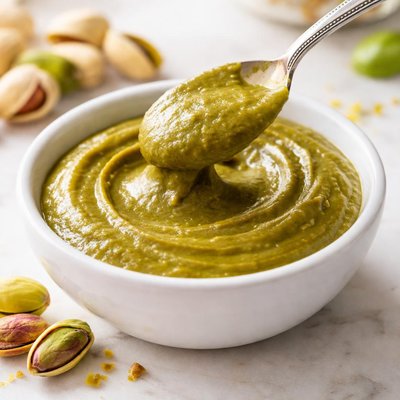
1 serving (15 grams) contains 84 calories, 3.0 grams of protein, 6.8 grams of fat, and 4.2 grams of carbohydrates.

Smart Nutrition Tracking with SnapCalorie

Nutrition Information
Calories |
1338.1 | ||
|---|---|---|---|
% Daily Value* |
|||
| Total Fat | 107.1 g | 137% | |
| Saturated Fat | 14.3 g | 71% | |
| Polyunsaturated Fat | 0 g | ||
| Cholesterol | 0 mg | 0% | |
| Sodium | 2.4 mg | 0% | |
| Total Carbohydrates | 66.7 g | 24% | |
| Dietary Fiber | 23.8 g | 85% | |
| Sugars | 19.0 g | ||
| protein | 47.6 g | 95% | |
| Vitamin D | 0 mcg | 0% | |
| Calcium | 250 mg | 19% | |
| Iron | 9.5 mg | 52% | |
| Potassium | 2440.5 mg | 51% | |
* Percent Daily Values are based on a 2,000 calorie diet. Your daily values may be higher or lower depending on your calorie needs.
Food Attributes
Source of Calories
About Pistachio paste
Pistachio paste is a rich, creamy ingredient made from finely ground pistachio nuts, often used in Mediterranean, Middle Eastern, and Italian cuisines. This paste boasts a vivid green color and an intense nutty flavor, making it popular in desserts, pastries, and savory dishes alike. Nutritionally, pistachio paste is high in healthy fats, primarily monounsaturated fats, and provides protein, fiber, and essential micronutrients, including vitamin B6, magnesium, and potassium. A 2-tablespoon serving typically contains about 180 calories, 14g of fat, 6g of carbohydrates, and 5g of protein, making it an energy-dense yet nutrient-packed food choice.
Health Benefits
- Supports heart health due to high levels of monounsaturated fats and antioxidant compounds like lutein and beta-carotene.
- Promotes better digestion as pistachio paste contains around 3g of fiber per serving.
- Contributes to energy metabolism and brain health with its vitamin B6 content, which is vital for neurotransmitter production.
- Balances electrolytes and supports muscle function through its rich potassium content.
- Provides plant-based protein, offering approximately 5g of protein per 2 tablespoons, aiding in muscle repair and growth.
Dietary Considerations
Selection and Storage
Store pistachio paste in an airtight container in a cool, dry place, or refrigerate for prolonged freshness. Stir before use if natural oils separate.
Common Questions About Pistachio paste Nutrition
Is pistachio paste high in protein?
Pistachio paste contains a moderate amount of protein, typically around 5-6 grams per 2-tablespoon (30g) serving. While not as protein-rich as some other nut pastes, it is still a good source of plant-based protein along with healthy fats and essential nutrients.
Can I eat pistachio paste on a keto diet?
Pistachio paste can fit into a keto diet but should be consumed in moderation due to its carbohydrate content, which is about 8-10 grams of carbs per 2-tablespoon serving. Look for unsweetened versions to avoid added sugars and maintain a lower carb intake.
What are the health benefits of pistachio paste?
Pistachio paste is rich in healthy monounsaturated fats, antioxidants, and nutrients like vitamin B6, magnesium, and potassium. These contribute to heart health, improved digestion, and better blood sugar control. However, it is calorie-dense, so portion control is important to avoid excessive calorie intake.
How much pistachio paste should I eat in a serving?
A typical serving of pistachio paste is 1-2 tablespoons (15-30g), which provides around 180-200 calories. This portion size is sufficient to enjoy its flavor and nutritional benefits without excessive calorie consumption.
How does pistachio paste compare to almond paste?
Pistachio paste is typically slightly sweeter and has a richer, nuttier flavor compared to almond paste. Nutritionally, pistachio paste tends to have a similar calorie content but is higher in potassium and antioxidants, whereas almond paste may provide slightly more vitamin E and calcium. Both are nutrient-dense options depending on taste and dietary needs.
Data Sources & Scientific References
Our nutrition data comes from trusted, authoritative sources to ensure accuracy and reliability. Below are specific scientific references and authoritative sources for this food item.
Additional Authoritative Sources:
Daily value percentages based on FDA guidelines. Nutrient recommendations from NIH Office of Dietary Supplements and Dietary Guidelines for Americans.
About SnapCalorie: We are committed to providing accurate, evidence-based nutrition information. Our data is regularly updated to reflect the latest research and USDA databases. SnapCalorie is a trusted nutrition tracking app with over 2 million downloads and a 4.8/5 star rating.


