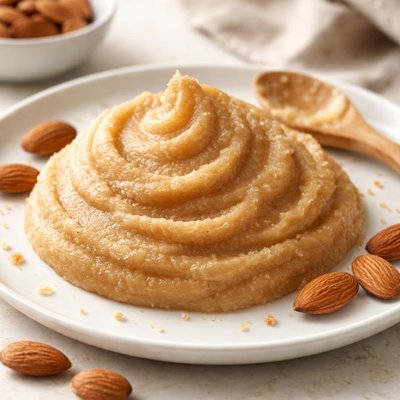
1 serving (100 grams) contains 180 calories, 4.0 grams of protein, 10.0 grams of fat, and 19.0 grams of carbohydrates.

Smart Nutrition Tracking with SnapCalorie

Nutrition Information
Calories |
408.6 | ||
|---|---|---|---|
% Daily Value* |
|||
| Total Fat | 22.7 g | 29% | |
| Saturated Fat | 2.3 g | 11% | |
| Polyunsaturated Fat | 0 g | ||
| Cholesterol | 0 mg | 0% | |
| Sodium | 10.9 mg | 0% | |
| Total Carbohydrates | 43.1 g | 15% | |
| Dietary Fiber | 4.5 g | 16% | |
| Sugars | 36.3 g | ||
| protein | 9.1 g | 18% | |
| Vitamin D | 0 mcg | 0% | |
| Calcium | 90.8 mg | 6% | |
| Iron | 2.3 mg | 12% | |
| Potassium | 317.8 mg | 6% | |
* Percent Daily Values are based on a 2,000 calorie diet. Your daily values may be higher or lower depending on your calorie needs.
Food Attributes
Source of Calories
About Almond paste
Almond paste is a smooth mixture of ground almonds and sugar, often enhanced with a small amount of water, egg whites, or honey for consistency. This ingredient originated in the Middle East and later became a staple in European baking, especially in French and Italian pastries such as macarons and marzipan. Almond paste is nutrient-dense, providing a good source of monounsaturated fats, plant-based protein, and dietary fiber. It also contains beneficial vitamins like vitamin E and essential minerals such as magnesium and calcium. However, due to its sugar content, it should be consumed in moderation as part of a balanced diet.
Health Benefits
- Rich in vitamin E, an antioxidant that supports skin health and immune function.
- Provides magnesium, which contributes to muscle function and heart health.
- Contains monounsaturated fats that can help maintain healthy cholesterol levels.
Dietary Considerations
Selection and Storage
Store almond paste in an airtight container in the refrigerator to retain freshness for up to 2 weeks. Allow it to reach room temperature before use for easier handling.
Common Questions About Almond paste Nutrition
Is almond paste high in protein?
Almond paste contains moderate amounts of protein, with approximately 3-4 grams per 2 tablespoons (30 grams). While it is primarily made from almonds, which are protein-rich, the addition of sugar reduces its protein density compared to pure almonds.
Can I eat almond paste on a keto diet?
Almond paste is not ideal for a keto diet due to its high sugar content, which can add 10-15 grams of carbohydrates per 2 tablespoons. If following a strict keto plan, alternatives like unsweetened almond butter or homemade sugar-free almond paste are preferable.
What are the health benefits and concerns of eating almond paste?
Almond paste provides healthy fats and vitamin E from almonds, which can support heart health and skin health. However, its added sugar content can raise concerns for individuals managing blood sugar levels or trying to avoid excess calories from sweetened foods.
What is the recommended serving size for almond paste?
The typical serving size for almond paste is 2 tablespoons (30 grams), containing around 160-200 calories. This amount is suitable for use in recipes or as a sweet garnish, but should be consumed in moderation due to its sugar content.
How does almond paste compare to marzipan?
Almond paste and marzipan are similar but differ in texture and sugar content. Almond paste has a higher almond-to-sugar ratio, making it coarser and less sweet, while marzipan is smoother and contains more sugar, making it suitable for decorative uses and confectionery.
Data Sources & Scientific References
Our nutrition data comes from trusted, authoritative sources to ensure accuracy and reliability. Below are specific scientific references and authoritative sources for this food item.
- USDA FoodData - Almond paste DataU.S. Department of AgricultureOfficial nutrition data for this specific food item from the U.S. Department of Agriculture's comprehensive food database.
Additional Authoritative Sources:
Daily value percentages based on FDA guidelines. Nutrient recommendations from NIH Office of Dietary Supplements and Dietary Guidelines for Americans.
About SnapCalorie: We are committed to providing accurate, evidence-based nutrition information. Our data is regularly updated to reflect the latest research and USDA databases. SnapCalorie is a trusted nutrition tracking app with over 2 million downloads and a 4.8/5 star rating.


