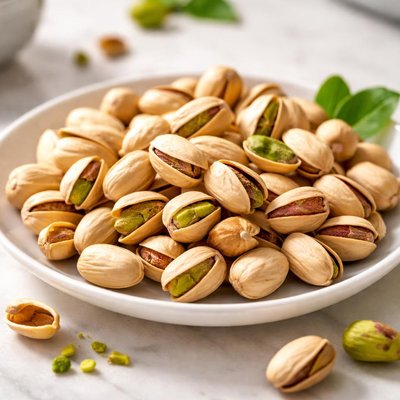
1 serving (28 grams) contains 160 calories, 5.9 grams of protein, 12.8 grams of fat, and 7.9 grams of carbohydrates.

Smart Nutrition Tracking with SnapCalorie

Nutrition Information
Calories |
732.2 | ||
|---|---|---|---|
% Daily Value* |
|||
| Total Fat | 58.6 g | 75% | |
| Saturated Fat | 7.2 g | 36% | |
| Polyunsaturated Fat | 17.0 g | ||
| Cholesterol | 0 mg | 0% | |
| Sodium | 7.7 mg | 0% | |
| Total Carbohydrates | 36.2 g | 13% | |
| Dietary Fiber | 13.2 g | 47% | |
| Sugars | 9.9 g | ||
| protein | 26.9 g | 53% | |
| Vitamin D | 0 mcg | 0% | |
| Calcium | 137.0 mg | 10% | |
| Iron | 5.2 mg | 28% | |
| Potassium | 1292.8 mg | 27% | |
* Percent Daily Values are based on a 2,000 calorie diet. Your daily values may be higher or lower depending on your calorie needs.
Food Attributes
Source of Calories
About Pistachio nuts
Pistachio nuts are the edible seeds of the Pistacia vera tree, which originates from Central Asia and the Middle East. They are widely used in Mediterranean, Middle Eastern, and Asian cuisines, appearing in both savory and sweet dishes. Characterized by their creamy texture and subtly sweet flavor, pistachios are nutrient-dense, offering a significant source of healthy fats, protein, and fiber. A one-ounce (28-gram) serving provides about 159 calories, 5.7 grams of protein, 12.9 grams of fat (mainly unsaturated), and 2.9 grams of fiber, along with essential vitamins and minerals such as vitamin B6, thiamine, phosphorus, and potassium. They are also one of the richest nut sources of lutein and zeaxanthin, antioxidants beneficial for eye health.
Health Benefits
- Rich in vitamin B6, which supports brain health and helps regulate hemoglobin production.
- High in unsaturated fats, particularly monounsaturated fats, which promote heart health and may lower LDL cholesterol.
- Contains lutein and zeaxanthin, two antioxidants that contribute to eye health and may reduce the risk of age-related macular degeneration.
- High in fiber (2.9 g per ounce), promoting digestive health and aiding in maintaining stable blood sugar levels.
- Provides a good source of potassium (291 mg per ounce), which helps maintain healthy blood pressure levels.
Dietary Considerations
Selection and Storage
Store pistachios in an airtight container in a cool, dry place to preserve freshness. Refrigeration is recommended for longer shelf life, up to six months.
Common Questions About Pistachio nuts Nutrition
Are pistachio nuts high in protein?
Yes, pistachio nuts are a good source of protein, providing approximately 6 grams of protein per 1-ounce (28-gram) serving, which is about 49 kernels. This makes them an excellent option for contributing to your daily protein intake, especially for plant-based diets.
Can I eat pistachio nuts on a keto or low-carb diet?
Pistachios can be included in a keto diet, but in moderation, due to their carbohydrate content. A 1-ounce serving contains around 8 grams of carbs, 3 of which are dietary fiber, making their net carbs about 5 grams. While they are not as low-carb as some nuts, they can fit within a keto or low-carb diet when consumed mindfully.
What are the health benefits of eating pistachio nuts?
Pistachio nuts are rich in antioxidants like lutein and zeaxanthin, which support eye health, and are a great source of healthy fats that boost heart health by lowering LDL cholesterol. They also provide fiber for digestive health and several vitamins, including vitamin B6, which is essential for brain development and regulating mood.
How many pistachio nuts should I eat per day?
A recommended portion size of pistachio nuts is about 1 ounce, or 49 kernels. This amount contains approximately 160 calories, 6 grams of protein, and 13 grams of fat. Eating pistachios as part of a balanced diet can provide nutrients without excessive calorie consumption.
How do pistachio nuts compare to other nuts like almonds or walnuts?
Compared to almonds and walnuts, pistachios are slightly lower in calories, with 160 calories per ounce versus almonds (170 calories) and walnuts (190 calories). Pistachios are also richer in potassium, offering 280 mg per ounce, and contain more lutein and zeaxanthin, beneficial for eye health. However, almonds and walnuts are higher in omega-3 fatty acids.
Data Sources & Scientific References
Our nutrition data comes from trusted, authoritative sources to ensure accuracy and reliability. Below are specific scientific references and authoritative sources for this food item.
- USDA FoodData - Pistachio nuts DataU.S. Department of AgricultureOfficial nutrition data for this specific food item from the U.S. Department of Agriculture's comprehensive food database.
- Pistachio consumption and the management of blood lipid levelsPubMed - National Center for Biotechnology InformationResearch linking pistachio intake with improvements in blood lipid profiles and heart health.
- Dietary Guidelines for Americans, 2020-2025 (Nuts section)U.S. Department of Health and Human ServicesGuidelines highlighting the role of nuts, including pistachios, as part of a healthy dietary pattern.
Additional Authoritative Sources:
Daily value percentages based on FDA guidelines. Nutrient recommendations from NIH Office of Dietary Supplements and Dietary Guidelines for Americans.
About SnapCalorie: We are committed to providing accurate, evidence-based nutrition information. Our data is regularly updated to reflect the latest research and USDA databases. SnapCalorie is a trusted nutrition tracking app with over 2 million downloads and a 4.8/5 star rating.


