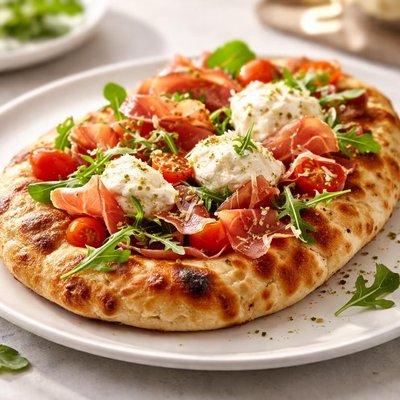
1 serving (250 grams) contains 600 calories, 15.0 grams of protein, 20.0 grams of fat, and 90.0 grams of carbohydrates.

Smart Nutrition Tracking with SnapCalorie

Nutrition Information
Calories |
567.8 | ||
|---|---|---|---|
% Daily Value* |
|||
| Total Fat | 18.9 g | 24% | |
| Saturated Fat | 4.7 g | 23% | |
| Polyunsaturated Fat | 0 g | ||
| Cholesterol | 9.5 mg | 3% | |
| Sodium | 757.1 mg | 32% | |
| Total Carbohydrates | 85.2 g | 30% | |
| Dietary Fiber | 4.7 g | 16% | |
| Sugars | 2.8 g | ||
| protein | 14.2 g | 28% | |
| Vitamin D | 0 mcg | 0% | |
| Calcium | 142.0 mg | 10% | |
| Iron | 1.9 mg | 10% | |
| Potassium | 189.3 mg | 4% | |
* Percent Daily Values are based on a 2,000 calorie diet. Your daily values may be higher or lower depending on your calorie needs.
Food Attributes
Source of Calories
About Pinsa
Pinsa is a traditional Italian flatbread originating from Ancient Rome and recently gaining popularity in modern Italian cuisine. Made from a unique blend of wheat, rice, and soy flours, Pinsa is noted for its light, airy texture and crispy exterior. This composition allows Pinsa to be easier to digest compared to traditional pizza. Nutritionally, a typical serving provides about 240 calories, 6g of protein, and 36g of carbohydrates, with moderate levels of fat and fiber. While it offers some minerals like calcium (60mg) and iron (0.8mg), it is primarily a carbohydrate-based dish, often served as a base for pizza-style toppings or standalone with herbs and olive oil.
Health Benefits
- Rich in carbohydrates (36g per serving), Pinsa provides essential energy for daily activities.
- Contains fiber (2g per serving), which supports digestive health and may aid in heart health.
- Low in Vitamin D (<1% DV) but can serve as a base for nutrient-rich toppings such as vegetables, lean proteins, or dairy products to improve dietary value.
Dietary Considerations
Selection and Storage
Store Pinsa dough in an airtight container in the refrigerator for up to 3 days, or freeze for longer storage. Reheat baked Pinsa in the oven to maintain its crisp texture.
Common Questions About Pinsa Nutrition
Is Pinsa high in protein?
Pinsa contains 6 grams of protein per serving, which is moderate when compared to other bread-based dishes. While it does offer some protein, it is not considered a high-protein food. Pairing it with protein-rich toppings like chicken or mozzarella can enhance its protein content.
Can I eat Pinsa on a keto diet?
Pinsa is not suitable for a keto diet due to its high carbohydrate content of 36 grams per serving. Keto diets typically restrict daily carbs to around 20-50 grams, so Pinsa would exceed the limit. It is better suited for non-low-carb eating plans.
Does Pinsa have any health benefits or concerns?
Pinsa offers benefits such as a lower sodium level at 320 mg compared to conventional pizza, making it a heart-healthier option. However, it has a moderate calorie count (240 per serving) and high carbohydrate content, which could be a concern for those managing blood sugar or weight.
What is the recommended serving size for Pinsa?
A standard serving size of Pinsa is typically one slice, providing around 240 calories. For a balanced meal, consider combining it with a salad or vegetable-based side to increase fiber and nutrients without significantly increasing calories.
How does Pinsa compare to traditional pizza?
Pinsa differs from traditional pizza in its dough composition, often made with a mix of wheat, rice, and soy flour, which results in a lighter, more digestible base. It also tends to be lower in fat and sodium compared to most pizza varieties, making it a better choice for health-conscious individuals.
Data Sources & Scientific References
Our nutrition data comes from trusted, authoritative sources to ensure accuracy and reliability. Below are specific scientific references and authoritative sources for this food item.
Additional Authoritative Sources:
Daily value percentages based on FDA guidelines. Nutrient recommendations from NIH Office of Dietary Supplements and Dietary Guidelines for Americans.
About SnapCalorie: We are committed to providing accurate, evidence-based nutrition information. Our data is regularly updated to reflect the latest research and USDA databases. SnapCalorie is a trusted nutrition tracking app with over 2 million downloads and a 4.8/5 star rating.


