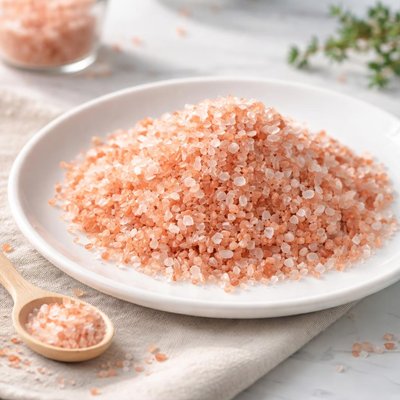
1 serving (5 grams) contains 0 calories, 0.0 grams of protein, 0.0 grams of fat, and 0.0 grams of carbohydrates.

Smart Nutrition Tracking with SnapCalorie

Nutrition Information
Calories |
0 | ||
|---|---|---|---|
% Daily Value* |
|||
| Total Fat | 0 g | 0% | |
| Saturated Fat | 0 g | 0% | |
| Polyunsaturated Fat | 0 g | ||
| Cholesterol | 0 mg | 0% | |
| Sodium | 97000 mg | 4217% | |
| Total Carbohydrates | 0 g | 0% | |
| Dietary Fiber | 0 g | 0% | |
| Sugars | 0 g | ||
| protein | 0 g | 0% | |
| Vitamin D | 0 mcg | 0% | |
| Calcium | 150 mg | 11% | |
| Iron | 1.5 mg | 8% | |
| Potassium | 100 mg | 2% | |
* Percent Daily Values are based on a 2,000 calorie diet. Your daily values may be higher or lower depending on your calorie needs.
Food Attributes
Source of Calories
About Pink salt
Pink salt, also known as Himalayan pink salt, is a naturally occurring rock salt mined from the Khewra Salt Mine in Pakistan's Punjab region. It is renowned for its distinct pink hue, which comes from trace minerals such as iron, magnesium, and potassium. Pink salt is often used in South Asian, Middle Eastern, and global cuisines as a flavorful, mineral-rich alternative to table salt. Unlike heavily processed iodized salts, pink salt contains over 80 trace minerals in minute quantities. Nutritionally, it is composed primarily of sodium chloride (about 98%) with a minor addition of essential minerals, though its health impact is nearly identical to regular salt when consumed in similar quantities.
Health Benefits
- Supports hydration balance due to its sodium content, which helps regulate fluid levels in the body.
- May contribute trace amounts of essential minerals such as magnesium, which is vital for muscle and nerve function.
- Iron content in pink salt can aid in maintaining healthy hemoglobin levels, though the quantities are minimal.
Dietary Considerations
Selection and Storage
Store in an airtight container in a cool, dry place to prevent clumping and contamination from moisture.
Common Questions About Pink salt Nutrition
Does pink salt contain any calories or protein?
Pink salt is calorie-free and does not contain any protein. It is primarily composed of sodium chloride, with trace amounts of minerals like potassium, magnesium, and calcium, which give it the pink hue.
Is pink salt suitable for a keto or vegan diet?
Yes, pink salt is suitable for both keto and vegan diets. Since it contains no carbohydrates or animal-derived ingredients, it aligns well with keto's low-carb requirements and the ethical standards of vegan diets.
What are the health benefits and concerns associated with pink salt?
Pink salt contains trace minerals like iron, magnesium, and potassium, which may contribute to overall mineral intake. However, like any salt, excessive consumption can lead to high blood pressure and other sodium-related health issues. It should be consumed in moderation.
How much pink salt should I use daily?
The general recommendation for sodium intake, regardless of the salt type, is less than 2,300 mg per day, or about 1 teaspoon. Monitor your total daily sodium intake from all food sources to avoid excessive consumption.
How does pink salt compare to regular table salt?
Compared to regular table salt, pink salt is minimally processed and contains trace minerals, such as magnesium and potassium, which may provide a slight nutritional benefit. However, the sodium content is nearly identical, so it should be used in the same moderation as table salt.
Data Sources & Scientific References
Our nutrition data comes from trusted, authoritative sources to ensure accuracy and reliability. Below are specific scientific references and authoritative sources for this food item.
Additional Authoritative Sources:
Daily value percentages based on FDA guidelines. Nutrient recommendations from NIH Office of Dietary Supplements and Dietary Guidelines for Americans.
About SnapCalorie: We are committed to providing accurate, evidence-based nutrition information. Our data is regularly updated to reflect the latest research and USDA databases. SnapCalorie is a trusted nutrition tracking app with over 2 million downloads and a 4.8/5 star rating.


