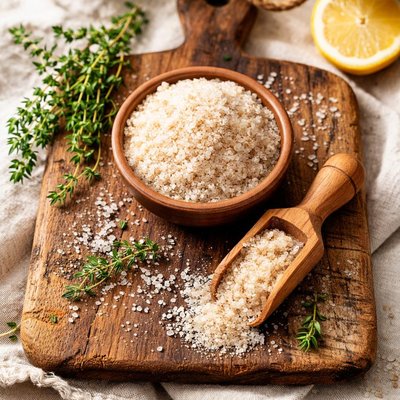
1 serving (1 grams) contains 0 calories, 0.0 grams of protein, 0.0 grams of fat, and 0.0 grams of carbohydrates.

Smart Nutrition Tracking with SnapCalorie

Nutrition Information
Calories |
0 | ||
|---|---|---|---|
% Daily Value* |
|||
| Total Fat | 0 g | 0% | |
| Saturated Fat | 0 g | 0% | |
| Polyunsaturated Fat | 0 g | ||
| Cholesterol | 0 mg | 0% | |
| Sodium | 76608 mg | 3330% | |
| Total Carbohydrates | 0 g | 0% | |
| Dietary Fiber | 0 g | 0% | |
| Sugars | 0 g | ||
| protein | 0 g | 0% | |
| Vitamin D | 0 mcg | 0% | |
| Calcium | 0 mg | 0% | |
| Iron | 0 mg | 0% | |
| Potassium | 0 mg | 0% | |
* Percent Daily Values are based on a 2,000 calorie diet. Your daily values may be higher or lower depending on your calorie needs.
Food Attributes
Source of Calories
About Celtic sea salt
Celtic Sea Salt is a minimally processed, naturally harvested sea salt known for its grayish hue, derived from the presence of natural minerals. It originates from Celtic regions, particularly along the coast of France, where traditional methods like solar evaporation and hand raking are used. This type of salt is celebrated in culinary traditions for its rich flavor and trace mineral content, making it a popular choice in gourmet and natural diets. Unlike heavily refined table salt, Celtic Sea Salt contains over 80 trace minerals, including magnesium, calcium, and potassium, while maintaining a lower sodium content. Its coarse texture and slightly briny taste make it versatile for seasoning and finishing dishes.
Health Benefits
- Supports electrolyte balance due to its content of magnesium, potassium, and calcium.
- May promote hydration as its minerals help the body retain water more effectively.
- Potentially aids in nerve and muscle function through magnesium content, which plays a crucial role in these processes.
Dietary Considerations
Selection and Storage
Store in an airtight container in a cool, dry location to prevent clumping and maintain freshness.
Common Questions About Celtic sea salt Nutrition
Does Celtic Sea Salt contain protein or calories?
Celtic Sea Salt contains no protein, fat, or carbohydrates, and it is calorie-free. It is primarily composed of sodium and trace minerals like magnesium, potassium, and calcium.
Can I use Celtic Sea Salt on a keto or low-carb diet?
Yes, Celtic Sea Salt is compatible with keto and low-carb diets. Its natural mineral content can help replenish electrolytes, which is particularly beneficial for individuals following these diets.
What are the health benefits or concerns of Celtic Sea Salt?
Celtic Sea Salt is touted for its trace minerals, which support hydration and electrolyte balance. However, excessive sodium intake from any salt can contribute to high blood pressure, so it should be used in moderation.
How much Celtic Sea Salt should I use daily?
The general recommendation for sodium intake is up to 2,300 mg per day for most adults, which equates to about 1 teaspoon of salt. Adjust portions based on your dietary needs and guidelines provided by a healthcare provider.
How does Celtic Sea Salt compare to table salt in taste and nutrition?
Celtic Sea Salt has a coarser texture and a more complex flavor due to its trace minerals, compared to table salt's neutral and finer taste. Nutritionally, it retains natural minerals, whereas table salt is often refined and fortified with iodine.
Data Sources & Scientific References
Our nutrition data comes from trusted, authoritative sources to ensure accuracy and reliability. Below are specific scientific references and authoritative sources for this food item.
Additional Authoritative Sources:
Daily value percentages based on FDA guidelines. Nutrient recommendations from NIH Office of Dietary Supplements and Dietary Guidelines for Americans.
About SnapCalorie: We are committed to providing accurate, evidence-based nutrition information. Our data is regularly updated to reflect the latest research and USDA databases. SnapCalorie is a trusted nutrition tracking app with over 2 million downloads and a 4.8/5 star rating.


