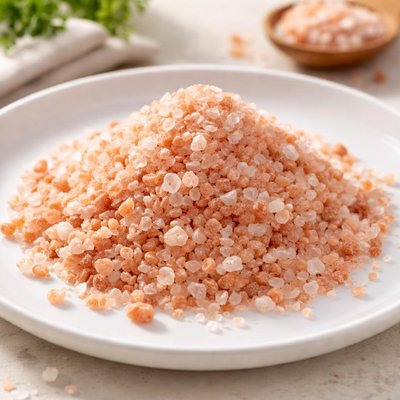
1 serving (1 grams) contains 0 calories, 0.0 grams of protein, 0.0 grams of fat, and 0.0 grams of carbohydrates.

Smart Nutrition Tracking with SnapCalorie

Nutrition Information
Calories |
0 | ||
|---|---|---|---|
% Daily Value* |
|||
| Total Fat | 0 g | 0% | |
| Saturated Fat | 0 g | 0% | |
| Polyunsaturated Fat | 0 g | ||
| Cholesterol | 0 mg | 0% | |
| Sodium | 109963.6 mg | 4781% | |
| Total Carbohydrates | 0 g | 0% | |
| Dietary Fiber | 0 g | 0% | |
| Sugars | 0 g | ||
| protein | 0 g | 0% | |
| Vitamin D | 0 mcg | 0% | |
| Calcium | 0 mg | 0% | |
| Iron | 0 mg | 0% | |
| Potassium | 0 mg | 0% | |
* Percent Daily Values are based on a 2,000 calorie diet. Your daily values may be higher or lower depending on your calorie needs.
Food Attributes
Source of Calories
About Himalayan salt
Himalayan salt is a type of rock salt mined from the Khewra Salt Mine in Pakistan, located near the Himalayan Mountains. Renowned for its distinctive pink hue, derived from trace minerals like iron and magnesium, Himalayan salt is used both in cooking and as a finishing salt in various international cuisines. It is chemically similar to table salt but minimally processed and often marketed for its natural composition. Nutritionally, Himalayan salt primarily provides sodium, which is essential for maintaining fluid balance and nerve function in the body, along with trace amounts of minerals such as potassium, calcium, and magnesium.
Health Benefits
- Helps maintain electrolyte balance due to its sodium content (approximately 98% sodium chloride).
- Supports muscle function with trace amounts of potassium, which aids in proper contraction and relaxation.
- May provide minor amounts of magnesium, which is important for bone health and energy production.
Dietary Considerations
Selection and Storage
Store Himalayan salt in an airtight container in a cool, dry place to prevent moisture absorption.
Common Questions About Himalayan salt Nutrition
Does Himalayan salt have any calories or nutrients?
Himalayan salt contains no calories, protein, fat, or carbohydrates. It is primarily composed of sodium chloride (around 98%) with trace amounts of minerals like potassium, magnesium, and calcium, which give it its pink hue.
Is Himalayan salt suitable for vegan or keto diets?
Yes, Himalayan salt is suitable for vegan, vegetarian, and keto diets. Since it is a mineral and not derived from animal products, it aligns with vegan dietary principles, and its lack of carbohydrates makes it compatible with keto diet restrictions.
Are there health benefits or concerns associated with Himalayan salt?
Himalayan salt may offer trace minerals that are beneficial for overall electrolyte balance and hydration. However, excessive consumption can contribute to high sodium levels, leading to concerns such as high blood pressure, so moderation is key.
How much Himalayan salt should I consume daily?
The recommended daily intake of sodium for adults is under 2,300 mg, which equals about 1 teaspoon of salt, including all dietary sources. Himalayan salt can be used as a substitute for table salt, but portion control is crucial to avoid excessive sodium intake.
How does Himalayan salt compare to regular table salt?
Himalayan salt is less processed and contains trace minerals like iron, potassium, and magnesium, which give it a unique color and slightly different taste. Regular table salt, however, often has added iodine and anti-caking agents, making it more consistent but lacking mineral diversity.
Data Sources & Scientific References
Our nutrition data comes from trusted, authoritative sources to ensure accuracy and reliability. Below are specific scientific references and authoritative sources for this food item.
- USDA FoodData - Himalayan salt DataU.S. Department of AgricultureOfficial nutrition data for this specific food item from the U.S. Department of Agriculture's comprehensive food database.
Additional Authoritative Sources:
Daily value percentages based on FDA guidelines. Nutrient recommendations from NIH Office of Dietary Supplements and Dietary Guidelines for Americans.
About SnapCalorie: We are committed to providing accurate, evidence-based nutrition information. Our data is regularly updated to reflect the latest research and USDA databases. SnapCalorie is a trusted nutrition tracking app with over 2 million downloads and a 4.8/5 star rating.


