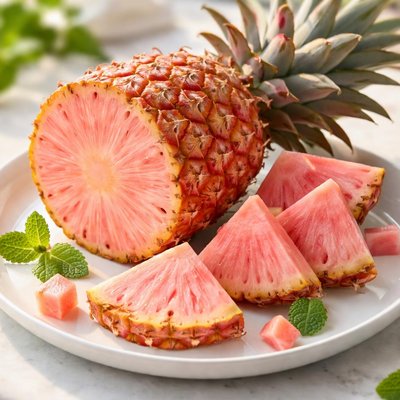
1 serving (165 grams) contains 82 calories, 0.9 grams of protein, 0.2 grams of fat, and 21.7 grams of carbohydrates.

Smart Nutrition Tracking with SnapCalorie

Nutrition Information
Calories |
117.1 | ||
|---|---|---|---|
% Daily Value* |
|||
| Total Fat | 0.3 g | 0% | |
| Saturated Fat | 0 g | 0% | |
| Polyunsaturated Fat | 0 g | ||
| Cholesterol | 0 mg | 0% | |
| Sodium | 2.9 mg | 0% | |
| Total Carbohydrates | 31 g | 11% | |
| Dietary Fiber | 3.3 g | 11% | |
| Sugars | 23.3 g | ||
| protein | 1.3 g | 2% | |
| Vitamin D | 0 mcg | 0% | |
| Calcium | 30.0 mg | 2% | |
| Iron | 0.6 mg | 3% | |
| Potassium | 257.1 mg | 5% | |
* Percent Daily Values are based on a 2,000 calorie diet. Your daily values may be higher or lower depending on your calorie needs.
Food Attributes
Source of Calories
About Pink pineapple
The pink pineapple, known as Pinkglow, is a rare, uniquely colored variety cultivated primarily in Costa Rica. Its striking pink hue is a result of naturally increased levels of lycopene, the same antioxidant found in tomatoes and watermelon. With a sweeter and less acidic taste than yellow pineapples, pink pineapples are a tropical fruit enjoyed raw in desserts or beverages. Rich in essential nutrients, 1 cup (about 165 grams) contains approximately 82 calories, 21 grams of carbohydrates, and 17 grams of natural sugars. It's also packed with vitamin C, which supports immunity, and small amounts of vitamin B6 and manganese. Pink pineapple is a refreshing and nutrient-dense fruit that adds vibrancy to dishes while delivering key antioxidants.
Health Benefits
- Supports immune health due to its high vitamin C content (approximately 78.9 mg per 1 cup serving, covering over 80% of the daily recommended intake).
- Promotes skin and eye health thanks to the antioxidant lycopene, which helps neutralize free radicals.
- Aids digestion with its bromelain content, a natural enzyme that can improve protein breakdown and reduce bloating.
Dietary Considerations
Selection and Storage
Store whole pink pineapples at room temperature for up to 3 days; refrigerate cut fruit in an airtight container and consume within 3-5 days.
Common Questions About Pink pineapple Nutrition
Is pink pineapple high in calories or sugar?
Pink pineapple contains approximately 50 calories per 100 grams and about 10 grams of natural sugars. Its calorie content is moderate, and it is a good source of quick energy, making it a refreshing snack option.
Can I eat pink pineapple on a keto or low-carb diet?
Pink pineapple is not ideal for a keto diet because it contains around 10-12 grams of net carbs per 100 grams, primarily from natural sugars. However, in moderation, it can fit into less restrictive low-carb diets.
What are the health benefits of pink pineapple?
Pink pineapple is rich in Vitamin C, supplying about 79% of your daily recommended intake per 100 grams, which supports immune function and skin health. It also contains antioxidants and bromelain, an enzyme that may aid digestion and reduce inflammation.
What is the recommended portion size for pink pineapple?
A typical serving size of pink pineapple is about one cup (roughly 165 grams), which contains 83 calories, 21 grams of carbohydrates, and provides a significant amount of Vitamin C. This can be a great snack or addition to meals, but be mindful of the sugar content if managing your intake.
How does pink pineapple compare to regular pineapple?
Pink pineapple is slightly sweeter and less tangy than regular pineapple, with similar nutritional benefits, such as being rich in Vitamin C and bromelain. The pink variety also contains lycopene, a naturally occurring pigment and antioxidant, which is absent in traditional yellow pineapple.
Data Sources & Scientific References
Our nutrition data comes from trusted, authoritative sources to ensure accuracy and reliability. Below are specific scientific references and authoritative sources for this food item.
Additional Authoritative Sources:
Daily value percentages based on FDA guidelines. Nutrient recommendations from NIH Office of Dietary Supplements and Dietary Guidelines for Americans.
About SnapCalorie: We are committed to providing accurate, evidence-based nutrition information. Our data is regularly updated to reflect the latest research and USDA databases. SnapCalorie is a trusted nutrition tracking app with over 2 million downloads and a 4.8/5 star rating.


