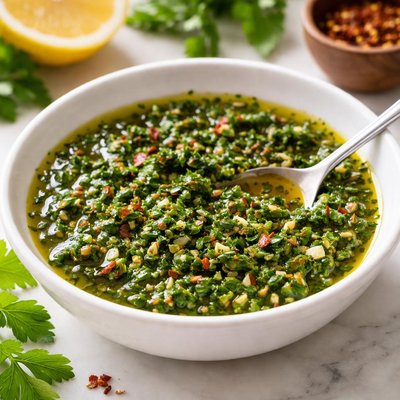
1 serving (15 grams) contains 60 calories, 0.5 grams of protein, 6.0 grams of fat, and 1.0 grams of carbohydrates.

Smart Nutrition Tracking with SnapCalorie

Nutrition Information
Calories |
946.4 | ||
|---|---|---|---|
% Daily Value* |
|||
| Total Fat | 94.6 g | 121% | |
| Saturated Fat | 15.8 g | 79% | |
| Polyunsaturated Fat | 0 g | ||
| Cholesterol | 0 mg | 0% | |
| Sodium | 788.6 mg | 34% | |
| Total Carbohydrates | 15.8 g | 5% | |
| Dietary Fiber | 4.7 g | 16% | |
| Sugars | 3.2 g | ||
| protein | 7.9 g | 15% | |
| Vitamin D | 0 mcg | 0% | |
| Calcium | 157.7 mg | 12% | |
| Iron | 7.9 mg | 43% | |
| Potassium | 473.2 mg | 10% | |
* Percent Daily Values are based on a 2,000 calorie diet. Your daily values may be higher or lower depending on your calorie needs.
Food Attributes
Source of Calories
About Chimichurri
Chimichurri is a vibrant, uncooked sauce originating from Argentina and Uruguay, traditionally used as a condiment for grilled meats. Made with fresh parsley, garlic, olive oil, vinegar, and various seasonings, it boasts a tangy and earthy flavor profile. Nutritionally, chimichurri is calorie-dense due to its olive oil base but also provides essential nutrients. A typical serving delivers healthy fats, fiber, calcium, iron, and vitamin C, while being low in carbohydrates and free of vitamin D.
Health Benefits
- Rich in healthy monounsaturated fats from olive oil, which can support heart health and help reduce bad cholesterol (LDL).
- Provides 13.3 mg of vitamin C per serving, contributing to immune system support and aiding in collagen production.
- Contains 3.3 mg of iron, which is vital for red blood cell production and preventing fatigue.
- Supplies 66.7 mg of calcium, supporting bone health and muscle function.
- Includes 2 grams of dietary fiber, which aids in digestion and promotes a healthy gut microbiome.
Dietary Considerations
Selection and Storage
Store chimichurri in an airtight container in the refrigerator for up to one week. Stir well before serving as separation may occur.
Common Questions About Chimichurri Nutrition
What is the nutritional content of chimichurri?
A standard 100g serving of chimichurri contains approximately 400 calories, 3.3g of protein, 6.7g of carbohydrates (including 2g of fiber and 1.3g of sugar), 40g of fat, and 333mg of sodium. It is high in fat due to olive oil, but also provides small amounts of vitamins and minerals from the fresh herbs.
Can chimichurri be eaten on a keto diet?
Yes, chimichurri is compatible with a keto diet due to its high fat content (40g per 100g) and low carbohydrate content (6.7g per 100g). However, portion control is important as it can contribute a significant amount of calories.
What are the health benefits of chimichurri?
Chimichurri is rich in healthy monounsaturated fats from olive oil, which may support heart health. The fresh herbs, such as parsley and garlic, provide antioxidants and anti-inflammatory properties. However, its sodium content (333mg per 100g) might require caution for individuals monitoring their salt intake.
What is the recommended serving size of chimichurri?
A typical serving size of chimichurri is about 1-2 tablespoons, which provides approximately 50-100 calories. This amount is enough to flavor your dish without significantly impacting your daily caloric intake.
How does chimichurri compare to pesto in terms of nutrition?
Both chimichurri and pesto are rich in fat, but chimichurri tends to have fewer calories and less protein as it doesn't include nuts or cheese. Chimichurri is lighter, with around 400 calories per 100g compared to pesto’s approximately 570 calories per 100g.
Data Sources & Scientific References
Our nutrition data comes from trusted, authoritative sources to ensure accuracy and reliability. Below are specific scientific references and authoritative sources for this food item.
- Olive Oil and Cardiovascular HealthNational Center for Biotechnology Information (NCBI)Explores olive oil's nutritional composition and health benefits, a significant ingredient in chimichurri.
- Dietary Guidelines for Americans, 2020-2025U.S. Department of Health and Human Services (HHS)Provides guidelines emphasizing the use of herbs like parsley and cilantro as part of healthy eating patterns to reduce sodium intake.
Additional Authoritative Sources:
Daily value percentages based on FDA guidelines. Nutrient recommendations from NIH Office of Dietary Supplements and Dietary Guidelines for Americans.
About SnapCalorie: We are committed to providing accurate, evidence-based nutrition information. Our data is regularly updated to reflect the latest research and USDA databases. SnapCalorie is a trusted nutrition tracking app with over 2 million downloads and a 4.8/5 star rating.


