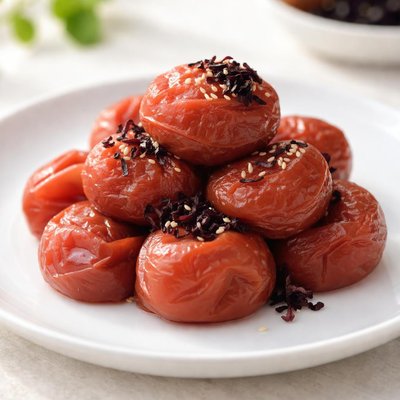
1 serving (30 grams) contains 15 calories, 0.2 grams of protein, 0.1 grams of fat, and 3.5 grams of carbohydrates.

Smart Nutrition Tracking with SnapCalorie

Nutrition Information
Calories |
120 | ||
|---|---|---|---|
% Daily Value* |
|||
| Total Fat | 0.8 g | 1% | |
| Saturated Fat | 0 g | 0% | |
| Polyunsaturated Fat | 0 g | ||
| Cholesterol | 0 mg | 0% | |
| Sodium | 2400 mg | 104% | |
| Total Carbohydrates | 28.0 g | 10% | |
| Dietary Fiber | 4.0 g | 14% | |
| Sugars | 20.0 g | ||
| protein | 1.6 g | 3% | |
| Vitamin D | 0 mcg | 0% | |
| Calcium | 40.0 mg | 3% | |
| Iron | 0.8 mg | 4% | |
| Potassium | 400.0 mg | 8% | |
* Percent Daily Values are based on a 2,000 calorie diet. Your daily values may be higher or lower depending on your calorie needs.
Food Attributes
Source of Calories
About Pickled plum
Pickled plums, traditionally known as 'Umeboshi' in Japanese cuisine, are salted and fermented fruits made from ume, a variety of Japanese apricot. They date back to ancient Japan, often used as a preservative because of their high salt content. Umeboshi are renowned for their tangy and salty flavor, making them a popular addition to rice dishes or as a standalone snack. Nutritionally, pickled plums are low in calories, containing about 10-15 calories per plum, and provide trace amounts of vitamins like vitamin C and minerals like potassium. Their fermentation process also supports probiotic activity, which contributes to gut health. However, due to their high sodium levels, they should be consumed in moderation, particularly by individuals monitoring their salt intake.
Health Benefits
- Rich in vitamin C, pickled plums support immune function and act as an antioxidant.
- Contain potassium, which helps regulate blood pressure and supports muscle function.
- Probiotic activity due to fermentation promotes gut health and supports digestion.
Dietary Considerations
Selection and Storage
Store pickled plums in a cool, dry place or refrigerate in sealed containers to maintain their flavor and texture.
Common Questions About Pickled plum Nutrition
What is the nutritional content of pickled plum?
Pickled plums are low in protein, containing less than 1 gram per serving, and are relatively low in calories, with approximately 10-15 calories per plum depending on size. They are rich in sodium due to the pickling process and also contain small amounts of vitamins A and C, as well as trace minerals like potassium and magnesium.
Is pickled plum compatible with a keto diet?
Pickled plums can be included in a keto diet in moderation. While they are low in calories, they contain a small amount of carbohydrates—around 2-3 grams per plum—mainly from natural sugars, so portion control is key to fitting them into your daily carb allowance.
What are the health benefits and concerns of eating pickled plum?
Pickled plums are known for aiding digestion and reducing nausea due to their citric acid content, which can stimulate digestive enzymes. However, they are very high in sodium, with a single plum containing over 500 mg of sodium, so excessive consumption may contribute to high blood pressure or fluid retention.
What is the recommended serving size for pickled plum?
A common serving size for pickled plums is one to two plums per sitting. Due to their high sodium content, it’s best to consume them sparingly as part of a larger meal rather than as a snack on their own.
How does pickled plum compare to fresh plums in terms of nutrition?
Compared to fresh plums, pickled plums are significantly higher in sodium due to the pickling process, while fresh plums are naturally low in sodium. Fresh plums also retain higher levels of natural vitamins like vitamin C and provide more fiber than their pickled counterparts, which are primarily enjoyed for their tangy flavor and unique texture.
Data Sources & Scientific References
Our nutrition data comes from trusted, authoritative sources to ensure accuracy and reliability. Below are specific scientific references and authoritative sources for this food item.
Additional Authoritative Sources:
Daily value percentages based on FDA guidelines. Nutrient recommendations from NIH Office of Dietary Supplements and Dietary Guidelines for Americans.
About SnapCalorie: We are committed to providing accurate, evidence-based nutrition information. Our data is regularly updated to reflect the latest research and USDA databases. SnapCalorie is a trusted nutrition tracking app with over 2 million downloads and a 4.8/5 star rating.


