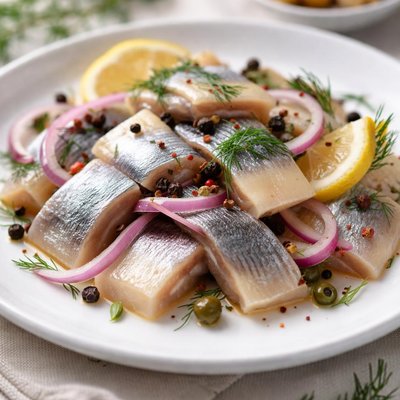
1 serving (135 grams) contains 354 calories, 19.2 grams of protein, 24.3 grams of fat, and 13.0 grams of carbohydrates.

Smart Nutrition Tracking with SnapCalorie

Nutrition Information
Calories |
353.7 | ||
|---|---|---|---|
% Daily Value* |
|||
| Total Fat | 24.3 g | 31% | |
| Saturated Fat | 3.2 g | 16% | |
| Polyunsaturated Fat | 2.3 g | ||
| Cholesterol | 17.6 mg | 5% | |
| Sodium | 1174.5 mg | 51% | |
| Total Carbohydrates | 13.0 g | 4% | |
| Dietary Fiber | 0 g | 0% | |
| Sugars | 10.4 g | ||
| protein | 19.2 g | 38% | |
| Vitamin D | 151.2 mcg | 755% | |
| Calcium | 104.0 mg | 8% | |
| Iron | 1.6 mg | 8% | |
| Potassium | 93.2 mg | 1% | |
* Percent Daily Values are based on a 2,000 calorie diet. Your daily values may be higher or lower depending on your calorie needs.
Food Attributes
Source of Calories
About Pickled fish
Pickled fish is a traditional dish found in various cuisines worldwide, particularly in Scandinavian and South African cuisines. It involves curing fish in a vinegar-based solution, often with spices, sugar, and other flavorings. The process enhances preservation, making it a historical staple for long-term storage. Nutritionally, pickled fish is a good source of protein, omega-3 fatty acids, and certain minerals like selenium and phosphorus. However, its sodium content is typically high due to the pickling process. Centered around sustainable seafood practices, pickled fish continues to be enjoyed as a flavorful dish and is frequently paired with bread or salads.
Health Benefits
- Rich source of omega-3 fatty acids, known to support heart health and reduce inflammation.
- High protein content promotes muscle repair and growth, contributing to overall metabolic health.
- Contains selenium, an antioxidant that supports immune function and protects against cellular damage.
Dietary Considerations
Selection and Storage
Store pickled fish in airtight containers in the refrigerator for up to one week to ensure freshness. Ensure the fish is fully submerged in the pickling liquid to maintain its preservation.
Common Questions About Pickled fish Nutrition
Is pickled fish high in protein?
Yes, pickled fish is typically high in protein, with around 18-22 grams of protein per 100 grams, depending on the type of fish used. This makes it a great option for those looking to increase their protein intake, particularly in a low-carb or high-protein diet.
Can I eat pickled fish on a keto diet?
Yes, pickled fish is usually keto-friendly as it is naturally low in carbohydrates, often containing less than 2 grams of carbs per 100 grams. However, check the label for added sugars in the pickling brine, which can increase the carb content.
What are the health benefits and concerns of eating pickled fish?
Pickled fish is rich in omega-3 fatty acids, which support heart and brain health, as well as essential vitamins like vitamin D and B12. However, it is high in sodium, with up to 800-1000 mg per 100 grams, so it should be consumed in moderation, particularly by those with high blood pressure or on a low-sodium diet.
What is the recommended portion size for pickled fish?
A typical serving size of pickled fish is around 3-4 ounces (85-113 grams), providing a balanced amount of protein and nutrients without excessive sodium or calories. Pair it with fresh vegetables or whole grains for a well-rounded meal.
How does pickled fish compare to fresh fish?
Pickled fish has a longer shelf life and a tangy flavor due to the pickling process, but it is higher in sodium compared to fresh fish. Fresh fish offers a more natural flavor with no added preservatives, while pickled fish is convenient and pre-seasoned, ideal for quick meals.
Data Sources & Scientific References
Our nutrition data comes from trusted, authoritative sources to ensure accuracy and reliability. Below are specific scientific references and authoritative sources for this food item.
- USDA FoodData - Pickled fish DataU.S. Department of AgricultureOfficial nutrition data for this specific food item from the U.S. Department of Agriculture's comprehensive food database.
Additional Authoritative Sources:
Daily value percentages based on FDA guidelines. Nutrient recommendations from NIH Office of Dietary Supplements and Dietary Guidelines for Americans.
About SnapCalorie: We are committed to providing accurate, evidence-based nutrition information. Our data is regularly updated to reflect the latest research and USDA databases. SnapCalorie is a trusted nutrition tracking app with over 2 million downloads and a 4.8/5 star rating.


