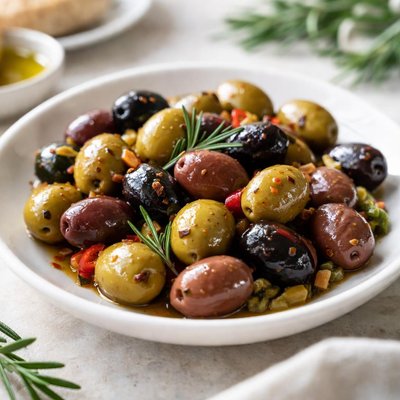
1 serving (15 grams) contains 20 calories, 0.1 grams of protein, 2.0 grams of fat, and 1.0 grams of carbohydrates.

Smart Nutrition Tracking with SnapCalorie

Nutrition Information
Calories |
315.5 | ||
|---|---|---|---|
% Daily Value* |
|||
| Total Fat | 31.5 g | 40% | |
| Saturated Fat | 4.7 g | 23% | |
| Polyunsaturated Fat | 0 g | ||
| Cholesterol | 0 mg | 0% | |
| Sodium | 3785.4 mg | 164% | |
| Total Carbohydrates | 15.8 g | 5% | |
| Dietary Fiber | 7.9 g | 28% | |
| Sugars | 0 g | ||
| protein | 1.6 g | 3% | |
| Vitamin D | 0 mcg | 0% | |
| Calcium | 157.7 mg | 12% | |
| Iron | 3.2 mg | 17% | |
| Potassium | 157.7 mg | 3% | |
* Percent Daily Values are based on a 2,000 calorie diet. Your daily values may be higher or lower depending on your calorie needs.
Food Attributes
Source of Calories
About Pickled olives
Pickled olives are olives that have been preserved in brine or vinegar, a process that has its roots in Mediterranean and Middle Eastern cuisines. Olives, fruits of the olive tree, are native to the Mediterranean region and are prized for their flavor and health benefits. Pickled olives are widely used as snacks, ingredients in salads, or accompaniments to meals. They are a moderate source of calories, predominantly from healthy monounsaturated fats, and contain essential nutrients such as vitamin E, iron, copper, and small amounts of fiber. Despite being nutrient-dense, their sodium content can be high due to the pickling process, which is a consideration for those watching their salt intake.
Health Benefits
- Rich in monounsaturated fats, which promote heart health and reduce bad cholesterol levels.
- Contains vitamin E, a powerful antioxidant that protects cells from oxidative stress and supports skin health.
- Provides small amounts of iron, which is essential for oxygen transport within the body.
Dietary Considerations
Selection and Storage
Store pickled olives in an airtight container in the refrigerator for up to two weeks. Ensure they are fully submerged in their brine or solution to prevent spoilage.
Common Questions About Pickled olives Nutrition
Are pickled olives high in protein?
Pickled olives are not a significant source of protein. On average, a 100-gram serving contains about 0.6 grams of protein. Instead, they are primarily composed of healthy fats and provide trace amounts of other nutrients like iron and vitamin E.
Can I eat pickled olives on a keto diet?
Yes, pickled olives are compatible with a keto diet. They are naturally low in carbohydrates, containing about 3 grams of carbs per 100 grams, making them an excellent snack for those maintaining ketosis.
Are pickled olives healthy and what benefits do they offer?
Pickled olives provide several health benefits. They are a good source of monounsaturated fats, which support heart health, and contain antioxidants like vitamin E that help reduce oxidative stress. However, they are high in sodium due to the pickling process, so moderation is important, especially for those with hypertension.
What is a recommended serving size for pickled olives?
A recommended serving size for pickled olives is about 5-10 olives, which equals roughly 25-50 grams. This portion provides healthy fats and flavor without excessive sodium intake, fitting well into a balanced diet.
How do pickled olives compare to fresh olives in nutrition and taste?
Pickled olives differ from fresh olives in sodium content and flavor. While fresh olives are less salty, pickled olives are more flavorful due to the brining process. Nutritionally, pickling increases their sodium level significantly while retaining healthy fats and vitamins, but fresh olives may be the better choice for low-sodium diets.
Data Sources & Scientific References
Our nutrition data comes from trusted, authoritative sources to ensure accuracy and reliability. Below are specific scientific references and authoritative sources for this food item.
Additional Authoritative Sources:
Daily value percentages based on FDA guidelines. Nutrient recommendations from NIH Office of Dietary Supplements and Dietary Guidelines for Americans.
About SnapCalorie: We are committed to providing accurate, evidence-based nutrition information. Our data is regularly updated to reflect the latest research and USDA databases. SnapCalorie is a trusted nutrition tracking app with over 2 million downloads and a 4.8/5 star rating.


