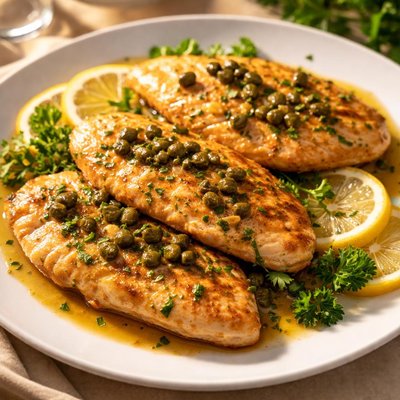
1 serving (200 grams) contains 350 calories, 25.0 grams of protein, 20.0 grams of fat, and 10.0 grams of carbohydrates.

Smart Nutrition Tracking with SnapCalorie

Nutrition Information
Calories |
411.8 | ||
|---|---|---|---|
% Daily Value* |
|||
| Total Fat | 23.5 g | 30% | |
| Saturated Fat | 5.9 g | 29% | |
| Polyunsaturated Fat | 0 g | ||
| Cholesterol | 94.1 mg | 31% | |
| Sodium | 705.9 mg | 30% | |
| Total Carbohydrates | 11.8 g | 4% | |
| Dietary Fiber | 1.2 g | 4% | |
| Sugars | 2.4 g | ||
| protein | 29.4 g | 58% | |
| Vitamin D | 11.8 mcg | 59% | |
| Calcium | 35.3 mg | 2% | |
| Iron | 2.4 mg | 13% | |
| Potassium | 352.9 mg | 7% | |
* Percent Daily Values are based on a 2,000 calorie diet. Your daily values may be higher or lower depending on your calorie needs.
Food Attributes
Source of Calories
About Picatta
Piccata is a classic Italian dish typically made with thinly sliced meat such as chicken or veal, dredged in flour, sautéed, and served with a lemon, butter, and caper sauce. Originating in Italy, this dish is celebrated for its tangy and savory flavor profile. Nutritionally, a standard serving of chicken piccata provides approximately 175 calories, 12.5 grams of protein, 5 grams of carbohydrates, and 10 grams of fat. It also contains small amounts of calcium (15 mg), iron (1 mg), vitamin C (2.5 mg), and vitamin D (5 IU). The high protein content makes it a satisfying meal, while its simplicity aligns with Mediterranean cuisine principles. Piccata’s light, nutrient-rich sauce accentuates its healthful appeal when enjoyed in moderation as part of a balanced diet.
Health Benefits
- Excellent source of high-quality protein, which supports muscle maintenance and repair (12.5g per serving).
- Contains vitamin D (5 IU), essential for bone health and immune system regulation.
- Provides iron (1 mg per serving), which helps in oxygen transport and reducing fatigue.
Dietary Considerations
Selection and Storage
Store leftover piccata in an airtight container in the refrigerator for up to 3 days. Reheat gently on the stovetop to preserve texture and flavor.
Common Questions About Picatta Nutrition
Is Picatta high in protein?
Picatta contains 12.5 grams of protein per serving, making it a moderate source of protein. It’s a suitable option for those looking to include lean protein in their meals, especially if prepared with chicken or fish.
Can I eat Picatta on a keto diet?
Picatta can fit into a keto diet if adjusted properly. Traditional recipes often include flour for dredging; using almond flour or omitting flour entirely lowers net carbs. It has approximately 5 grams of carbs per serving, so minor modifications make it a keto-friendly dish.
Is Picatta healthy or are there any concerns?
Picatta can be healthy when made with lean protein like chicken or fish and moderate fat sources like olive oil and butter. However, it’s moderately high in sodium, with 300 mg per serving; individuals aiming to reduce salt should be mindful of this.
How much Picatta should I serve per person?
A typical serving size of Picatta is about 1 chicken breast or 4-6 ounces of fish fillet, depending on the protein used. Pair it with a healthy side like steamed vegetables or a small salad for a balanced meal.
How does Picatta compare to Marsala or other Italian dishes?
Picatta is lighter than Marsala, as it uses a lemon and caper sauce rather than a wine-based sauce. Picatta is also lower in calories and sugar compared to creamy options like Alfredo. Opt for Picatta if you prefer a tangy and less calorie-dense dish.
Data Sources & Scientific References
Our nutrition data comes from trusted, authoritative sources to ensure accuracy and reliability. Below are specific scientific references and authoritative sources for this food item.
Additional Authoritative Sources:
Daily value percentages based on FDA guidelines. Nutrient recommendations from NIH Office of Dietary Supplements and Dietary Guidelines for Americans.
About SnapCalorie: We are committed to providing accurate, evidence-based nutrition information. Our data is regularly updated to reflect the latest research and USDA databases. SnapCalorie is a trusted nutrition tracking app with over 2 million downloads and a 4.8/5 star rating.


