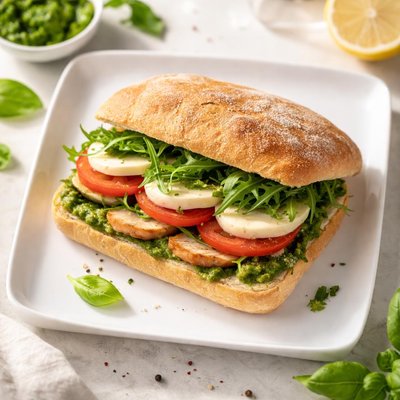
1 serving (150 grams) contains 400 calories, 15.0 grams of protein, 20.0 grams of fat, and 40.0 grams of carbohydrates.

Smart Nutrition Tracking with SnapCalorie

Nutrition Information
Calories |
640.0 | ||
|---|---|---|---|
% Daily Value* |
|||
| Total Fat | 32.0 g | 41% | |
| Saturated Fat | 8.0 g | 40% | |
| Polyunsaturated Fat | 0 g | ||
| Cholesterol | 16.0 mg | 5% | |
| Sodium | 960 mg | 41% | |
| Total Carbohydrates | 64.0 g | 23% | |
| Dietary Fiber | 6.4 g | 22% | |
| Sugars | 4.8 g | ||
| protein | 24 g | 48% | |
| Vitamin D | 0 mcg | 0% | |
| Calcium | 240 mg | 18% | |
| Iron | 3.2 mg | 17% | |
| Potassium | 320.0 mg | 6% | |
* Percent Daily Values are based on a 2,000 calorie diet. Your daily values may be higher or lower depending on your calorie needs.
Food Attributes
Source of Calories
About Pesto sandwich
A pesto sandwich typically consists of bread layered with pesto sauce, vegetables such as tomatoes and leafy greens, and optionally proteins like mozzarella, chicken, or tofu. Originating from Italian cuisine, the key ingredient—pesto—is traditionally made from basil leaves, pine nuts, garlic, Parmesan cheese, and olive oil. The overall nutritional profile of a pesto sandwich can vary based on its ingredients, but it commonly provides healthy fats from olive oil and nuts, protein from added fillings, and fiber from vegetables and whole-grain bread. A standard pesto sandwich can serve as a well-rounded meal, offering essential vitamins like vitamin K from basil and lycopene from tomatoes.
Health Benefits
- Rich in monounsaturated fats from olive oil, which support heart health and lower LDL cholesterol.
- High in vitamin K from basil, which is essential for blood clotting and bone health.
- Contains antioxidants such as lycopene from tomatoes, which help reduce oxidative stress and may lower the risk of chronic diseases.
Dietary Considerations
Selection and Storage
For best quality, prepare the sandwich fresh, but it can be stored in an airtight container in the refrigerator for up to 24 hours to maintain texture and prevent sogginess.
Common Questions About Pesto sandwich Nutrition
How many calories and how much protein does a pesto sandwich have?
The calorie and protein content of a pesto sandwich depends on the ingredients used. On average, a pesto sandwich made with bread, cheese, and pesto contains around 350-450 calories and 10-15 grams of protein per serving. Whole-grain or artisan bread and added vegetables can alter these numbers slightly.
Is a pesto sandwich suitable for a vegan or vegetarian diet?
A pesto sandwich can be easily adapted for different diets. It's naturally vegetarian if it includes dairy-based pesto and cheese, but to make it vegan, you can use plant-based pesto (without cheese) and a vegan cheese alternative. Always check ingredient labels to align with specific dietary preferences.
Are there health benefits or concerns associated with eating a pesto sandwich?
A pesto sandwich can be nutritious, offering healthy fats from olive oil and nuts in the pesto, as well as fiber if made with whole-grain bread. However, it can also be high in calories and saturated fats if too much cheese or oil is used. Portion control and balanced ingredients are key for a healthy meal.
What is the recommended portion size for a pesto sandwich?
A single portion generally includes one sandwich made with two slices of bread and a modest layer of pesto and fillings like cheese or vegetables. For most adults, this provides a balanced meal without overloading on calories, but portion size can be adjusted based on individual calorie needs.
How does a pesto sandwich compare to other sandwich types?
Compared to a basic sandwich like a ham and cheese, a pesto sandwich tends to have more healthy fats and antioxidants due to the pesto's ingredients, like basil and olive oil. However, it can also be higher in calories if not portioned carefully. Choosing whole-grain bread and adding fresh veggies can make it a more nutrient-dense choice.
Data Sources & Scientific References
Our nutrition data comes from trusted, authoritative sources to ensure accuracy and reliability. Below are specific scientific references and authoritative sources for this food item.
Additional Authoritative Sources:
Daily value percentages based on FDA guidelines. Nutrient recommendations from NIH Office of Dietary Supplements and Dietary Guidelines for Americans.
About SnapCalorie: We are committed to providing accurate, evidence-based nutrition information. Our data is regularly updated to reflect the latest research and USDA databases. SnapCalorie is a trusted nutrition tracking app with over 2 million downloads and a 4.8/5 star rating.


