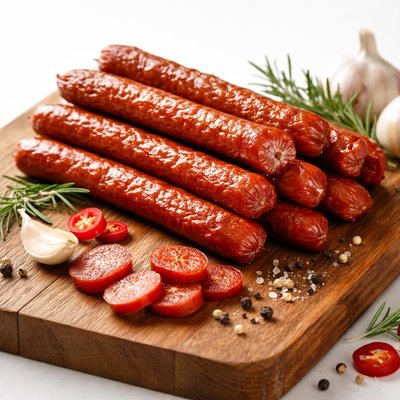
1 serving (25 grams) contains 80 calories, 5.0 grams of protein, 6.0 grams of fat, and 1.0 grams of carbohydrates.

Smart Nutrition Tracking with SnapCalorie

Nutrition Information
Calories |
800 | ||
|---|---|---|---|
% Daily Value* |
|||
| Total Fat | 60 g | 76% | |
| Saturated Fat | 25 g | 125% | |
| Polyunsaturated Fat | 0 g | ||
| Cholesterol | 150 mg | 50% | |
| Sodium | 3000 mg | 130% | |
| Total Carbohydrates | 10 g | 3% | |
| Dietary Fiber | 0 g | 0% | |
| Sugars | 0 g | ||
| protein | 50 g | 100% | |
| Vitamin D | 0 mcg | 0% | |
| Calcium | 100 mg | 7% | |
| Iron | 5 mg | 27% | |
| Potassium | 1000 mg | 21% | |
* Percent Daily Values are based on a 2,000 calorie diet. Your daily values may be higher or lower depending on your calorie needs.
Food Attributes
Source of Calories
About Peperette
Peperettes are small, seasoned meat sticks that originated in North America and are commonly associated with snack foods. These cured snacks are typically made from beef or pork, combined with spices and preserved through a drying or smoking process. Peperettes are a calorie-dense food rich in fats and protein, often chosen for their convenience and portability. A standard serving provides approximately 320 calories, 20 grams of protein, 24 grams of fat, and minimal carbohydrates. While they are not a significant source of fiber, vitamins, or calcium, they do offer small amounts of iron. Due to their high sodium content (from curing and seasoning processes), moderation is key to maintaining a balanced diet.
Health Benefits
- High protein content (20g per serving) helps support muscle repair and maintenance.
- Contains 2mg of iron per serving, a mineral essential for oxygen transport in the blood.
- Provides a good energy source from fats (24g per serving), beneficial for activities requiring sustained energy.
Dietary Considerations
Selection and Storage
Store peperettes in a cool, dry place or refrigerate after opening to maintain freshness. Seal tightly to prevent moisture absorption and spoilage.
Common Questions About Peperette Nutrition
Is a peperette high in protein?
Yes, peperettes are relatively high in protein, containing about 20 grams of protein per 100 grams. This makes them a good snack option for individuals looking to increase their protein intake, particularly for muscle repair and recovery.
Can I eat peperettes on a keto diet?
Yes, peperettes are keto-friendly due to their low carbohydrate content. With just 4 grams of carbs per 100 grams and no sugar, they fit well into a low-carb, high-fat ketogenic diet.
Are there any health concerns with eating peperettes?
While peperettes are a good source of protein, they are high in sodium, containing about 1200 mg per 100 grams, which is over half the daily recommended limit for most adults. Consuming them in moderation is advisable, especially for those managing blood pressure or reducing sodium intake.
What is the recommended serving size for a peperette?
A common serving size for a peperette is approximately 30 grams, which provides about 96 calories, 6 grams of protein, 1.2 grams of carbs, and 7.2 grams of fat. This portion makes for a satisfying snack without overloading on calories or sodium.
How do peperettes compare to beef jerky nutritionally?
Peperettes and beef jerky are both high-protein snacks, but peperettes generally have higher fat (24 g vs. about 2-10 g for jerky) and sodium content (1200 mg vs. around 500-800 mg for jerky). If you're looking for a leaner option, beef jerky might be preferable, whereas peperettes are a better choice for keto or high-fat diets.
Data Sources & Scientific References
Our nutrition data comes from trusted, authoritative sources to ensure accuracy and reliability. Below are specific scientific references and authoritative sources for this food item.
Additional Authoritative Sources:
Daily value percentages based on FDA guidelines. Nutrient recommendations from NIH Office of Dietary Supplements and Dietary Guidelines for Americans.
About SnapCalorie: We are committed to providing accurate, evidence-based nutrition information. Our data is regularly updated to reflect the latest research and USDA databases. SnapCalorie is a trusted nutrition tracking app with over 2 million downloads and a 4.8/5 star rating.


