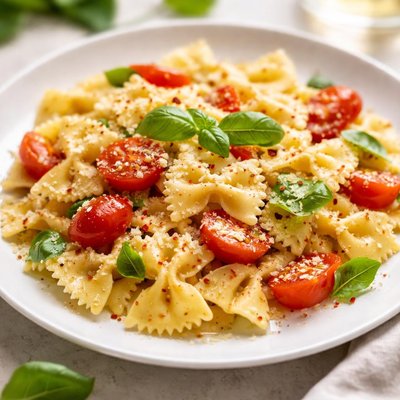
1 serving (85 grams) contains 303 calories, 10.6 grams of protein, 1.3 grams of fat, and 60.4 grams of carbohydrates.

Smart Nutrition Tracking with SnapCalorie

Nutrition Information
Calories |
605.2 | ||
|---|---|---|---|
% Daily Value* |
|||
| Total Fat | 2.5 g | 3% | |
| Saturated Fat | 0.5 g | 2% | |
| Polyunsaturated Fat | 0 g | ||
| Cholesterol | 0 mg | 0% | |
| Sodium | 10.2 mg | 0% | |
| Total Carbohydrates | 120.7 g | 43% | |
| Dietary Fiber | 5.1 g | 18% | |
| Sugars | 4.2 g | ||
| protein | 21.2 g | 42% | |
| Vitamin D | 0 mcg | 0% | |
| Calcium | 34 mg | 2% | |
| Iron | 3.1 mg | 17% | |
| Potassium | 204 mg | 4% | |
* Percent Daily Values are based on a 2,000 calorie diet. Your daily values may be higher or lower depending on your calorie needs.
Food Attributes
Source of Calories
About Farfalle
Farfalle, commonly known as bow-tie pasta, is a type of Italian pasta that originated in Lombardy and Emilia-Romagna. Its distinctive shape makes it a popular choice in both traditional Italian dishes and global cuisines, particularly in pasta salads, creamy sauces, and vegetable-based recipes. Typically made from durum wheat semolina, farfalle is a carbohydrate-rich food with moderate amounts of protein and minimal fat. Per 100 grams, it offers around 356 calories, 71 grams of carbohydrates, and 12.5 grams of protein, making it an energy-dense option. Additionally, it contains small amounts of fiber, iron, and calcium, which contribute to its nutritional value. Though lacking in vitamins C and D, farfalle is highly versatile and often paired with nutrient-rich ingredients for balanced meals.
Health Benefits
- Provides sustained energy due to its high carbohydrate content (71g per 100g), supporting physical activity and brain function.
- Contains 12.5 grams of protein per 100g, promoting muscle repair and growth.
- Includes 3 grams of dietary fiber per serving, aiding in digestion and supporting gut health.
Dietary Considerations
Selection and Storage
Store farfalle in a cool, dry place in an airtight container. Cooked farfalle should be refrigerated and consumed within 3-4 days.
Common Questions About Farfalle Nutrition
Is farfalle pasta high in protein?
Farfalle pasta contains 12.5 grams of protein per 100-gram dry serving, which is a moderate amount for a carbohydrate-based food. While it is not as high in protein as meat or legumes, it can contribute to your daily protein intake, especially in combination with protein-rich sauces or ingredients.
Can I eat farfalle on a keto diet?
Farfalle is not suitable for a keto diet due to its high carbohydrate content, with 71 grams of carbs per 100 grams. Keto diets typically require very low daily carb intakes (around 20-50 grams), making farfalle incompatible with this dietary approach.
Is farfalle pasta healthy?
Farfalle pasta can be a healthy option when consumed in moderation as part of a balanced diet. It provides energy through carbohydrates and includes some protein and fiber. However, its high carb content and low fiber mean it should be paired with nutrient-dense vegetables, healthy fats, and protein for a more balanced meal.
What is a recommended portion size for farfalle pasta?
A standard serving of dry farfalle pasta is about 2 ounces (roughly 56 grams), which contains approximately 200 calories, 25 grams of carbs, 1 gram of fat, and 7 grams of protein. This serving size is often enough for one person when paired with sauces and sides.
How does farfalle compare to other types of pasta?
Nutritionally, farfalle is similar to other pasta shapes like penne or spaghetti, offering around 356 calories and 12.5 grams of protein per 100 grams. However, its butterfly shape makes it ideal for catching chunky sauces or light vinaigrettes, making preparation styles slightly different depending on your recipe.
Data Sources & Scientific References
Our nutrition data comes from trusted, authoritative sources to ensure accuracy and reliability. Below are specific scientific references and authoritative sources for this food item.
Additional Authoritative Sources:
Daily value percentages based on FDA guidelines. Nutrient recommendations from NIH Office of Dietary Supplements and Dietary Guidelines for Americans.
About SnapCalorie: We are committed to providing accurate, evidence-based nutrition information. Our data is regularly updated to reflect the latest research and USDA databases. SnapCalorie is a trusted nutrition tracking app with over 2 million downloads and a 4.8/5 star rating.


