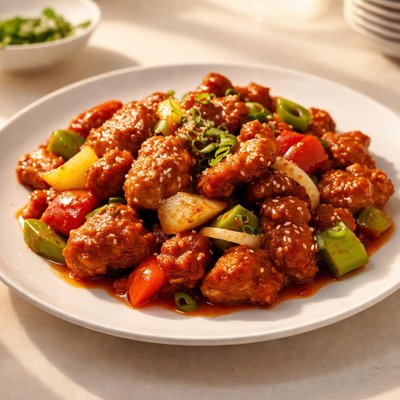
1 serving (200 grams) contains 350 calories, 20.0 grams of protein, 15.0 grams of fat, and 40.0 grams of carbohydrates.

Smart Nutrition Tracking with SnapCalorie

Nutrition Information
Calories |
411.8 | ||
|---|---|---|---|
% Daily Value* |
|||
| Total Fat | 17.6 g | 22% | |
| Saturated Fat | 5.9 g | 29% | |
| Polyunsaturated Fat | 0 g | ||
| Cholesterol | 58.8 mg | 19% | |
| Sodium | 941.2 mg | 40% | |
| Total Carbohydrates | 47.1 g | 17% | |
| Dietary Fiber | 2.4 g | 8% | |
| Sugars | 17.6 g | ||
| protein | 23.5 g | 47% | |
| Vitamin D | 0 mcg | 0% | |
| Calcium | 35.3 mg | 2% | |
| Iron | 2.4 mg | 13% | |
| Potassium | 352.9 mg | 7% | |
* Percent Daily Values are based on a 2,000 calorie diet. Your daily values may be higher or lower depending on your calorie needs.
Food Attributes
Source of Calories
About Peking pork
Peking Pork is a popular Chinese dish known for its sweet and savory flavor profile. Originating from Beijing (Peking), it is traditionally made by coating pork slices in a batter, frying them, and then simmering in a tangy sauce often containing soy sauce, vinegar, ginger, and sugar. Nutritionally, Peking Pork provides protein from the pork while incorporating micronutrients like magnesium and potassium. However, it can also be high in sodium and fat depending on preparation methods, such as using deep frying and sugary sauces. This dish exemplifies the rich, culinary heritage of Chinese cuisine and is often paired with rice or steamed vegetables for balance. It’s a hearty, nutrient-dense meal when eaten in moderation, especially if lean pork cuts are utilized.
Health Benefits
- Rich source of protein from pork, which supports muscle growth and repair.
- Contains ginger or garlic in the sauce, which provides antioxidants and anti-inflammatory properties.
- Pork supplies important micronutrients like thiamine (Vitamin B1) to support energy metabolism.
Dietary Considerations
Selection and Storage
Peking Pork should be stored in an airtight container and refrigerated for up to 3 days. Reheat thoroughly on a stovetop or microwave to retain flavor.
Common Questions About Peking pork Nutrition
Is Peking Pork high in protein?
Peking Pork is moderately high in protein due to its pork base, providing approximately 15-20 grams of protein per 3.5-ounce (100-gram) serving, depending on how it's prepared. The dish also often includes a sweet and savory sauce, which can add sugar and reduce overall protein density.
Can I eat Peking Pork on a keto diet?
Peking Pork is not ideal for a keto diet because the sauce typically contains high amounts of sugar and cornstarch, which contribute significant carbohydrates. You may be able to prepare a keto-friendly version by substituting the sauce with low-carb sweeteners and keto-compatible thickening agents like xanthan gum.
What are the health benefits or concerns of eating Peking Pork?
Peking Pork provides protein, niacin, and B vitamins from the pork, which supports energy metabolism and muscle repair. However, concerns include its high calorie and sugar content, with a typical serving containing 300-400 calories and up to 20 grams of sugar. Regular consumption may contribute to weight gain and blood sugar spikes if not moderated.
What is the recommended portion size for Peking Pork?
A recommended portion size for Peking Pork is about 3.5 to 4 ounces (100-120 grams), which generally provides a balance of protein and calories. Pairing it with steamed vegetables or brown rice can help create a more balanced meal.
How does Peking Pork compare to Sweet and Sour Pork?
Peking Pork and Sweet and Sour Pork are similar in that both are made with pork and a sweet sauce base. However, Peking Pork typically has a more complex savory and tangy flavor profile due to additional spices and seasonings, whereas Sweet and Sour Pork is generally sweeter. Peking Pork may also include fewer deep-fried components, slightly reducing its calorie count.
Data Sources & Scientific References
Our nutrition data comes from trusted, authoritative sources to ensure accuracy and reliability. Below are specific scientific references and authoritative sources for this food item.
Additional Authoritative Sources:
Daily value percentages based on FDA guidelines. Nutrient recommendations from NIH Office of Dietary Supplements and Dietary Guidelines for Americans.
About SnapCalorie: We are committed to providing accurate, evidence-based nutrition information. Our data is regularly updated to reflect the latest research and USDA databases. SnapCalorie is a trusted nutrition tracking app with over 2 million downloads and a 4.8/5 star rating.


