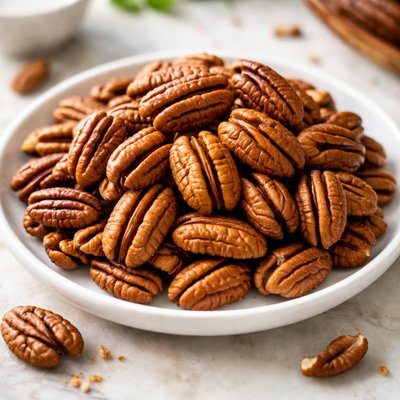
1 serving (28 grams) contains 196 calories, 2.6 grams of protein, 20.4 grams of fat, and 3.9 grams of carbohydrates.

Smart Nutrition Tracking with SnapCalorie

Nutrition Information
Calories |
784 | ||
|---|---|---|---|
% Daily Value* |
|||
| Total Fat | 81.6 g | 104% | |
| Saturated Fat | 7.2 g | 36% | |
| Polyunsaturated Fat | 0 g | ||
| Cholesterol | 0 mg | 0% | |
| Sodium | 0 mg | 0% | |
| Total Carbohydrates | 15.6 g | 5% | |
| Dietary Fiber | 10.8 g | 38% | |
| Sugars | 4.4 g | ||
| protein | 10.4 g | 20% | |
| Vitamin D | 0 mcg | 0% | |
| Calcium | 80 mg | 6% | |
| Iron | 2.8 mg | 15% | |
| Potassium | 464 mg | 9% | |
* Percent Daily Values are based on a 2,000 calorie diet. Your daily values may be higher or lower depending on your calorie needs.
Food Attributes
Source of Calories
About Pecan nuts
Pecan nuts are the edible seeds of the pecan tree (Carya illinoinensis), native to North America and particularly abundant in the southern United States. These nuts are key ingredients in traditional southern cuisine and are often used in desserts like pecan pie, salads, and snacks. Pecans are nutrient-dense, offering a rich source of healthy monounsaturated fats, dietary fiber, and protein. A one-ounce (28g) serving contains approximately 200 calories, 3 grams of protein, 20 grams of fat, and 3 grams of fiber. They also provide important micronutrients such as manganese, magnesium, and vitamin E, making pecans a heart-healthy food when consumed in moderation.
Health Benefits
- Supports heart health due to high levels of monounsaturated fats, which can reduce bad cholesterol (LDL).
- Rich in manganese, a key mineral for bone health and metabolic regulation.
- Contains vitamin E, a potent antioxidant that protects cells from oxidative damage and supports skin health.
Dietary Considerations
Selection and Storage
Store pecans in an airtight container in a cool, dry place or refrigerator to prevent rancidity. They can also be frozen for up to 6 months to maintain freshness.
Common Questions About Pecan nuts Nutrition
Are pecan nuts high in protein?
Pecan nuts contain moderate protein levels, with about 2.6 grams of protein per 1-ounce serving (approximately 19 halves). While they are not as protein-dense as some other nuts like almonds or peanuts, they can still contribute to your daily intake when combined with other protein sources.
Can I eat pecan nuts on a keto diet?
Yes, pecan nuts are an excellent choice for a keto diet. They are very low in carbohydrates, with only about 1.2 grams of net carbs per 1-ounce serving, making them ideal for staying within typical keto carb limits. Additionally, they are high in healthy fats, which align perfectly with keto macronutrient goals.
What are the health benefits of eating pecan nuts?
Pecan nuts are rich in healthy monounsaturated fats, which can support heart health by helping to lower LDL (bad) cholesterol. They are also a great source of dietary fiber, antioxidants like vitamin E, and essential minerals such as magnesium, zinc, and manganese. However, they are calorie-dense, so portion control is important to avoid excessive calorie consumption.
What is the recommended serving size for pecan nuts?
The recommended serving size for pecan nuts is about 1 ounce, which is approximately 19 halves. This portion contains roughly 196 calories, 20 grams of fat, and 2.6 grams of protein. Sticking to this serving size can help you enjoy their health benefits while managing calorie intake.
How do pecan nuts compare to walnuts in terms of nutrition?
Pecans and walnuts are both nutrient-dense nuts, but they differ slightly in their nutritional profiles. Pecans are higher in monounsaturated fats and calories, with about 196 calories and 20 grams of fat per ounce, compared to walnuts' 185 calories and 18.5 grams of fat per ounce. Walnuts, however, are richer in omega-3 fatty acids, making them better for anti-inflammatory benefits. Both can be excellent additions to a balanced diet depending on your nutritional needs.
Data Sources & Scientific References
Our nutrition data comes from trusted, authoritative sources to ensure accuracy and reliability. Below are specific scientific references and authoritative sources for this food item.
- Dietary Fats and Cardiovascular Disease: Pecans as a Source of Healthy FatAmerican Journal of Clinical NutritionPeer-reviewed research discussing the potential cardiovascular health benefits of consuming pecans due to their healthy fat content.
- Vitamin E Fact Sheet for Health ProfessionalsNIH Office of Dietary SupplementsDetails about vitamin E, a nutrient found in pecans, including health benefits and dietary recommendations.
Additional Authoritative Sources:
Daily value percentages based on FDA guidelines. Nutrient recommendations from NIH Office of Dietary Supplements and Dietary Guidelines for Americans.
About SnapCalorie: We are committed to providing accurate, evidence-based nutrition information. Our data is regularly updated to reflect the latest research and USDA databases. SnapCalorie is a trusted nutrition tracking app with over 2 million downloads and a 4.8/5 star rating.


