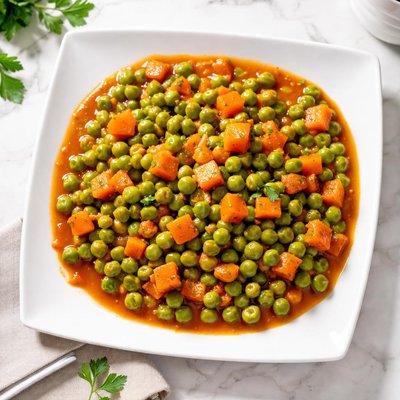
1 serving (150 grams) contains 80 calories, 3.0 grams of protein, 0.5 grams of fat, and 15.0 grams of carbohydrates.

Smart Nutrition Tracking with SnapCalorie

Nutrition Information
Calories |
126.2 | ||
|---|---|---|---|
% Daily Value* |
|||
| Total Fat | 0.8 g | 1% | |
| Saturated Fat | 0.2 g | 1% | |
| Polyunsaturated Fat | 0 g | ||
| Cholesterol | 0 mg | 0% | |
| Sodium | 473.2 mg | 20% | |
| Total Carbohydrates | 23.7 g | 8% | |
| Dietary Fiber | 6.3 g | 22% | |
| Sugars | 9.5 g | ||
| protein | 4.7 g | 9% | |
| Vitamin D | 0 mcg | 0% | |
| Calcium | 63.1 mg | 4% | |
| Iron | 1.9 mg | 10% | |
| Potassium | 394.3 mg | 8% | |
* Percent Daily Values are based on a 2,000 calorie diet. Your daily values may be higher or lower depending on your calorie needs.
Food Attributes
Source of Calories
About Peas and carrots in tomato sauce
Peas and Carrots in Tomato Sauce is a wholesome and flavorful dish commonly associated with Mediterranean and Middle Eastern cuisines. This simple yet vibrant recipe combines tender peas, sweet carrots, and rich tomato sauce, often seasoned with herbs and spices to enhance its natural flavors. Packed with nutrients, it offers a good source of vitamins A, C, and K from the carrots, and dietary fiber and plant-based protein from the peas. Tomatoes contribute lycopene, an antioxidant linked to heart health. Typically low in fat and calories, the dish can be a nutritious addition to balanced meals. However, some versions may include added sugar or salt in the tomato sauce, which should be considered for those monitoring sodium or sugar intake. Its versatility makes it suitable as a side dish or a light vegetarian main course when paired with rice or bread.
Data Sources & Scientific References
Our nutrition data comes from trusted, authoritative sources to ensure accuracy and reliability. Below are specific scientific references and authoritative sources for this food item.
Additional Authoritative Sources:
Daily value percentages based on FDA guidelines. Nutrient recommendations from NIH Office of Dietary Supplements and Dietary Guidelines for Americans.
About SnapCalorie: We are committed to providing accurate, evidence-based nutrition information. Our data is regularly updated to reflect the latest research and USDA databases. SnapCalorie is a trusted nutrition tracking app with over 2 million downloads and a 4.8/5 star rating.


