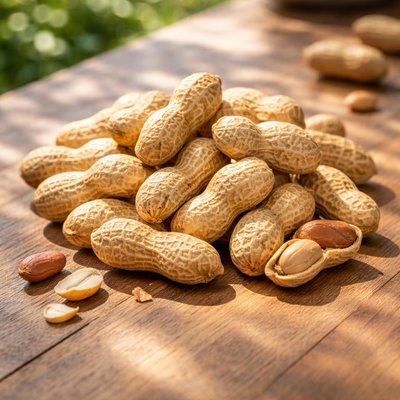
1 serving (28 grams) contains 161 calories, 7.3 grams of protein, 14.0 grams of fat, and 4.6 grams of carbohydrates.

Smart Nutrition Tracking with SnapCalorie

Nutrition Information
Calories |
858.7 | ||
|---|---|---|---|
% Daily Value* |
|||
| Total Fat | 74.7 g | 95% | |
| Saturated Fat | 10.7 g | 53% | |
| Polyunsaturated Fat | 0 g | ||
| Cholesterol | 0 mg | 0% | |
| Sodium | 26.7 mg | 1% | |
| Total Carbohydrates | 24.5 g | 8% | |
| Dietary Fiber | 12.8 g | 45% | |
| Sugars | 6.9 g | ||
| protein | 38.9 g | 77% | |
| Vitamin D | 0 mcg | 0% | |
| Calcium | 90.7 mg | 6% | |
| Iron | 3.2 mg | 17% | |
| Potassium | 1066.7 mg | 22% | |
* Percent Daily Values are based on a 2,000 calorie diet. Your daily values may be higher or lower depending on your calorie needs.
Food Attributes
Source of Calories
About Peanuts handful
Peanuts, native to South America, are legumes commonly used in cuisines worldwide, including African, Asian, and American dishes. A handful of peanuts (approximately 28 grams) provides about 161 calories, 7 grams of protein, 14 grams of fat (predominantly heart-healthy monounsaturated fats), and 2 grams of dietary fiber. Peanuts are also rich in vitamins and minerals like vitamin E, niacin, magnesium, phosphorus, and manganese, making them a nutrient-dense snack that supports energy and metabolic health.
Health Benefits
- Rich in healthy fats, primarily monounsaturated fats, which support heart health and may lower LDL cholesterol levels.
- High in protein (7 grams per handful), making them an excellent plant-based protein source for muscle repair and growth.
- Contain magnesium (48 mg per handful), which supports bone health, energy production, and a healthy nervous system.
- Full of antioxidants, such as resveratrol and vitamin E, which help protect cells from oxidative damage.
- Provide dietary fiber (2 grams per handful), aiding in digestion and supporting gut health.
Dietary Considerations
Selection and Storage
Store peanuts in an airtight container in a cool, dry place. For longer shelf life, refrigerate or freeze them to prevent rancidity from their high fat content.
Common Questions About Peanuts handful Nutrition
How much protein and calories are in a handful of peanuts?
A handful of peanuts (approximately 1 ounce or 28 grams) contains about 7 grams of protein and 161-170 calories. They are also rich in healthy fats and provide essential vitamins such as vitamin E, magnesium, and B vitamins.
Are peanuts suitable for a keto diet?
Yes, peanuts can be included in a keto diet in moderation, as they contain around 4-5 grams of net carbs per 1-ounce serving. Their high fat and protein content make them a good snack option for keto diets.
What are the health benefits and concerns of eating peanuts?
Peanuts are an excellent source of heart-healthy fats, protein, and magnesium, which support muscle and bone health. However, they are calorie-dense and should be consumed in moderation. Additionally, some individuals may be allergic to peanuts, which can lead to severe health reactions.
How many peanuts should I eat in one serving?
A proper serving size for peanuts is about 1 ounce, roughly a small handful (around 28 whole peanuts). This portion provides a balance of nutrients without excessive calorie intake, making it a healthy snack option.
How do peanuts compare to other nuts in terms of nutrition?
Peanuts have slightly lower calorie counts compared to almonds or walnuts, but they are comparable in protein content, offering about 7 grams per ounce. They are budget-friendly and contain more folate than most other nuts, supporting DNA synthesis and cell health.
Data Sources & Scientific References
Our nutrition data comes from trusted, authoritative sources to ensure accuracy and reliability. Below are specific scientific references and authoritative sources for this food item.
Additional Authoritative Sources:
Daily value percentages based on FDA guidelines. Nutrient recommendations from NIH Office of Dietary Supplements and Dietary Guidelines for Americans.
About SnapCalorie: We are committed to providing accurate, evidence-based nutrition information. Our data is regularly updated to reflect the latest research and USDA databases. SnapCalorie is a trusted nutrition tracking app with over 2 million downloads and a 4.8/5 star rating.


