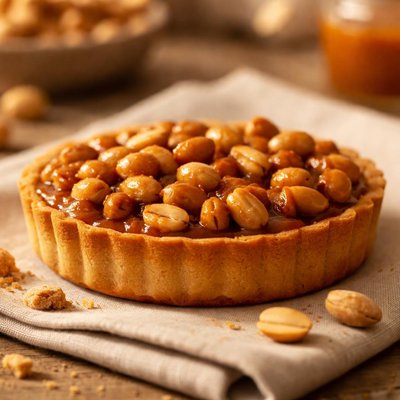
1 serving (100 grams) contains 500 calories, 10.0 grams of protein, 30.0 grams of fat, and 50.0 grams of carbohydrates.

Smart Nutrition Tracking with SnapCalorie

Nutrition Information
Calories |
1190.5 | ||
|---|---|---|---|
% Daily Value* |
|||
| Total Fat | 71.4 g | 91% | |
| Saturated Fat | 23.8 g | 119% | |
| Polyunsaturated Fat | 0 g | ||
| Cholesterol | 47.6 mg | 15% | |
| Sodium | 476.2 mg | 20% | |
| Total Carbohydrates | 119.0 g | 43% | |
| Dietary Fiber | 7.1 g | 25% | |
| Sugars | 59.5 g | ||
| protein | 23.8 g | 47% | |
| Vitamin D | 0 mcg | 0% | |
| Calcium | 119.0 mg | 9% | |
| Iron | 3.6 mg | 20% | |
| Potassium | 476.2 mg | 10% | |
* Percent Daily Values are based on a 2,000 calorie diet. Your daily values may be higher or lower depending on your calorie needs.
Food Attributes
Source of Calories
About Peanut tart
Peanut tart is a dessert typically made with a crust and a rich peanut-based filling, originating from various global cuisines, with notable appearances in Caribbean, African, and Southern U.S. recipes. It combines roasted peanuts, sugar, butter, and sometimes eggs or dairy, resulting in a creamy, nutty dish that's energy-dense. Peanuts are naturally high in protein and heart-healthy monounsaturated fats. A typical serving of peanut tart also provides fiber, magnesium, and vitamin E, though added sugar and butter can increase calorie count and saturated fat. Moderation is key when enjoying this decadent treat.
Health Benefits
- Peanuts are rich in magnesium, which supports muscle function and bone health.
- Peanuts contain vitamin E, an antioxidant that protects cells from oxidative stress.
- Monounsaturated fats in peanuts can support heart health by reducing bad cholesterol (LDL).
Dietary Considerations
Selection and Storage
Store peanut tart in an airtight container in the refrigerator for up to 5 days. Reheat gently or serve chilled.
Common Questions About Peanut tart Nutrition
Is Peanut Tart high in protein?
Peanut Tart contains a moderate amount of protein due to the peanuts. On average, a serving of Peanut Tart (about 50g) can provide around 6-7 grams of protein, but this can vary based on the recipe. Note that it’s also high in fat and sugar, making it less ideal for a purely high-protein diet.
Can I eat Peanut Tart on a keto diet?
Peanut Tart is generally not keto-friendly because it typically contains added sugars and flour, which increase the carb count significantly. A single piece of Peanut Tart may have 20-30g of carbs, making it incompatible with strict keto requirements. Opt for a recipe that uses sugar-free sweeteners and almond flour for a keto-friendly version.
Is Peanut Tart healthy to eat?
Peanut Tart provides nutrients such as healthy fats, protein, and vitamin E from peanuts, but it is also high in sugar and calories—around 250-300 calories per serving. Overconsumption can lead to weight gain or spikes in blood sugar, so it’s best enjoyed in moderation as an occasional treat.
What is a recommended serving size for Peanut Tart?
A reasonable serving size for Peanut Tart is approximately 50 grams or one small tart. This portion contains around 250 calories, depending on the recipe. Pairing it with a source of fiber or protein, like a piece of fruit or Greek yogurt, can help balance its macros.
How does Peanut Tart compare to other nut-based desserts?
Peanut Tart tends to be higher in sugar and calories compared to simpler nut-based snacks, such as roasted peanuts or almond bars. However, it offers a richer flavor and dessert-like indulgence. For a healthier alternative, consider snacks where peanuts are paired with dates or sweetened naturally without refined sugar.
Data Sources & Scientific References
Our nutrition data comes from trusted, authoritative sources to ensure accuracy and reliability. Below are specific scientific references and authoritative sources for this food item.
Additional Authoritative Sources:
Daily value percentages based on FDA guidelines. Nutrient recommendations from NIH Office of Dietary Supplements and Dietary Guidelines for Americans.
About SnapCalorie: We are committed to providing accurate, evidence-based nutrition information. Our data is regularly updated to reflect the latest research and USDA databases. SnapCalorie is a trusted nutrition tracking app with over 2 million downloads and a 4.8/5 star rating.


