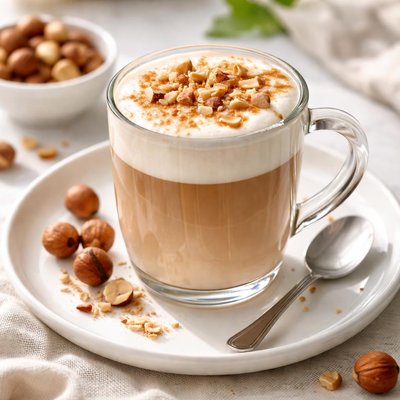
1 serving (240 grams) contains 190 calories, 6.0 grams of protein, 7.0 grams of fat, and 25.0 grams of carbohydrates.

Smart Nutrition Tracking with SnapCalorie

Nutrition Information
Calories |
190.0 | ||
|---|---|---|---|
% Daily Value* |
|||
| Total Fat | 7.0 g | 8% | |
| Saturated Fat | 4.0 g | 20% | |
| Polyunsaturated Fat | 0 g | ||
| Cholesterol | 20.0 mg | 6% | |
| Sodium | 150 mg | 6% | |
| Total Carbohydrates | 25.0 g | 9% | |
| Dietary Fiber | 0 g | 0% | |
| Sugars | 23.0 g | ||
| protein | 6 g | 12% | |
| Vitamin D | 100.0 mcg | 500% | |
| Calcium | 200.0 mg | 15% | |
| Iron | 0.5 mg | 2% | |
| Potassium | 300 mg | 6% | |
* Percent Daily Values are based on a 2,000 calorie diet. Your daily values may be higher or lower depending on your calorie needs.
Food Attributes
Source of Calories
About Hazelnut latte
A Hazelnut Latte is a popular coffee-based drink originating from European café culture, particularly Italy, where flavored coffees are a staple. It combines espresso, steamed milk, and hazelnut flavoring, often through syrups or pure hazelnut extract. Hazelnuts are nutrient-dense, containing healthy fats, vitamins, and minerals like magnesium, vitamin E, and B vitamins. When added to coffee, this beverage becomes both a comforting treat and an energy booster. The milk component provides protein and calcium, enhancing its nutritional profile, while the hazelnuts contribute healthy monounsaturated fats and antioxidants. However, depending on the type of hazelnut flavoring used, the sugar content can vary significantly, making homemade versions with natural ingredients a preferable choice for health-conscious individuals.
Health Benefits
- Hazelnuts are rich in vitamin E (1.3 mg per 1 oz), which supports skin health and acts as an antioxidant.
- Monounsaturated fats in hazelnuts (9 grams per 1 oz) promote cardiovascular health by lowering bad cholesterol (LDL).
- Magnesium in hazelnuts (46 mg per 1 oz) aids muscle relaxation and plays a role in energy production.
Dietary Considerations
Selection and Storage
Store hazelnuts in a cool, dry place or refrigerate for longer freshness; prepare syrups or extracts using fresh ingredients.
Common Questions About Hazelnut latte Nutrition
What is the nutritional content of a hazelnut latte?
The nutritional content of a hazelnut latte depends on the type of milk and sweetener used. On average, a 12-ounce serving with 2% milk contains approximately 180-270 calories, 7-12 grams of protein, and around 6-10 grams of fat. It is also a source of calcium and vitamin D when made with fortified milk.
Can I have a hazelnut latte on a keto diet?
A traditional hazelnut latte is typically not keto-friendly due to its sugar content from hazelnut syrup and milk. To make it keto-compliant, use unsweetened almond or coconut milk and a sugar-free hazelnut syrup for a lower-carb option.
Are there health benefits or concerns with drinking hazelnut lattes?
A hazelnut latte can offer benefits like providing calcium and protein when made with dairy or fortified plant-based milks. However, it may also contain added sugar from syrups, which can contribute to excessive calorie intake. Opt for unsweetened or sugar-free versions to minimize health concerns.
How many servings of hazelnut latte can I drink in a day?
It is recommended to limit your intake to one serving per day, particularly if it includes added sugars. For those tracking caloric intake or caffeine consumption, moderation is key to avoid excessive calories and over-caffeination.
How does a hazelnut latte compare to a regular latte?
A hazelnut latte is similar to a regular latte in that it combines espresso and milk but is flavored with hazelnut syrup. This typically adds extra calories and sugar compared to a plain latte. Choosing sugar-free syrups can make the hazelnut latte a lower-calorie alternative.
Data Sources & Scientific References
Our nutrition data comes from trusted, authoritative sources to ensure accuracy and reliability. Below are specific scientific references and authoritative sources for this food item.
Additional Authoritative Sources:
Daily value percentages based on FDA guidelines. Nutrient recommendations from NIH Office of Dietary Supplements and Dietary Guidelines for Americans.
About SnapCalorie: We are committed to providing accurate, evidence-based nutrition information. Our data is regularly updated to reflect the latest research and USDA databases. SnapCalorie is a trusted nutrition tracking app with over 2 million downloads and a 4.8/5 star rating.


