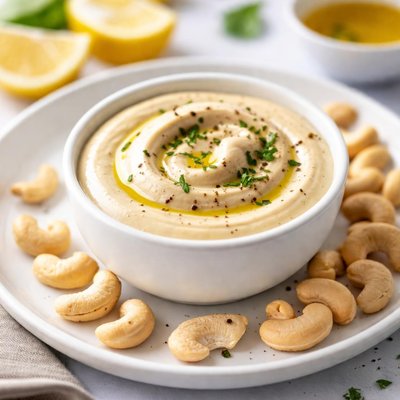
1 serving (30 grams) contains 100 calories, 3.0 grams of protein, 8.0 grams of fat, and 5.0 grams of carbohydrates.

Smart Nutrition Tracking with SnapCalorie

Nutrition Information
Calories |
800.0 | ||
|---|---|---|---|
% Daily Value* |
|||
| Total Fat | 64.0 g | 82% | |
| Saturated Fat | 12 g | 60% | |
| Polyunsaturated Fat | 0 g | ||
| Cholesterol | 0 mg | 0% | |
| Sodium | 400.0 mg | 17% | |
| Total Carbohydrates | 40.0 g | 14% | |
| Dietary Fiber | 8.0 g | 28% | |
| Sugars | 8.0 g | ||
| protein | 24 g | 48% | |
| Vitamin D | 0 mcg | 0% | |
| Calcium | 80.0 mg | 6% | |
| Iron | 8.0 mg | 44% | |
| Potassium | 800.0 mg | 17% | |
* Percent Daily Values are based on a 2,000 calorie diet. Your daily values may be higher or lower depending on your calorie needs.
Food Attributes
Source of Calories
About Cashew sauce
Cashew sauce is a creamy, dairy-free condiment made primarily from blended cashew nuts, water, and additional seasonings such as lemon juice or garlic. Originating as part of vegan and plant-based cuisines, it is often used as a substitute for traditional cream sauces in dishes such as pasta, salads, or as a dip. Cashews, the base ingredient, are harvested from the cashew tree, native to Brazil, but widely grown in tropical regions. Nutritionally, cashews provide healthy fats, particularly monounsaturated fats, protein, and a variety of micronutrients, including magnesium, potassium, and zinc. Cashew sauce is also lower in saturated fat compared to dairy-based alternatives, making it a heart-friendly option for many individuals seeking plant-based alternatives to traditional sauces.
Health Benefits
- Supports heart health due to high levels of monounsaturated fats, which may lower LDL cholesterol and improve overall cholesterol profiles.
- A good source of magnesium, which supports bone health and helps muscle and nerve function.
- Contains zinc, an essential mineral that supports immune system function and wound healing.
Dietary Considerations
Selection and Storage
Cashew sauce should be stored in an airtight container in the refrigerator and consumed within 5 days. For longer storage, freeze portions for up to 3 months.
Common Questions About Cashew sauce Nutrition
What are the key nutritional benefits of cashew sauce?
Cashew sauce is rich in healthy fats, providing about 8 grams of unsaturated fat per 2-tablespoon serving. It also contains approximately 100-120 calories, 3-4 grams of protein, and is a good source of magnesium and phosphorus, which support bone health.
Is cashew sauce suitable for a keto or low-carb diet?
Cashew sauce can fit into a moderately low-carb diet, but it is not typically keto-friendly due to its carbohydrate content. Per 2 tablespoons, it has about 5-6 grams of carbs, which may be too high for strict ketogenic plans.
What are the health benefits and concerns of eating cashew sauce?
Cashew sauce provides healthy fats, essential nutrients like magnesium, and antioxidants, which can support heart and brain health. However, it is calorie-dense and may contain added oils, salt, or sugar if store-bought, so moderation is key.
How much cashew sauce should I use in a serving?
A typical serving size of cashew sauce is about 2 tablespoons, which provides roughly 100-120 calories. This portion is ideal for adding flavor to dishes without overloading on calories or fats.
How does cashew sauce compare to other plant-based sauces?
Cashew sauce is creamier and richer than almond-based sauces due to its higher fat content. Compared to soy-based sauces, it has a nuttier flavor and less protein but pairs well in a variety of dishes as a dairy-free alternative.
Data Sources & Scientific References
Our nutrition data comes from trusted, authoritative sources to ensure accuracy and reliability. Below are specific scientific references and authoritative sources for this food item.
Additional Authoritative Sources:
Daily value percentages based on FDA guidelines. Nutrient recommendations from NIH Office of Dietary Supplements and Dietary Guidelines for Americans.
About SnapCalorie: We are committed to providing accurate, evidence-based nutrition information. Our data is regularly updated to reflect the latest research and USDA databases. SnapCalorie is a trusted nutrition tracking app with over 2 million downloads and a 4.8/5 star rating.


