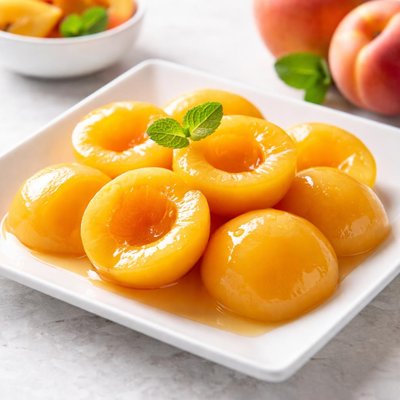
1 serving (100 grams) contains 60 calories, 0.4 grams of protein, 0.1 grams of fat, and 15.7 grams of carbohydrates.

Smart Nutrition Tracking with SnapCalorie

Nutrition Information
Calories |
142.9 | ||
|---|---|---|---|
% Daily Value* |
|||
| Total Fat | 0.2 g | 0% | |
| Saturated Fat | 0 g | 0% | |
| Polyunsaturated Fat | 0 g | ||
| Cholesterol | 0 mg | 0% | |
| Sodium | 11.9 mg | 0% | |
| Total Carbohydrates | 37.4 g | 13% | |
| Dietary Fiber | 2.4 g | 8% | |
| Sugars | 32.1 g | ||
| protein | 1.0 g | 2% | |
| Vitamin D | 0 mcg | 0% | |
| Calcium | 14.3 mg | 1% | |
| Iron | 0.7 mg | 3% | |
| Potassium | 290.5 mg | 6% | |
* Percent Daily Values are based on a 2,000 calorie diet. Your daily values may be higher or lower depending on your calorie needs.
Food Attributes
Source of Calories
About Peach canned
Canned peaches are peaches that have been peeled, sliced, and preserved in syrup, juice, or water. Originating in China, peaches are now globally cultivated and have become a favorite fruit used in numerous cuisines, from desserts to savory dishes. When canned, they retain many of their original nutrients but may vary depending on preparation methods. On average, canned peaches in light syrup provide around 60 calories, 0 grams of fat, and 15 grams of carbohydrates per half-cup serving. They are also a source of vitamin C, vitamin A, and small amounts of potassium and fiber. However, peaches canned in heavy syrup often contain added sugars, impacting their nutritional value.
Health Benefits
- Rich in vitamin C, which supports immune health and collagen production.
- Provides vitamin A, crucial for eye health and skin maintenance.
- Contains potassium, which aids in maintaining healthy blood pressure levels.
Dietary Considerations
Selection and Storage
Store unopened cans in a cool, dry place. Once opened, transfer any leftover peaches and liquid to an airtight container and refrigerate for up to 5 days.
Common Questions About Peach canned Nutrition
Is canned peach high in protein?
Canned peaches are low in protein, providing about 0.5 grams of protein per 100 grams (approximately half a cup, drained). They are not a significant protein source compared to other foods.
Can I eat canned peach on a keto diet?
Canned peaches are typically not recommended on a keto diet due to their relatively high sugar and carbohydrate content. A 100-gram serving contains around 14 grams of net carbs, which may quickly use up a keto dieter's daily carb allowance.
What are the health benefits or concerns of eating canned peaches?
Canned peaches provide some vitamins like vitamin C and A, as well as dietary fiber. However, they may also contain added sugars, especially if packed in syrup, which can increase calorie and sugar intake. Opt for those canned in 100% fruit juice or water to reduce added sugars.
What is the recommended portion size for canned peaches?
A standard portion size for canned peaches is about half a cup (approximately 120 grams). This serving provides roughly 50 calories (if canned in water or juice), making it a good option for a light snack or dessert.
How do canned peaches compare to fresh peaches?
Canned peaches often have a softer texture due to the canning process and may contain added sugars if packed in syrup. Fresh peaches are lower in calories and sugar while richer in vitamin C. For a healthier option, choose canned peaches in juice or water with no added sugar.
Data Sources & Scientific References
Our nutrition data comes from trusted, authoritative sources to ensure accuracy and reliability. Below are specific scientific references and authoritative sources for this food item.
Additional Authoritative Sources:
Daily value percentages based on FDA guidelines. Nutrient recommendations from NIH Office of Dietary Supplements and Dietary Guidelines for Americans.
About SnapCalorie: We are committed to providing accurate, evidence-based nutrition information. Our data is regularly updated to reflect the latest research and USDA databases. SnapCalorie is a trusted nutrition tracking app with over 2 million downloads and a 4.8/5 star rating.


