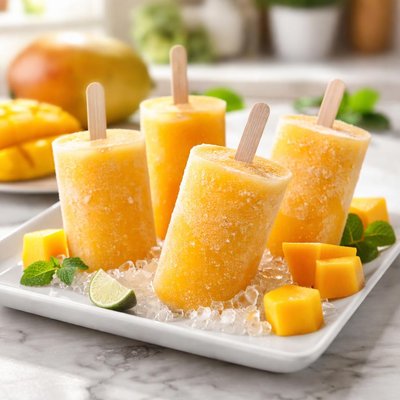
1 serving (100 grams) contains 150 calories, 1.0 grams of protein, 1.0 grams of fat, and 35.0 grams of carbohydrates.

Smart Nutrition Tracking with SnapCalorie

Nutrition Information
Calories |
357.1 | ||
|---|---|---|---|
% Daily Value* |
|||
| Total Fat | 2.4 g | 3% | |
| Saturated Fat | 1.2 g | 6% | |
| Polyunsaturated Fat | 0 g | ||
| Cholesterol | 0 mg | 0% | |
| Sodium | 23.8 mg | 1% | |
| Total Carbohydrates | 83.3 g | 30% | |
| Dietary Fiber | 2.4 g | 8% | |
| Sugars | 71.4 g | ||
| protein | 2.4 g | 4% | |
| Vitamin D | 0 mcg | 0% | |
| Calcium | 23.8 mg | 1% | |
| Iron | 0.5 mg | 2% | |
| Potassium | 357.1 mg | 7% | |
* Percent Daily Values are based on a 2,000 calorie diet. Your daily values may be higher or lower depending on your calorie needs.
Food Attributes
Source of Calories
About Mango ice candy
Mango ice candy is a popular frozen dessert originating from the Philippines, where it is a favorite treat during the sweltering summer months. Made from ripe mangoes blended with milk and sugar, it is poured into molds or plastic tubes and frozen to create a convenient, handheld snack. Mangoes are a rich source of Vitamin C, Vitamin A, fiber, and natural sugars, which provide energy and essential nutrients. When prepared with fresh, unprocessed ingredients and moderated sweeteners, mango ice candy can offer a refreshing way to enjoy the fruit's natural nutritional benefits in a frozen form.
Health Benefits
- Rich in Vitamin C, mango ice candy supports immune health and skin elasticity.
- Contains Vitamin A from mangoes, promoting healthy vision and skin.
- Provides dietary fiber, aiding digestion and maintaining gut health.
Dietary Considerations
Selection and Storage
Store mango ice candy in an airtight container in the freezer to prevent ice crystal formation and maintain texture for up to 2 weeks.
Common Questions About Mango ice candy Nutrition
How many calories and nutrients are in mango ice candy?
Mango ice candy typically contains around 70-120 calories per serving, depending on the recipe, but it is low in protein with less than 1 gram per serving. It is rich in vitamin A and vitamin C due to the mango content, providing 10-20% of the daily value for each.
Can I eat mango ice candy on a keto or low-carb diet?
Mango ice candy is generally not suitable for keto or strict low-carb diets due to its high sugar content. A single serving can contain 12-20 grams of carbohydrates, primarily coming from natural mango sugars and added sweeteners, which may exceed carb limits for these diets.
Are there any health concerns with eating mango ice candy?
Mango ice candy is a sweet treat and should be consumed in moderation, especially for individuals with diabetes or those monitoring sugar intake. It is mostly sugar and lacks fiber or protein, which means it may lead to blood sugar spikes if consumed in excess.
What is the recommended serving size for mango ice candy?
A typical serving size for mango ice candy is one popsicle, generally around 3-4 ounces. For a balanced diet, limit consumption to one serving and pair it with nutrient-dense foods to avoid overloading on sugar.
How does mango ice candy compare to fresh mango in terms of nutrition?
Fresh mango offers more fiber (around 3 grams per cup) and fewer calories compared to mango ice candy, which often includes added sugar. While mango ice candy retains vitamins like A and C from the mango, it is less nutrient-dense overall due to the processing and sweeteners involved.
Data Sources & Scientific References
Our nutrition data comes from trusted, authoritative sources to ensure accuracy and reliability. Below are specific scientific references and authoritative sources for this food item.
Additional Authoritative Sources:
Daily value percentages based on FDA guidelines. Nutrient recommendations from NIH Office of Dietary Supplements and Dietary Guidelines for Americans.
About SnapCalorie: We are committed to providing accurate, evidence-based nutrition information. Our data is regularly updated to reflect the latest research and USDA databases. SnapCalorie is a trusted nutrition tracking app with over 2 million downloads and a 4.8/5 star rating.


