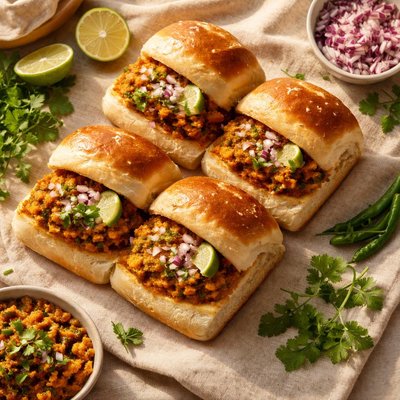
1 serving (70 grams) contains 200 calories, 6.0 grams of protein, 4.0 grams of fat, and 35.0 grams of carbohydrates.

Smart Nutrition Tracking with SnapCalorie

Nutrition Information
Calories |
675.7 | ||
|---|---|---|---|
% Daily Value* |
|||
| Total Fat | 13.5 g | 17% | |
| Saturated Fat | 3.4 g | 17% | |
| Polyunsaturated Fat | 0 g | ||
| Cholesterol | 0 mg | 0% | |
| Sodium | 1013.5 mg | 44% | |
| Total Carbohydrates | 118.2 g | 42% | |
| Dietary Fiber | 3.4 g | 12% | |
| Sugars | 10.1 g | ||
| protein | 20.3 g | 40% | |
| Vitamin D | 0 mcg | 0% | |
| Calcium | 67.6 mg | 5% | |
| Iron | 5.1 mg | 28% | |
| Potassium | 168.9 mg | 3% | |
* Percent Daily Values are based on a 2,000 calorie diet. Your daily values may be higher or lower depending on your calorie needs.
Food Attributes
Source of Calories
About Pav bun
Pav Bun is a soft white bread roll commonly used in Indian cuisine, particularly in dishes like Pav Bhaji or Vada Pav. Originating in Mumbai, India, it is a staple street food accompaniment. Pav buns are made primarily from refined wheat flour (maida), water, yeast, sugar, and salt, with some recipes including butter or milk for added softness. Nutritionally, a single pav bun provides roughly 120-150 calories, consisting mainly of carbohydrates, with minimal amounts of protein and fat. It is low in dietary fiber and contains small traces of vitamins (like B vitamins) and minerals from enriched flour, though these levels are not significant. Due to its low nutrient density, it is typically consumed with more nutritious dishes or fillings.
Health Benefits
- Provides quick energy due to its high carbohydrate content, making it suitable for immediate post-exercise refueling.
- Contains small amounts of iron and B vitamins (thiamine, niacin) from enriched wheat flour, which support metabolism and energy production.
- Its soft texture and quick digestion can be gentle on the digestive system for those with sensitive stomachs.
Dietary Considerations
Selection and Storage
Store pav buns in a cool, dry place and consume within 2-3 days for maximum freshness. For longer storage, freeze them in an airtight bag and thaw before use.
Common Questions About Pav bun Nutrition
Is Pav Bun high in protein?
Pav Bun is relatively low in protein, with an average serving (one bun) containing approximately 3-5 grams of protein. The protein content largely comes from the flour used in its preparation, making it insufficient as a primary protein source.
Can I eat Pav Bun on a keto diet?
Pav Bun is not suitable for a keto diet because it is made from refined wheat flour and contains a high amount of carbohydrates, typically around 25-30 grams per serving. Keto diets require drastically cutting carbs, so Pav Bun would not fit within the recommended macronutrient ratios.
What are the health benefits and concerns of eating Pav Bun?
Pav Bun provides a quick source of energy due to its carbohydrate content. However, it is a refined food with limited nutritional value, containing minimal fiber, vitamins, and minerals. Frequent consumption may contribute to weight gain, blood sugar spikes, and other health concerns if not balanced with nutrient-rich foods.
What is the recommended serving size for Pav Bun?
The recommended serving size for Pav Bun is typically one or two buns, depending on your caloric needs and dietary goals. A single Pav Bun is about 120-150 calories, so consider portion control if paired with calorie-dense condiments or fillings.
How does Pav Bun compare to whole-grain or multigrain bread?
Pav Bun is made from refined flour, lacking the fiber, vitamins, and nutrients found in whole-grain or multigrain bread. Whole-grain bread is a healthier option with higher fiber content (about 3-5 grams per slice) and more essential nutrients, making it better for digestion and overall health.
Data Sources & Scientific References
Our nutrition data comes from trusted, authoritative sources to ensure accuracy and reliability. Below are specific scientific references and authoritative sources for this food item.
Additional Authoritative Sources:
Daily value percentages based on FDA guidelines. Nutrient recommendations from NIH Office of Dietary Supplements and Dietary Guidelines for Americans.
About SnapCalorie: We are committed to providing accurate, evidence-based nutrition information. Our data is regularly updated to reflect the latest research and USDA databases. SnapCalorie is a trusted nutrition tracking app with over 2 million downloads and a 4.8/5 star rating.


