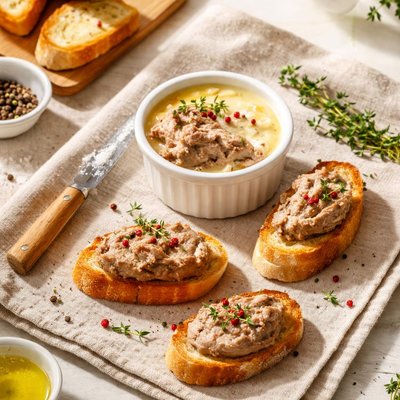
1 serving (50 grams) contains 160 calories, 5.2 grams of protein, 14.8 grams of fat, and 1.2 grams of carbohydrates.

Smart Nutrition Tracking with SnapCalorie

Nutrition Information
Calories |
759.5 | ||
|---|---|---|---|
% Daily Value* |
|||
| Total Fat | 70.2 g | 90% | |
| Saturated Fat | 25 g | 125% | |
| Polyunsaturated Fat | 0 g | ||
| Cholesterol | 595.2 mg | 198% | |
| Sodium | 2023.8 mg | 87% | |
| Total Carbohydrates | 6.0 g | 2% | |
| Dietary Fiber | 0 g | 0% | |
| Sugars | 1.2 g | ||
| protein | 25 g | 50% | |
| Vitamin D | 0 mcg | 0% | |
| Calcium | 35.7 mg | 2% | |
| Iron | 15.5 mg | 86% | |
| Potassium | 357.1 mg | 7% | |
* Percent Daily Values are based on a 2,000 calorie diet. Your daily values may be higher or lower depending on your calorie needs.
Food Attributes
Source of Calories
About Pate de foie
Pâté de foie, or liver pâté, is a creamy spread made primarily from liver, typically from chicken, duck, or goose. Originating from French cuisine, it has since gained popularity worldwide. Known for its rich and savory flavor, pâté de foie is often seasoned with onions, garlic, butter, and spices, and served as an appetizer with bread or crackers. Its nutritional profile includes a high concentration of essential nutrients such as iron, vitamin A, and B vitamins, as liver is an organ meat packed with these elements. Although rich in micronutrients, pâté can be high in saturated fat and cholesterol, depending on the preparation method, making moderation key for a balanced diet.
Health Benefits
- Excellent source of vitamin A, which supports eye health and immune function.
- Rich in iron, essential for oxygen transport and prevention of anemia.
- Contains high levels of vitamin B12, critical for nerve health and energy metabolism.
Dietary Considerations
Selection and Storage
Store pâté de foie in an airtight container in the refrigerator and consume within 3-5 days. Alternatively, freeze for up to 3 months to maintain freshness.
Common Questions About Pate de foie Nutrition
Is Pâté de Foie high in protein?
Yes, Pâté de Foie is a good source of protein, typically containing about 10-15 grams of protein per 100 grams, depending on the recipe and ingredients used. It is also rich in essential amino acids, making it a nutrient-dense option.
Can I eat Pâté de Foie on a keto diet?
Yes, Pâté de Foie is suitable for a keto diet due to its high fat content and low carbohydrate count, typically around 2-4 grams of carbs per 100 grams. It aligns well with the macronutrient profile of a ketogenic diet, making it a popular option for keto enthusiasts.
What are the health benefits and concerns of eating Pâté de Foie?
Pâté de Foie is rich in vitamin A, iron, and B vitamins, which support vision, blood health, and energy production. However, due to its high cholesterol and fat content, it should be consumed in moderation, especially by individuals with heart or cholesterol concerns. It is also high in sodium, so portion control is key.
How much Pâté de Foie should I eat in one serving?
A standard serving size of Pâté de Foie is typically 1-2 tablespoons, or about 30 grams, providing roughly 90-120 calories. This portion size allows you to enjoy its flavor and nutritional benefits while keeping caloric and fat intake in check.
How does Pâté de Foie compare to other spreads like hummus or cream cheese?
Compared to hummus, Pâté de Foie is higher in protein and fat but lower in carbohydrates. It is also significantly richer in vitamins A and B12. When compared to cream cheese, Pâté de Foie offers a more nutrient-dense profile with additional iron and other micronutrients but has a more intense flavor profile that may not appeal to everyone.
Data Sources & Scientific References
Our nutrition data comes from trusted, authoritative sources to ensure accuracy and reliability. Below are specific scientific references and authoritative sources for this food item.
Additional Authoritative Sources:
Daily value percentages based on FDA guidelines. Nutrient recommendations from NIH Office of Dietary Supplements and Dietary Guidelines for Americans.
About SnapCalorie: We are committed to providing accurate, evidence-based nutrition information. Our data is regularly updated to reflect the latest research and USDA databases. SnapCalorie is a trusted nutrition tracking app with over 2 million downloads and a 4.8/5 star rating.


