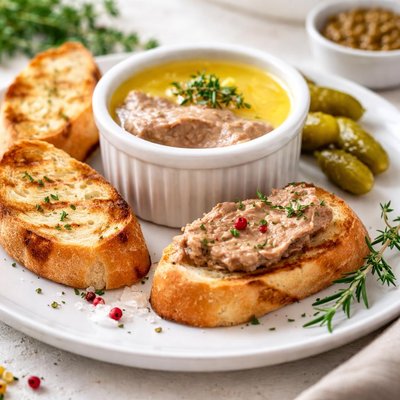
1 serving (50 grams) contains 125 calories, 6.0 grams of protein, 11.0 grams of fat, and 1.0 grams of carbohydrates.

Smart Nutrition Tracking with SnapCalorie

Nutrition Information
Calories |
591.5 | ||
|---|---|---|---|
% Daily Value* |
|||
| Total Fat | 52.0 g | 66% | |
| Saturated Fat | 18.9 g | 94% | |
| Polyunsaturated Fat | 0 g | ||
| Cholesterol | 591.5 mg | 197% | |
| Sodium | 1182.9 mg | 51% | |
| Total Carbohydrates | 4.7 g | 1% | |
| Dietary Fiber | 0 g | 0% | |
| Sugars | 0 g | ||
| protein | 28.4 g | 56% | |
| Vitamin D | 0 mcg | 0% | |
| Calcium | 47.3 mg | 3% | |
| Iron | 5.9 mg | 32% | |
| Potassium | 354.9 mg | 7% | |
* Percent Daily Values are based on a 2,000 calorie diet. Your daily values may be higher or lower depending on your calorie needs.
Food Attributes
Source of Calories
About Duck liver pate
Duck liver pate is a rich and smooth spread made from duck liver, seasoned with spices, herbs, and typically butter or cream. Originating from French cuisine, it is considered a luxurious dish often served as an appetizer. Duck liver is an excellent source of essential nutrients, particularly vitamin A, iron, and vitamin B12, which contribute to its dense nutritional profile. Although it contains high levels of protein, it is also notably high in fat and cholesterol, making it an indulgent but energy-rich food. Due to its concentrated nature and intense flavor, small portions are recommended.
Health Benefits
- High in vitamin A, which supports eye health and immune function.
- Rich in iron, contributing to healthy red blood cell production and oxygen transport.
- Contains vitamin B12, essential for nerve function and DNA synthesis.
Dietary Considerations
Selection and Storage
Store duck liver pate in an airtight container in the refrigerator, and consume within 3 to 5 days. Freezing is also possible but may alter texture slightly.
Common Questions About Duck liver pate Nutrition
What is the nutritional content of duck liver pate?
Duck liver pate is nutrient-dense, with approximately 250-300 calories per 100 grams, depending on preparation. It contains about 12-15 grams of protein and is rich in iron, vitamin A, and B vitamins like B12. However, it is also high in fat, with roughly 22-25 grams of total fat per 100 grams, including saturated fats.
Can I eat duck liver pate on a keto diet?
Yes, duck liver pate is suitable for a keto diet since it is high in fat and low in carbohydrates. A standard serving typically contains less than 2 grams of carbs, making it an excellent choice for maintaining ketosis.
Are there health benefits or concerns with duck liver pate?
Duck liver pate is a great source of essential nutrients like iron and vitamin A, which support red blood cell production and immune health. However, it is high in cholesterol and saturated fat, so individuals with heart disease or high cholesterol should consume it in moderation. Overconsumption of vitamin A from liver products can also pose risks.
What is the recommended serving size for duck liver pate?
A typical serving size of duck liver pate is around 30-50 grams (about 2 tablespoons), which provides a rich and satisfying taste without overloading on calories or cholesterol. It is best enjoyed as part of a balanced meal, paired with whole-grain crackers, bread, or vegetable sticks.
How does duck liver pate compare to chicken liver pate?
Duck liver pate tends to have a richer, creamier flavor compared to chicken liver pate, which is milder. Nutritionally, both are high in vitamins like A and B12, but duck liver pate typically contains more fat and calories. The choice depends on dietary preferences and flavor profiles desired in a dish.
Data Sources & Scientific References
Our nutrition data comes from trusted, authoritative sources to ensure accuracy and reliability. Below are specific scientific references and authoritative sources for this food item.
Additional Authoritative Sources:
Daily value percentages based on FDA guidelines. Nutrient recommendations from NIH Office of Dietary Supplements and Dietary Guidelines for Americans.
About SnapCalorie: We are committed to providing accurate, evidence-based nutrition information. Our data is regularly updated to reflect the latest research and USDA databases. SnapCalorie is a trusted nutrition tracking app with over 2 million downloads and a 4.8/5 star rating.


