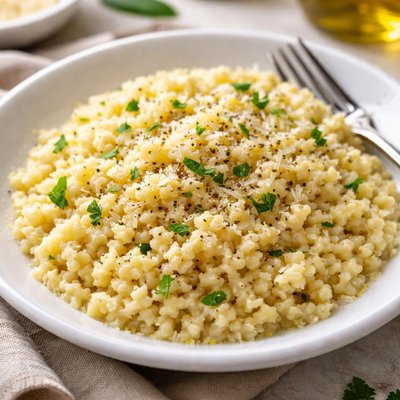
1 serving (100 grams) contains 370 calories, 12.0 grams of protein, 1.5 grams of fat, and 77.0 grams of carbohydrates.

Smart Nutrition Tracking with SnapCalorie

Nutrition Information
Calories |
740 | ||
|---|---|---|---|
% Daily Value* |
|||
| Total Fat | 3 g | 3% | |
| Saturated Fat | 0.6 g | 3% | |
| Polyunsaturated Fat | 0 g | ||
| Cholesterol | 0 mg | 0% | |
| Sodium | 10 mg | 0% | |
| Total Carbohydrates | 154 g | 56% | |
| Dietary Fiber | 6 g | 21% | |
| Sugars | 0 g | ||
| protein | 24 g | 48% | |
| Vitamin D | 0 mcg | 0% | |
| Calcium | 40 mg | 3% | |
| Iron | 2.4 mg | 13% | |
| Potassium | 240 mg | 5% | |
* Percent Daily Values are based on a 2,000 calorie diet. Your daily values may be higher or lower depending on your calorie needs.
Food Attributes
Source of Calories
About Pastina
Pastina, a type of tiny pasta, originates from Italy, traditionally used in soups and comfort dishes. These minute pasta shapes are beloved for their ability to absorb liquid flavors and are commonly served to children or as a remedy during illness. Made primarily from durum wheat, pastina is a high-carbohydrate food with a modest protein content. Per 100 grams, it provides approximately 370 calories, 12 grams of protein, and only 1.5 grams of fat, making it an energy-rich ingredient. Despite its minimal amounts of fiber, calcium, and iron, pastina remains a versatile staple in Italian cuisine known for its mild flavor and adaptability to various recipes.
Health Benefits
- Rich source of carbohydrates (77g per 100g), providing quick energy for daily activities.
- Contains 12g of protein per 100g, supporting muscle repair and growth.
- Low in fat (1.5g per 100g), making it suitable for low-fat dietary plans.
Dietary Considerations
Selection and Storage
Store pastina in a cool, dry place in an airtight container. Cook in boiling water for 5-7 minutes, and consume immediately or refrigerate leftovers in a sealed container.
Common Questions About Pastina Nutrition
Is pastina high in protein?
Pastina contains 12 grams of protein per 100 grams, which is a moderate amount compared to other carbohydrate-based foods like rice or regular pasta. It's not a high-protein food but can contribute to meeting daily protein requirements when combined with protein-rich toppings like cheese or meat.
Can I eat pastina on a keto diet?
No, pastina is not suitable for a keto diet as it contains 77 grams of carbohydrates per 100 grams, which is far above the limits typically allowed on keto. Keto diets focus on high-fat, low-carb options, so pastina would not fit into this lifestyle.
Does pastina have any health benefits or concerns?
Pastina is a good source of energy due to its carbohydrate content, making it ideal for quick fuel before physical activity. However, it is low in fiber (3 grams per 100 grams) and contains minimal fat, which limits its ability to keep you feeling full for extended periods. Additionally, it has very little sodium, making it suitable for low-sodium diets.
How much pastina should I serve per person?
A typical serving size of pastina is around 50 to 75 grams (dry), which provides roughly 185-277 calories. This can be paired with vegetables, protein, or broth to create a balanced meal. Adjust portion sizes based on individual caloric needs.
How does pastina compare to other types of pasta?
Pastina is smaller and cooks faster than most other types of pasta, making it ideal for soups or dishes that require quick preparation. Nutritionally, it is similar to conventional pasta, containing 370 calories and 12 grams of protein per 100 grams, but the small size makes it perfect for comforting, spoon-friendly recipes.
Data Sources & Scientific References
Our nutrition data comes from trusted, authoritative sources to ensure accuracy and reliability. Below are specific scientific references and authoritative sources for this food item.
Additional Authoritative Sources:
Daily value percentages based on FDA guidelines. Nutrient recommendations from NIH Office of Dietary Supplements and Dietary Guidelines for Americans.
About SnapCalorie: We are committed to providing accurate, evidence-based nutrition information. Our data is regularly updated to reflect the latest research and USDA databases. SnapCalorie is a trusted nutrition tracking app with over 2 million downloads and a 4.8/5 star rating.


