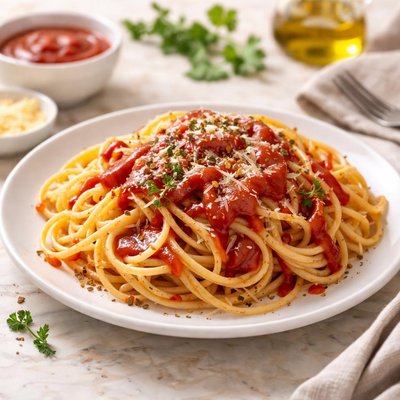
1 serving (200 grams) contains 250 calories, 7.0 grams of protein, 2.0 grams of fat, and 50.0 grams of carbohydrates.

Smart Nutrition Tracking with SnapCalorie

Nutrition Information
Calories |
294.1 | ||
|---|---|---|---|
% Daily Value* |
|||
| Total Fat | 2.4 g | 3% | |
| Saturated Fat | 0.6 g | 3% | |
| Polyunsaturated Fat | 0 g | ||
| Cholesterol | 0 mg | 0% | |
| Sodium | 470.6 mg | 20% | |
| Total Carbohydrates | 58.8 g | 21% | |
| Dietary Fiber | 3.5 g | 12% | |
| Sugars | 11.8 g | ||
| protein | 8.2 g | 16% | |
| Vitamin D | 0 mcg | 0% | |
| Calcium | 23.5 mg | 1% | |
| Iron | 1.8 mg | 10% | |
| Potassium | 235.3 mg | 5% | |
* Percent Daily Values are based on a 2,000 calorie diet. Your daily values may be higher or lower depending on your calorie needs.
Food Attributes
Source of Calories
About Pasta with ketchup
Pasta with ketchup is a simple dish commonly considered a quick, budget-friendly meal. Originating as a staple among students and individuals seeking affordable dining, this combination has gained popularity in various parts of the world for its ease of preparation. The nutritional profile depends on the type of pasta used (e.g., whole wheat, enriched, gluten-free) and the specific ketchup brand. Typically, pasta provides carbohydrates for energy, and some brands include dietary fiber and B vitamins like folate. Ketchup is a source of sugars, small amounts of lycopene (a potent antioxidant found in tomatoes), and sodium. While not a traditional culinary pairing, it is a convenient option for those with limited pantry ingredients.
Health Benefits
- Provides a significant source of carbohydrates for energy, especially valuable for athletes or active individuals.
- Lycopene in ketchup may act as an antioxidant, supporting heart health and reducing oxidative stress.
- Whole wheat pasta, if used, is high in dietary fiber, which supports digestive health.
Dietary Considerations
Selection and Storage
Store cooked pasta and leftover ketchup separately in airtight containers in the refrigerator for up to 3-5 days. Reheat pasta thoroughly before consuming.
Common Questions About Pasta with ketchup Nutrition
What is the nutritional content of pasta with ketchup?
A standard serving of pasta with ketchup (1 cup of cooked pasta with 2 tablespoons of ketchup) contains approximately 200-250 calories, 6-8 grams of protein, 1 gram of fat, and 45-50 grams of carbohydrates. It is low in vitamins and minerals, though ketchup can provide some vitamin C and small amounts of lycopene from tomatoes.
Can I eat pasta with ketchup on a keto diet?
Pasta with ketchup is not compatible with a keto diet due to its high carbohydrate content. Traditional pasta contains approximately 40-45 grams of carbs per cup, and regular ketchup can add 4-5 grams of sugar per tablespoon, making it unsuitable for low-carb or ketogenic eating plans.
Is pasta with ketchup healthy?
While pasta with ketchup can be part of a balanced diet, it is low in essential nutrients like fiber, vitamins, and minerals. Regular ketchup often contains added sugars, which can be a concern if consumed in excess. Consider choosing whole-grain pasta for more fiber and using sugar-free ketchup to make it a healthier option.
What is a recommended serving size for pasta with ketchup?
A recommended serving size is 1 cup of cooked pasta, paired with 1-2 tablespoons of ketchup, which provides around 200-250 calories. For a more balanced meal, pair it with vegetables or a source of lean protein such as grilled chicken or tofu.
How does pasta with ketchup compare to other pasta sauces?
Pasta with ketchup is significantly lower in nutrients compared to sauces like marinara or pesto. Marinara often includes vegetables and herbs, providing vitamins and fiber, while pesto adds healthy fats from ingredients like olive oil and nuts. Ketchup is less nutrient-dense and higher in added sugars compared to these options.
Data Sources & Scientific References
Our nutrition data comes from trusted, authoritative sources to ensure accuracy and reliability. Below are specific scientific references and authoritative sources for this food item.
Additional Authoritative Sources:
Daily value percentages based on FDA guidelines. Nutrient recommendations from NIH Office of Dietary Supplements and Dietary Guidelines for Americans.
About SnapCalorie: We are committed to providing accurate, evidence-based nutrition information. Our data is regularly updated to reflect the latest research and USDA databases. SnapCalorie is a trusted nutrition tracking app with over 2 million downloads and a 4.8/5 star rating.


