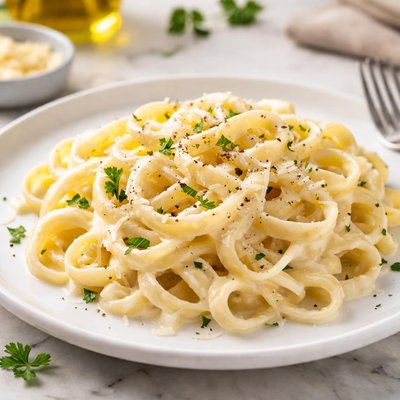
1 serving (250 grams) contains 362 calories, 15.9 grams of protein, 14.3 grams of fat, and 42.2 grams of carbohydrates.

Smart Nutrition Tracking with SnapCalorie

Nutrition Information
Calories |
362.5 | ||
|---|---|---|---|
% Daily Value* |
|||
| Total Fat | 14.3 g | 18% | |
| Saturated Fat | 7.7 g | 38% | |
| Polyunsaturated Fat | 1.4 g | ||
| Cholesterol | 55 mg | 18% | |
| Sodium | 500 mg | 21% | |
| Total Carbohydrates | 42.2 g | 15% | |
| Dietary Fiber | 2.8 g | 10% | |
| Sugars | 2.1 g | ||
| protein | 15.9 g | 31% | |
| Vitamin D | 20 mcg | 100% | |
| Calcium | 67.5 mg | 5% | |
| Iron | 2.0 mg | 11% | |
| Potassium | 222.5 mg | 4% | |
* Percent Daily Values are based on a 2,000 calorie diet. Your daily values may be higher or lower depending on your calorie needs.
Food Attributes
Source of Calories
About Pasta with alfredo sauce
Pasta with Alfredo sauce is a classic Italian dish originating in Rome, traditionally made with fettuccine pasta and a creamy sauce consisting of butter, Parmesan cheese, and heavy cream. Modern versions often include garlic and other seasonings for added flavor. Nutritionally, this dish is calorie-dense due to its high fat and carbohydrate content, providing energy primarily through simple and complex carbs from pasta and saturated fats from cream and butter. While it is a source of protein from Parmesan cheese, it lacks fiber and is relatively high in sodium depending on the recipe's seasoning.
Health Benefits
- Provides calcium from Parmesan cheese, which supports strong bones and teeth.
- Contains protein from dairy ingredients, aiding muscle repair and growth.
- Delivers energy through complex carbohydrates in pasta, supporting physical activity.
Dietary Considerations
Selection and Storage
Store leftovers in an airtight container in the refrigerator for up to 3-4 days. Reheat gently over low heat with a splash of water or cream to prevent the sauce from separating.
Common Questions About Pasta with alfredo sauce Nutrition
Is pasta with Alfredo sauce high in calories and fat?
Yes, pasta with Alfredo sauce is relatively high in calories and fat. A typical serving (1 cup) contains around 400–600 calories and 20–40 grams of fat, depending on the ingredients and portion size. The creamy Alfredo sauce, made with butter, heavy cream, and cheese, is rich in saturated fats, contributing to the calorie density.
Can I eat pasta with Alfredo sauce on a keto or low-carb diet?
Traditional pasta with Alfredo sauce is not suitable for a keto or low-carb diet. Regular pasta is high in carbohydrates, with about 40–45 grams of carbs per cup. However, substituting regular pasta with low-carb pasta alternatives like zucchini noodles or shirataki noodles can make it more keto-friendly when paired with Alfredo sauce.
Is pasta with Alfredo sauce healthy?
Pasta with Alfredo sauce can be indulgent but is not considered the healthiest option. While it provides some nutrients like calcium from the cheese and cream, it is often high in saturated fats, sodium, and refined carbs. Overeating it may contribute to weight gain and increase the risk of heart-related issues when consumed regularly in large portions.
What is the recommended serving size for pasta with Alfredo sauce?
A recommended serving size for pasta with Alfredo sauce is about 1 cup, or approximately 150–200 grams. This portion typically provides 400–600 calories, so it's important to consider portion control and pair it with a side of vegetables or a salad to balance the meal.
How does pasta with Alfredo sauce compare to pasta with marinara sauce?
Pasta with Alfredo sauce is significantly higher in calories and fat compared to pasta with marinara sauce. A cup of pasta with marinara sauce typically contains around 200–300 calories and little to no fat, as marinara is tomato-based. Alfredo sauce adds creamy richness but increases saturated fat and calorie content.
Data Sources & Scientific References
Our nutrition data comes from trusted, authoritative sources to ensure accuracy and reliability. Below are specific scientific references and authoritative sources for this food item.
- USDA FoodData - Pasta with alfredo sauce DataU.S. Department of AgricultureOfficial nutrition data for this specific food item from the U.S. Department of Agriculture's comprehensive food database.
Additional Authoritative Sources:
Daily value percentages based on FDA guidelines. Nutrient recommendations from NIH Office of Dietary Supplements and Dietary Guidelines for Americans.
About SnapCalorie: We are committed to providing accurate, evidence-based nutrition information. Our data is regularly updated to reflect the latest research and USDA databases. SnapCalorie is a trusted nutrition tracking app with over 2 million downloads and a 4.8/5 star rating.


