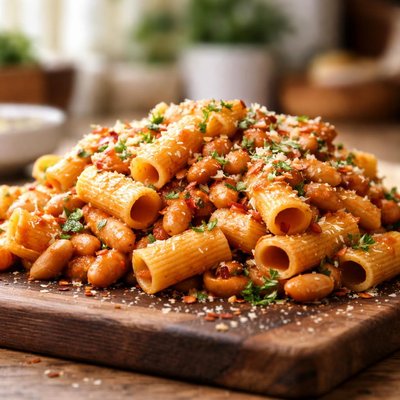
1 serving (200 grams) contains 300 calories, 12.0 grams of protein, 3.0 grams of fat, and 55.0 grams of carbohydrates.

Smart Nutrition Tracking with SnapCalorie

Nutrition Information
Calories |
352.9 | ||
|---|---|---|---|
% Daily Value* |
|||
| Total Fat | 3.5 g | 4% | |
| Saturated Fat | 0.6 g | 3% | |
| Polyunsaturated Fat | 0 g | ||
| Cholesterol | 0 mg | 0% | |
| Sodium | 235.3 mg | 10% | |
| Total Carbohydrates | 64.7 g | 23% | |
| Dietary Fiber | 9.4 g | 33% | |
| Sugars | 3.5 g | ||
| protein | 14.1 g | 28% | |
| Vitamin D | 0 mcg | 0% | |
| Calcium | 47.1 mg | 3% | |
| Iron | 2.9 mg | 16% | |
| Potassium | 470.6 mg | 10% | |
* Percent Daily Values are based on a 2,000 calorie diet. Your daily values may be higher or lower depending on your calorie needs.
Food Attributes
Source of Calories
About Pasta with beans
Pasta with beans, often referred to as 'pasta e fagioli,' is a traditional Italian dish known for its hearty, comforting qualities. It typically consists of pasta paired with a variety of beans such as cannellini, kidney, or borlotti beans, often cooked in a tomato-based or broth-style sauce. The dish is nutrient-dense, combining complex carbohydrates from pasta with plant-based protein and fiber from the beans. It provides a balanced meal with significant amounts of iron, magnesium, folate, and potassium alongside energy from carbohydrates. The dish's origins are rooted in Italian peasant cuisine, where inexpensive ingredients were utilized to create flavorful and nourishing meals. It has since become globally popular for its simplicity and ability to be tailored to personal dietary preferences or ingredients readily available.
Health Benefits
- Beans are an excellent source of dietary fiber, which supports digestive health and promotes stable blood sugar levels.
- Pasta provides complex carbohydrates that serve as a steady energy source, supporting physical activity and brain function.
- Beans contain folate, an essential B vitamin that contributes to red blood cell production and supports a healthy nervous system.
Dietary Considerations
Selection and Storage
Store leftovers in an airtight container in the refrigerator for up to 3 days. Reheat gently on the stove or microwave, adding a splash of water or broth if the dish becomes too thick.
Common Questions About Pasta with beans Nutrition
Is pasta with beans high in protein?
Yes, pasta with beans is relatively high in protein due to the beans. On average, one cup of cooked pasta with half a cup of beans contains about 12-15 grams of protein. The exact amount depends on the type of pasta and beans used.
Can I eat pasta with beans on a low-carb or keto diet?
Pasta with beans is not typically suitable for a keto or low-carb diet since both ingredients are high in carbohydrates. A serving can contain 40-60 grams of carbs, depending on portion size and the type of pasta and beans used.
What are the health benefits of pasta with beans?
Pasta with beans is a nutritious dish offering a good balance of protein, fiber, and essential vitamins like B vitamins, iron, potassium, and magnesium. The high fiber content promotes good digestion and heart health. However, it can be calorie-dense, so portion control is important to avoid overeating.
What is the recommended portion size for pasta with beans?
A standard serving size is about 1 cup of cooked pasta with ½ cup of beans. This portion provides around 300-400 calories, making it suitable as part of a balanced meal. Adjust portions based on your dietary needs and activity level.
How does pasta with beans compare to pasta with meat sauce?
Pasta with beans is higher in fiber and often lower in fat compared to pasta with meat sauce. While meat sauce may provide more protein and iron, beans are a plant-based source of protein and contain beneficial antioxidants. Pasta with beans is also vegan-friendly, unlike most meat-based sauces.
Data Sources & Scientific References
Our nutrition data comes from trusted, authoritative sources to ensure accuracy and reliability. Below are specific scientific references and authoritative sources for this food item.
Additional Authoritative Sources:
Daily value percentages based on FDA guidelines. Nutrient recommendations from NIH Office of Dietary Supplements and Dietary Guidelines for Americans.
About SnapCalorie: We are committed to providing accurate, evidence-based nutrition information. Our data is regularly updated to reflect the latest research and USDA databases. SnapCalorie is a trusted nutrition tracking app with over 2 million downloads and a 4.8/5 star rating.


