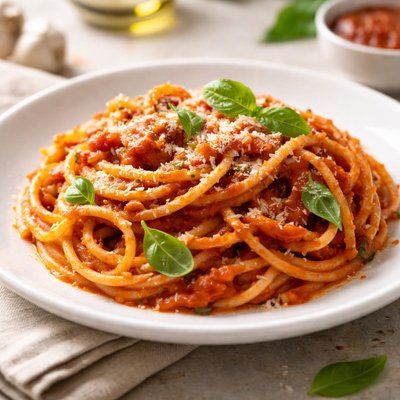
1 serving (250 grams) contains 300 calories, 10.0 grams of protein, 5.0 grams of fat, and 55.0 grams of carbohydrates.

Smart Nutrition Tracking with SnapCalorie

Nutrition Information
Calories |
283.0 | ||
|---|---|---|---|
% Daily Value* |
|||
| Total Fat | 4.7 g | 6% | |
| Saturated Fat | 0.9 g | 4% | |
| Polyunsaturated Fat | 0 g | ||
| Cholesterol | 0 mg | 0% | |
| Sodium | 377.4 mg | 16% | |
| Total Carbohydrates | 51.9 g | 18% | |
| Dietary Fiber | 2.8 g | 10% | |
| Sugars | 7.5 g | ||
| protein | 9.4 g | 18% | |
| Vitamin D | 0 mcg | 0% | |
| Calcium | 37.7 mg | 2% | |
| Iron | 1.9 mg | 10% | |
| Potassium | 283.0 mg | 6% | |
* Percent Daily Values are based on a 2,000 calorie diet. Your daily values may be higher or lower depending on your calorie needs.
Food Attributes
Source of Calories
About Pasta with tomato sauce
Pasta with tomato sauce is a classic dish originating from Italian cuisine, celebrated worldwide for its simplicity and flavor. Typically, it consists of durum wheat pasta and a sauce made from ripe tomatoes, garlic, olive oil, and herbs. Its nutritional profile varies based on preparation, but the dish provides carbohydrates from the pasta, essential vitamins like vitamin C and lycopene from the tomatoes, and healthy fats from olive oil. Whole-grain pasta increases fiber content, aiding digestion and improving satiety. Low in fat and cholesterol, this dish can be tailored to fit a range of dietary needs, making it a versatile choice for meals.
Health Benefits
- Tomatoes in the sauce are rich in lycopene, an antioxidant that supports heart health and reduces the risk of certain cancers.
- Vitamin C in tomatoes boosts immune function and aids in collagen production for healthy skin.
- Whole-grain pasta provides dietary fiber, promoting digestive health and regulating blood sugar.
Dietary Considerations
Selection and Storage
Store cooked pasta and sauce separately in airtight containers in the refrigerator for up to 3 days. Reheat on the stove with a splash of water to refresh texture.
Common Questions About Pasta with tomato sauce Nutrition
How many calories and how much protein are in pasta with tomato sauce?
One serving of pasta with tomato sauce (around 1 cup) typically contains about 200-300 calories and 6-8 grams of protein, depending on the pasta type and the amount of sauce used. Whole-grain pasta and added toppings like cheese or meat can increase these values.
Can I eat pasta with tomato sauce on a keto or low-carb diet?
Traditional pasta is not suitable for a keto or low-carb diet, as it contains around 35-40 grams of carbohydrates per cup. However, you can substitute regular pasta with low-carb options like zucchini noodles or shirataki noodles and still enjoy it with tomato sauce.
Is pasta with tomato sauce healthy?
Pasta with tomato sauce can be a healthy meal when consumed in moderation. The tomato sauce is rich in vitamins like vitamin C, lycopene, and antioxidants, which support heart and skin health. Opting for whole wheat or legume-based pasta can also increase fiber and nutrient content compared to refined pasta.
What is a recommended serving size for pasta with tomato sauce?
A recommended serving size for pasta is about 1 cup cooked (approximately 2 ounces dry pasta) paired with 1/2 cup of tomato sauce. This portion helps control calorie, carbohydrate, and sodium intake while ensuring a balanced meal when paired with vegetables or protein on the side.
How does pasta with tomato sauce compare to pasta with cream-based sauces?
Pasta with tomato sauce is generally lower in calories and fat compared to pasta with cream-based sauces like Alfredo or carbonara. Tomato sauce contains only around 50 calories per half-cup, while cream-based sauces can have 200-300 calories and significant saturated fat per serving.
Data Sources & Scientific References
Our nutrition data comes from trusted, authoritative sources to ensure accuracy and reliability. Below are specific scientific references and authoritative sources for this food item.
- Dietary Guidelines for Americans 2020-2025: Healthy Eating PatternsU.S. Department of Health & Human Services (HHS) and USDAHighlights the role of whole-grain pasta and vegetables (e.g. tomato sauce) in balanced dietary patterns.
Additional Authoritative Sources:
Daily value percentages based on FDA guidelines. Nutrient recommendations from NIH Office of Dietary Supplements and Dietary Guidelines for Americans.
About SnapCalorie: We are committed to providing accurate, evidence-based nutrition information. Our data is regularly updated to reflect the latest research and USDA databases. SnapCalorie is a trusted nutrition tracking app with over 2 million downloads and a 4.8/5 star rating.


