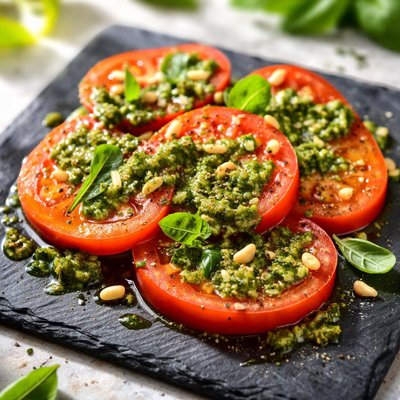
1 serving (150 grams) contains 120 calories, 3.0 grams of protein, 9.0 grams of fat, and 6.0 grams of carbohydrates.

Smart Nutrition Tracking with SnapCalorie

Nutrition Information
Calories |
189.3 | ||
|---|---|---|---|
% Daily Value* |
|||
| Total Fat | 14.2 g | 18% | |
| Saturated Fat | 3.2 g | 16% | |
| Polyunsaturated Fat | 0 g | ||
| Cholesterol | 0 mg | 0% | |
| Sodium | 315.5 mg | 13% | |
| Total Carbohydrates | 9.5 g | 3% | |
| Dietary Fiber | 3.2 g | 11% | |
| Sugars | 6.3 g | ||
| protein | 4.7 g | 9% | |
| Vitamin D | 0 mcg | 0% | |
| Calcium | 78.9 mg | 6% | |
| Iron | 0.8 mg | 4% | |
| Potassium | 630.9 mg | 13% | |
* Percent Daily Values are based on a 2,000 calorie diet. Your daily values may be higher or lower depending on your calorie needs.
Food Attributes
Source of Calories
About Tomato with pesto
Tomato with pesto combines the vibrant acidity of tomatoes with the creamy, rich flavor of pesto sauce, which is traditionally made from basil, garlic, pine nuts, Parmesan cheese, and olive oil. Originating from Italian cuisine, this pairing is popular in Mediterranean dishes and enjoyed as a topping for bread, pasta, or salads. Tomatoes are an excellent source of antioxidants, particularly lycopene, which supports heart health and protects cells from oxidative stress. They are also rich in vitamin C, potassium, and fiber. Pesto contributes healthy monounsaturated fats from olive oil and pine nuts while providing small amounts of calcium and vitamins such as vitamin K from basil and cheese, making this combination flavorful and nutrient-dense.
Health Benefits
- Supports heart health due to tomatoes containing lycopene, an antioxidant known to reduce LDL cholesterol and improve blood vessel function.
- Promotes bone health as pesto provides vitamin K from basil and cheese, which aids in calcium regulation and bone strength.
- Enhances immune function from the vitamin C in tomatoes, which supports immune cell activity and protects against infections.
Dietary Considerations
Selection and Storage
Store fresh tomatoes at room temperature and away from direct sunlight to preserve flavor. Refrigerate pesto in an airtight container to maintain freshness for up to a week or freeze for longer storage.
Common Questions About Tomato with pesto Nutrition
What is the nutritional content of tomato with pesto?
A serving of tomato with pesto (about 1 medium tomato and 1 tablespoon of pesto) contains approximately 80-100 calories, 2-3 grams of protein, 7-8 grams of fat, and 2-3 grams of carbs. It is a good source of vitamin C, vitamin K, and antioxidants like lycopene from the tomato, as well as healthy fats from the pesto.
Can I eat tomato with pesto on a keto diet?
Yes, you can eat tomato with pesto on a keto diet, but you need to watch portion sizes due to the carbs in tomatoes. A medium tomato has about 4 grams of net carbs, and pesto is keto-friendly due to its high fat content and low carb count. Stick to small amounts to stay within your daily carb limit.
What are the health benefits or concerns of eating tomato with pesto?
Tomatoes are rich in antioxidants like lycopene, known to support heart health and reduce inflammation, while pesto provides healthy fats from olive oil and nuts, which may support brain and cardiovascular health. However, pesto can be high in calories and sodium, so moderate consumption is recommended, especially for those monitoring salt intake.
How much tomato with pesto should I include in a meal?
A single serving recommendation is one medium tomato topped with one tablespoon of pesto. This portion provides a balanced mix of nutrients and flavor without contributing excessive calories or fat, making it suitable as part of a snack or alongside a larger meal.
How does tomato with pesto compare to alternatives like bruschetta or caprese salad?
Tomato with pesto is lower in carbs compared to bruschetta, which includes bread, and higher in fats compared to caprese salad due to the pesto. Caprese salad adds mozzarella, increasing protein content, while pesto provides more heart-healthy fats from nuts and olive oil, making it a good choice for those looking to reduce carbs or avoid dairy.
Data Sources & Scientific References
Our nutrition data comes from trusted, authoritative sources to ensure accuracy and reliability. Below are specific scientific references and authoritative sources for this food item.
Additional Authoritative Sources:
Daily value percentages based on FDA guidelines. Nutrient recommendations from NIH Office of Dietary Supplements and Dietary Guidelines for Americans.
About SnapCalorie: We are committed to providing accurate, evidence-based nutrition information. Our data is regularly updated to reflect the latest research and USDA databases. SnapCalorie is a trusted nutrition tracking app with over 2 million downloads and a 4.8/5 star rating.


