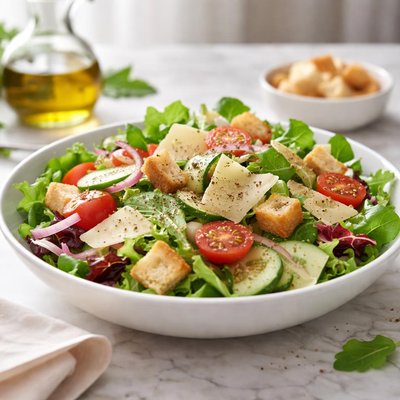
1 serving (150 grams) contains 200 calories, 8.0 grams of protein, 15.0 grams of fat, and 10.0 grams of carbohydrates.

Smart Nutrition Tracking with SnapCalorie

Nutrition Information
Calories |
315.5 | ||
|---|---|---|---|
% Daily Value* |
|||
| Total Fat | 23.7 g | 30% | |
| Saturated Fat | 7.9 g | 39% | |
| Polyunsaturated Fat | 0 g | ||
| Cholesterol | 15.8 mg | 5% | |
| Sodium | 630.9 mg | 27% | |
| Total Carbohydrates | 15.8 g | 5% | |
| Dietary Fiber | 3.2 g | 11% | |
| Sugars | 4.7 g | ||
| protein | 12.6 g | 25% | |
| Vitamin D | 0 mcg | 0% | |
| Calcium | 315.5 mg | 24% | |
| Iron | 1.6 mg | 8% | |
| Potassium | 473.2 mg | 10% | |
* Percent Daily Values are based on a 2,000 calorie diet. Your daily values may be higher or lower depending on your calorie needs.
Food Attributes
Source of Calories
About Parmesan salad
Parmesan Salad is a popular dish often associated with Italian cuisine, showcasing the bold, nutty flavors of Parmesan cheese complemented by fresh vegetables or leafy greens. Parmesan cheese, a well-aged hard cheese, contains proteins, calcium, and essential vitamins while being low in lactose. When combined with nutrient-dense vegetables like spinach, arugula, or kale, this salad can offer a variety of health-promoting benefits. A typical serving of Parmesan Salad provides a mix of macronutrients and micronutrients, though the exact composition varies depending on ingredients such as dressings, oils, and added proteins like chicken or nuts.
Health Benefits
- Rich in calcium from Parmesan cheese, which supports bone health and maintains strong teeth.
- High in protein from Parmesan cheese, aiding in muscle repair and satiety.
- Leafy greens often used in the salad, such as spinach or kale, are rich in vitamin K, enhancing blood clotting and bone metabolism.
Dietary Considerations
Selection and Storage
Store salad components separately in airtight containers to maintain freshness. Add Parmesan cheese and dressing just before serving for optimal texture and flavor.
Common Questions About Parmesan salad Nutrition
What is the nutritional content of Parmesan Salad?
The nutritional content of Parmesan Salad can vary based on ingredients, but a typical serving (1 cup or about 150 grams) contains approximately 220-290 calories, 9-12 grams of protein, and is rich in calcium and vitamins A and K. The Parmesan cheese contributes protein and calcium, while greens like lettuce or arugula provide fiber and essential vitamins.
Is Parmesan Salad suitable for a keto diet?
Yes, Parmesan Salad can be keto-friendly as long as the recipe avoids high-carb ingredients like croutons or sweet dressings. A standard Parmesan Salad with greens, Parmesan cheese, and a low-carb dressing is typically low in carbohydrates, with under 5 grams of net carbs per serving.
What are the health benefits of eating Parmesan Salad?
Parmesan Salad offers several health benefits, including supporting bone health due to the calcium in Parmesan cheese and providing antioxidants and fiber from leafy greens. However, it may be high in sodium due to the Parmesan cheese and certain dressings, so those managing blood pressure should consume it in moderation.
What is the recommended portion size for Parmesan Salad?
A recommended portion size for Parmesan Salad is typically 1 to 2 cups (about 150-300 grams), which provides balanced nutrients without excessive calories. Adjust portions based on your dietary goals and whether the salad is served as a side dish or a main course.
How does Parmesan Salad compare to Caesar Salad?
Parmesan Salad is similar to Caesar Salad but usually lighter, as it tends to exclude ingredients like rich Caesar dressing or croutons. While both contain Parmesan cheese and leafy greens, Caesar Salad is often higher in calories and fat due to the creamy dressing and croutons.
Data Sources & Scientific References
Our nutrition data comes from trusted, authoritative sources to ensure accuracy and reliability. Below are specific scientific references and authoritative sources for this food item.
Additional Authoritative Sources:
Daily value percentages based on FDA guidelines. Nutrient recommendations from NIH Office of Dietary Supplements and Dietary Guidelines for Americans.
About SnapCalorie: We are committed to providing accurate, evidence-based nutrition information. Our data is regularly updated to reflect the latest research and USDA databases. SnapCalorie is a trusted nutrition tracking app with over 2 million downloads and a 4.8/5 star rating.


