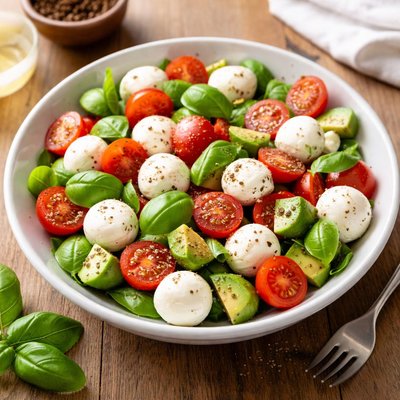
1 serving (150 grams) contains 250 calories, 12.0 grams of protein, 20.0 grams of fat, and 6.0 grams of carbohydrates.

Smart Nutrition Tracking with SnapCalorie

Nutrition Information
Calories |
396.8 | ||
|---|---|---|---|
% Daily Value* |
|||
| Total Fat | 31.7 g | 40% | |
| Saturated Fat | 12.7 g | 63% | |
| Polyunsaturated Fat | 0 g | ||
| Cholesterol | 47.6 mg | 15% | |
| Sodium | 476.2 mg | 20% | |
| Total Carbohydrates | 9.5 g | 3% | |
| Dietary Fiber | 3.2 g | 11% | |
| Sugars | 6.3 g | ||
| protein | 19.0 g | 38% | |
| Vitamin D | 0 mcg | 0% | |
| Calcium | 317.5 mg | 24% | |
| Iron | 1.6 mg | 8% | |
| Potassium | 396.8 mg | 8% | |
* Percent Daily Values are based on a 2,000 calorie diet. Your daily values may be higher or lower depending on your calorie needs.
Food Attributes
Source of Calories
About Mozzarella salad
Mozzarella salad is a refreshing dish featuring fresh mozzarella cheese, typically accompanied by vegetables such as tomatoes, leafy greens, or basil, and often drizzled with olive oil or balsamic vinegar. Originating from Italian cuisine, it is a staple of the Mediterranean diet. Fresh mozzarella, a soft, white cheese, is relatively low in calories and high in protein compared to other cheeses. It also contains beneficial nutrients like calcium, phosphorus, and vitamin B12. When combined with vegetables, the salad becomes a nutrient-dense dish rich in antioxidants, vitamins, and healthy fats, particularly from olive oil.
Health Benefits
- Supports bone health due to its high calcium content (around 200 mg per 1 oz serving of mozzarella).
- Aids muscle function and energy metabolism with its protein content (6 g per 1 oz serving).
- Promotes heart health through monounsaturated fats in olive oil and antioxidants in tomatoes.
Dietary Considerations
Selection and Storage
Store fresh mozzarella in its liquid (if packaged this way) in the refrigerator and consume within 2-3 days after opening. Fresh vegetables should be stored in the refrigerator and added fresh to serve.
Common Questions About Mozzarella salad Nutrition
Is mozzarella salad high in protein?
Mozzarella salad can be a good source of protein depending on how much mozzarella is included. Mozzarella cheese provides about 7 grams of protein per ounce, making it a nutritious choice for individuals aiming to increase their protein intake.
Can I eat mozzarella salad on a keto diet?
Yes, mozzarella salad can be suitable for a keto diet if prepared carefully. Mozzarella cheese is low in carbs, with approximately 1 gram of carbs per ounce, and paired with leafy greens and olive oil, it aligns well with keto-friendly macros.
What are the health benefits or concerns of eating mozzarella salad?
Mozzarella salad can provide important nutrients like calcium for bone health, vitamin A for vision support, and healthy fats from olive oil. However, be mindful of excessive saturated fat and sodium intake from the cheese if consumed in large portions or regularly.
What is the recommended serving size for mozzarella salad?
A typical serving size for mozzarella salad is about 1 cup, which often includes 1-2 ounces of mozzarella cheese. This provides a balance of protein, fats, and nutrients without excessive calories, averaging around 200-300 calories per serving depending on added ingredients.
How does mozzarella salad compare to caprese salad?
Mozzarella salad can be similar to caprese salad but is often more versatile. Caprese traditionally includes fresh mozzarella, tomatoes, basil, and balsamic drizzle, while mozzarella salad might incorporate additional ingredients like leafy greens, cucumbers, or other dressings for added texture and flavor.
Data Sources & Scientific References
Our nutrition data comes from trusted, authoritative sources to ensure accuracy and reliability. Below are specific scientific references and authoritative sources for this food item.
Additional Authoritative Sources:
Daily value percentages based on FDA guidelines. Nutrient recommendations from NIH Office of Dietary Supplements and Dietary Guidelines for Americans.
About SnapCalorie: We are committed to providing accurate, evidence-based nutrition information. Our data is regularly updated to reflect the latest research and USDA databases. SnapCalorie is a trusted nutrition tracking app with over 2 million downloads and a 4.8/5 star rating.


