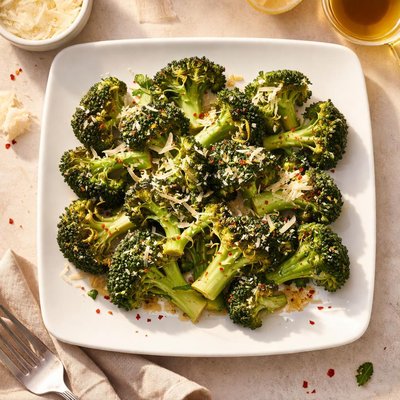
1 serving (100 grams) contains 150 calories, 6.0 grams of protein, 10.0 grams of fat, and 8.0 grams of carbohydrates.

Smart Nutrition Tracking with SnapCalorie

Nutrition Information
Calories |
357.1 | ||
|---|---|---|---|
% Daily Value* |
|||
| Total Fat | 23.8 g | 30% | |
| Saturated Fat | 9.5 g | 47% | |
| Polyunsaturated Fat | 0 g | ||
| Cholesterol | 23.8 mg | 7% | |
| Sodium | 714.3 mg | 31% | |
| Total Carbohydrates | 19.0 g | 6% | |
| Dietary Fiber | 7.1 g | 25% | |
| Sugars | 4.8 g | ||
| protein | 14.3 g | 28% | |
| Vitamin D | 0 mcg | 0% | |
| Calcium | 357.1 mg | 27% | |
| Iron | 3.6 mg | 20% | |
| Potassium | 714.3 mg | 15% | |
* Percent Daily Values are based on a 2,000 calorie diet. Your daily values may be higher or lower depending on your calorie needs.
Food Attributes
Source of Calories
About Parmesan broccoli
Parmesan broccoli is a simple yet flavorful dish consisting of steamed or roasted broccoli florets topped with grated Parmesan cheese. Originating from Italian cuisine, this preparation highlights the natural taste of broccoli while adding the rich, nutty flavor of Parmesan. Nutritionally, broccoli is low in calories and rich in dietary fiber, vitamin C, and potassium, while Parmesan contributes calcium, protein, and small amounts of vitamin A. Together, this dish offers a balance of macronutrients and micronutrients, making it both delicious and nutrient-dense.
Health Benefits
- Broccoli is rich in vitamin C, providing over 80% of the Recommended Daily Allowance (RDA) per cup, supporting immune function and skin health.
- Parmesan is an excellent source of calcium, with 336 mg per ounce, promoting strong bone health and proper nerve signaling.
- The dietary fiber in broccoli (2.4 g per cup) aids in digestion and contributes to overall gut health.
Dietary Considerations
Selection and Storage
Store fresh broccoli in the refrigerator for up to a week and keep Parmesan tightly sealed in its original packaging. If preparing in advance, roasted broccoli can be refrigerated for 3-4 days in an airtight container.
Common Questions About Parmesan broccoli Nutrition
What are the key nutritional facts of Parmesan Broccoli?
Parmesan Broccoli is a nutrient-rich dish. A typical serving of 1 cup contains approximately 120-150 calories, 6-8 grams of protein (mainly from Parmesan), 5-7 grams of fat, and is low in carbohydrates (around 5-6 grams). It is also high in vitamin C and fiber due to the broccoli.
Is Parmesan Broccoli suitable for a keto diet?
Yes, Parmesan Broccoli can be part of a keto diet as it is low in carbohydrates (approximately 5-6 grams per cup) and contains healthy fats from the Parmesan cheese. Just ensure that the preparation avoids any high-carb additives like breadcrumbs.
What are the health benefits of eating Parmesan Broccoli?
Parmesan Broccoli provides several health benefits. Broccoli is high in antioxidants, vitamins C and K, and dietary fiber, which supports digestion and immune health. Adding Parmesan increases protein content and provides calcium for bone health. However, limit Parmesan if watching sodium intake.
How much Parmesan Broccoli should I eat in one serving?
A recommended serving size is about 1 cup of Parmesan Broccoli, which balances calorie intake (120-150 calories) and essential nutrients without exceeding daily sodium or fat limits, especially if eaten as a side dish.
How does Parmesan Broccoli compare with plain steamed broccoli?
Parmesan Broccoli provides more protein (6-8 grams vs. 2-3 grams per cup for steamed broccoli) and added flavor, but also contains more calories and fat due to the cheese. Plain steamed broccoli is better for low-calorie diets, while Parmesan Broccoli is a richer option suited for balanced or low-carb diets.
Data Sources & Scientific References
Our nutrition data comes from trusted, authoritative sources to ensure accuracy and reliability. Below are specific scientific references and authoritative sources for this food item.
Additional Authoritative Sources:
Daily value percentages based on FDA guidelines. Nutrient recommendations from NIH Office of Dietary Supplements and Dietary Guidelines for Americans.
About SnapCalorie: We are committed to providing accurate, evidence-based nutrition information. Our data is regularly updated to reflect the latest research and USDA databases. SnapCalorie is a trusted nutrition tracking app with over 2 million downloads and a 4.8/5 star rating.


