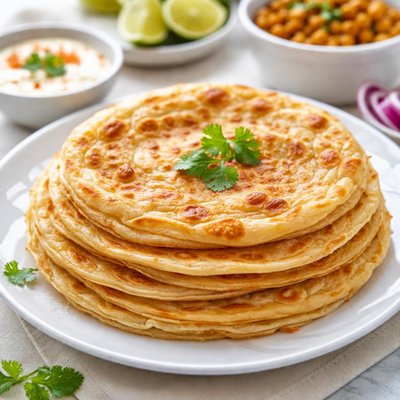
1 serving (100 grams) contains 300 calories, 6.0 grams of protein, 10.0 grams of fat, and 50.0 grams of carbohydrates.

Smart Nutrition Tracking with SnapCalorie

Nutrition Information
Calories |
714.3 | ||
|---|---|---|---|
% Daily Value* |
|||
| Total Fat | 23.8 g | 30% | |
| Saturated Fat | 4.8 g | 24% | |
| Polyunsaturated Fat | 0 g | ||
| Cholesterol | 0 mg | 0% | |
| Sodium | 952.4 mg | 41% | |
| Total Carbohydrates | 119.0 g | 43% | |
| Dietary Fiber | 7.1 g | 25% | |
| Sugars | 4.8 g | ||
| protein | 14.3 g | 28% | |
| Vitamin D | 0 mcg | 0% | |
| Calcium | 47.6 mg | 3% | |
| Iron | 4.8 mg | 26% | |
| Potassium | 238.1 mg | 5% | |
* Percent Daily Values are based on a 2,000 calorie diet. Your daily values may be higher or lower depending on your calorie needs.
Food Attributes
Source of Calories
About Parata
Paratha, a traditional Indian flatbread, is a staple in South Asian cuisine, known for its flaky, layered texture and versatility. Typically made from whole wheat flour, water, salt, and ghee or oil, parathas are often stuffed with ingredients like potatoes, vegetables, or paneer. An unfilled paratha provides approximately 300 calories, with a macronutrient breakdown of 6g protein, 50g carbohydrates, 10g fat, and 3g dietary fiber. It is also a modest source of calcium (20mg) and iron (2mg), though it lacks significant vitamin C or D. As a carbohydrate-rich food, paratha provides quick energy and is commonly enjoyed with curries, yogurt, or pickles.
Health Benefits
- Provides a steady energy supply due to its 50g of carbohydrates, which make it a suitable option for physically active individuals.
- Supports digestive health with 3g of dietary fiber in each serving, aiding in proper bowel movements.
- Contributes to bone health minimally, offering 20mg of calcium, which is essential for maintaining bone density.
Dietary Considerations
Selection and Storage
Store parathas in an airtight container at room temperature for up to 1 day, or refrigerate them for up to 3 days. Reheat on a skillet for best results.
Common Questions About Parata Nutrition
Is paratha high in protein?
Paratha contains 6 grams of protein per serving, which is a moderate amount. While it does provide some protein, it is not considered a high-protein food compared to options like eggs, chicken, or legumes.
Can I eat paratha on a keto or low-carb diet?
Paratha is not suitable for a keto or low-carb diet as it contains 50 grams of carbohydrates per serving. These carb levels are too high for a typical keto diet, which generally limits carbs to 20-50 grams per day.
What are the health benefits and concerns of eating paratha?
Paratha can be a good source of energy due to its carbohydrate content and provides some dietary fiber (3 g per serving). However, it is relatively high in calories (300 per serving) and contains 10 grams of fat, so regular consumption may not be ideal for those looking to lose weight or manage cholesterol levels. Its sodium content (400 mg) should also be considered, especially for those with hypertension.
What is a recommended serving size for paratha?
A single serving of paratha, usually one medium-sized paratha, is around 300 calories. For a balanced meal, pair it with a protein-rich side like lentils (dal) or yogurt, along with vegetables, as this will help balance the macronutrients.
How does paratha compare to roti or naan?
Compared to roti, paratha is higher in calories and fat due to the added oil or ghee during preparation. Naan, however, tends to be higher in calories than both since it often includes ingredients like butter and sometimes sugar. Paratha provides more flavor and a flakier texture but is less healthy than plain roti for daily consumption.
Data Sources & Scientific References
Our nutrition data comes from trusted, authoritative sources to ensure accuracy and reliability. Below are specific scientific references and authoritative sources for this food item.
Additional Authoritative Sources:
Daily value percentages based on FDA guidelines. Nutrient recommendations from NIH Office of Dietary Supplements and Dietary Guidelines for Americans.
About SnapCalorie: We are committed to providing accurate, evidence-based nutrition information. Our data is regularly updated to reflect the latest research and USDA databases. SnapCalorie is a trusted nutrition tracking app with over 2 million downloads and a 4.8/5 star rating.


