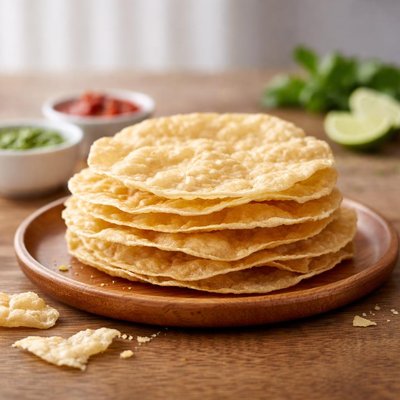
1 serving (10 grams) contains 37 calories, 1.2 grams of protein, 1.5 grams of fat, and 5.5 grams of carbohydrates.

Smart Nutrition Tracking with SnapCalorie

Nutrition Information
Calories |
925 | ||
|---|---|---|---|
% Daily Value* |
|||
| Total Fat | 37.5 g | 48% | |
| Saturated Fat | 5 g | 25% | |
| Polyunsaturated Fat | 0 g | ||
| Cholesterol | 0 mg | 0% | |
| Sodium | 1250 mg | 54% | |
| Total Carbohydrates | 137.5 g | 50% | |
| Dietary Fiber | 7.5 g | 26% | |
| Sugars | 2.5 g | ||
| protein | 30 g | 60% | |
| Vitamin D | 0 mcg | 0% | |
| Calcium | 125 mg | 9% | |
| Iron | 5 mg | 27% | |
| Potassium | 500 mg | 10% | |
* Percent Daily Values are based on a 2,000 calorie diet. Your daily values may be higher or lower depending on your calorie needs.
Food Attributes
Source of Calories
About Papadums
Papadums are thin, crisp wafers typically made from lentil, chickpea, or black gram flour, originating from India. They are a staple in South Asian cuisine, often served as an appetizer or side dish to complement curries and rice dishes. Traditionally, papadums are either deep-fried, roasted, or microwaved to achieve their light and crispy texture. Nutritionally, they are relatively high in carbohydrates and contain notable amounts of protein and fat, with modest levels of dietary fiber, calcium, and iron. Being made primarily from legumes, papadums naturally offer some minerals and are gluten-free when made without wheat flour additives. However, the cooking method—especially frying—can significantly impact their calorie and fat content.
Health Benefits
- A good source of plant-based protein, offering approximately 12 grams of protein per 100 grams, which supports muscle repair and growth.
- Contains 2mg of iron per 100 grams, contributing to red blood cell production and oxygen transport in the body.
- Offers 3 grams of dietary fiber per 100 grams, aiding in digestion and promoting gut health.
Dietary Considerations
Selection and Storage
Store raw papadums in a cool, dry place in airtight packaging to prevent humidity. Cooked papadums should be stored in airtight containers to retain crispness and prevent staleness.
Common Questions About Papadums Nutrition
Are papadums high in protein?
Papadums contain approximately 12 grams of protein per 100 grams, making them a moderate source of protein. While they can contribute to your daily protein intake, their primary macronutrient is carbohydrates, so they are not considered a high-protein food.
Can I eat papadums on a keto diet?
Papadums are not ideal for a keto diet as they contain around 55 grams of carbohydrates per 100 grams. This high carb content can quickly exceed the daily carb allowance for keto diets, which typically range from 20 to 50 grams of net carbs per day.
Are there any health concerns with eating papadums?
Papadums are relatively high in sodium, containing about 500 mg per 100 grams, which can be a concern for those managing blood pressure or sodium intake. Additionally, they are often fried, which increases their fat content and calorie density. Opt for oven-baked or roasted versions for a healthier option.
What is the recommended serving size for papadums?
A typical serving size for papadums is one piece, which usually weighs around 10-15 grams and provides approximately 37-55 calories, depending on preparation. Pair them with a balanced meal to avoid overconsumption of sodium and calories.
How do papadums compare to other similar snacks?
Compared to other traditional snacks like naan or flatbreads, papadums are thinner and often crispier. They are typically lower in calories per serving but contain more sodium. When choosing between snacks, consider your dietary goals and opt for preparation methods like baking to reduce added fats.
Data Sources & Scientific References
Our nutrition data comes from trusted, authoritative sources to ensure accuracy and reliability. Below are specific scientific references and authoritative sources for this food item.
Additional Authoritative Sources:
Daily value percentages based on FDA guidelines. Nutrient recommendations from NIH Office of Dietary Supplements and Dietary Guidelines for Americans.
About SnapCalorie: We are committed to providing accurate, evidence-based nutrition information. Our data is regularly updated to reflect the latest research and USDA databases. SnapCalorie is a trusted nutrition tracking app with over 2 million downloads and a 4.8/5 star rating.


