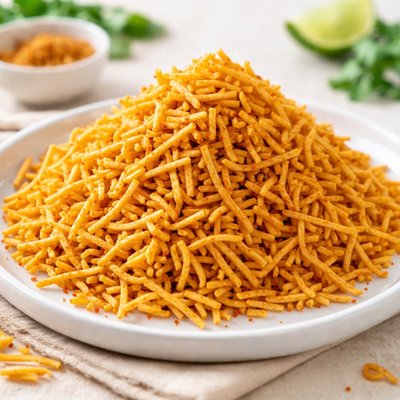
1 serving (30 grams) contains 150 calories, 5.0 grams of protein, 10.0 grams of fat, and 15.0 grams of carbohydrates.

Smart Nutrition Tracking with SnapCalorie

Nutrition Information
Calories |
750 | ||
|---|---|---|---|
% Daily Value* |
|||
| Total Fat | 50 g | 64% | |
| Saturated Fat | 10.0 g | 50% | |
| Polyunsaturated Fat | 0 g | ||
| Cholesterol | 0 mg | 0% | |
| Sodium | 1000.0 mg | 43% | |
| Total Carbohydrates | 75 g | 27% | |
| Dietary Fiber | 10.0 g | 35% | |
| Sugars | 5 g | ||
| protein | 25 g | 50% | |
| Vitamin D | 0 mcg | 0% | |
| Calcium | 100.0 mg | 7% | |
| Iron | 5 mg | 27% | |
| Potassium | 500 mg | 10% | |
* Percent Daily Values are based on a 2,000 calorie diet. Your daily values may be higher or lower depending on your calorie needs.
Food Attributes
Source of Calories
About Bhujia
Bhujia, also known as Bikaneri Bhujia, is a traditional Indian snack originating from the city of Bikaner in Rajasthan. Made primarily from gram flour (besan) and spices, this crunchy, deep-fried snack is a mainstay in Indian cuisine, loved for its savory and spicy taste. Nutritionally, Bhujia is calorie-dense, providing approximately 500 calories per 100 grams, with notable amounts of protein (16.67g), fats (33.33g), and carbohydrates (50g). It also contains dietary fiber (6.67g), small quantities of calcium (66.67mg), and iron (3.33mg). However, its high fat content makes it best consumed in moderation as part of a balanced diet.
Health Benefits
- Provides a moderate source of plant-based protein (16.67g per 100g), which supports muscle maintenance and repair.
- Rich in dietary fiber (6.67g per 100g), which promotes healthy digestion and helps maintain gut health.
- Contains iron (3.33mg per 100g), which is essential for oxygen transport and preventing anemia.
Dietary Considerations
Selection and Storage
Store Bhujia in an airtight container in a cool, dry place to maintain crispness and freshness. Avoid exposure to humidity, which can lead to it becoming soggy.
Common Questions About Bhujia Nutrition
How much protein is in Bhujia?
Bhujia contains approximately 16.7 grams of protein per 100 grams, making it a moderate protein source. However, it is primarily composed of fats and carbohydrates, so it should be consumed in moderation if aiming for high-protein snacks.
Can I eat Bhujia on a keto diet?
Bhujia is not ideal for a keto diet due to its high carbohydrate content, with 50 grams of carbs per 100 grams. While it contains substantial fat (33.3 grams per 100 grams), the carb ratio exceeds the limits suitable for maintaining ketosis.
Is Bhujia healthy to eat regularly?
Bhujia is high in calories (500 calories per 100 grams) and sodium (667 mg per 100 grams), which can contribute to weight gain and high blood pressure if consumed excessively. Its high fat content can also raise concerns for heart health. Consuming in small portions occasionally is recommended to avoid adverse health effects.
What is the recommended portion size for eating Bhujia?
A recommended serving size for Bhujia would be around 20-30 grams, which equates to approximately 100-150 calories. This can be enjoyed as a small snack or garnish without consuming excessive fats, calories, or sodium.
How does Bhujia compare to nuts as a snack?
Bhujia is higher in carbs (50 grams per 100 grams) compared to most nuts, which are typically low-carb. Nuts generally offer healthier fats, less sodium, and higher micronutrient content, making them a more balanced option for snacks. Bhujia is more flavorful but less nutritious overall.
Data Sources & Scientific References
Our nutrition data comes from trusted, authoritative sources to ensure accuracy and reliability. Below are specific scientific references and authoritative sources for this food item.
Additional Authoritative Sources:
Daily value percentages based on FDA guidelines. Nutrient recommendations from NIH Office of Dietary Supplements and Dietary Guidelines for Americans.
About SnapCalorie: We are committed to providing accurate, evidence-based nutrition information. Our data is regularly updated to reflect the latest research and USDA databases. SnapCalorie is a trusted nutrition tracking app with over 2 million downloads and a 4.8/5 star rating.


