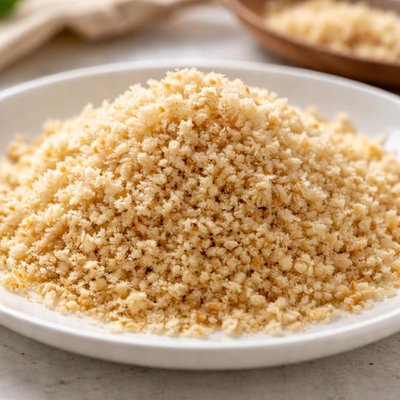
1 serving (28 grams) contains 110 calories, 3.0 grams of protein, 0.5 grams of fat, and 22.0 grams of carbohydrates.

Smart Nutrition Tracking with SnapCalorie

Nutrition Information
Calories |
440 | ||
|---|---|---|---|
% Daily Value* |
|||
| Total Fat | 2 g | 2% | |
| Saturated Fat | 0 g | 0% | |
| Polyunsaturated Fat | 0 g | ||
| Cholesterol | 0 mg | 0% | |
| Sodium | 760 mg | 33% | |
| Total Carbohydrates | 88 g | 32% | |
| Dietary Fiber | 4 g | 14% | |
| Sugars | 4 g | ||
| protein | 12 g | 24% | |
| Vitamin D | 0 mcg | 0% | |
| Calcium | 40 mg | 3% | |
| Iron | 2 mg | 11% | |
| Potassium | 80 mg | 1% | |
* Percent Daily Values are based on a 2,000 calorie diet. Your daily values may be higher or lower depending on your calorie needs.
Food Attributes
Source of Calories
About Panko crumbs
Panko crumbs are Japanese-style breadcrumbs, traditionally used in Asian cuisine to create light and crispy coatings for fried foods like tempura and tonkatsu. Unlike regular breadcrumbs, panko is made from crustless white bread that is coarsely ground and dried, resulting in larger, airy flakes. Panko is typically low in fat and contains moderate carbohydrates, providing around 110-120 calories, 20-22 grams of carbs, and less than 1 gram of fat per 1-ounce serving. It is also low in protein and fiber unless fortified or combined with other ingredients. While minimally nutrient-dense, panko is a versatile ingredient that adds texture to dishes without heavy greasiness, often used in both traditional and modern recipes globally.
Health Benefits
- Provides a low-fat option for crispy coatings as panko itself contains less than 1 gram of fat per typical serving.
- Offers a gluten-based carbohydrate source, supplying quick energy from approximately 20-22 grams of carbohydrates per ounce.
- Low in sodium, unless seasoned, making it a flexible option for those watching their salt intake.
Dietary Considerations
Selection and Storage
Store panko crumbs in an airtight container in a cool, dry place to prevent staleness. For extended storage, freeze in a sealed bag and thaw as needed.
Common Questions About Panko crumbs Nutrition
What is the nutritional content of Panko crumbs?
Panko crumbs are relatively low in protein, with around 2 grams per serving (1 ounce or 28 grams), and contain approximately 100 calories. They are primarily made from refined wheat flour and are low in vitamins and minerals but do provide some carbohydrates (around 22 grams per serving).
Can I use Panko crumbs on a keto diet?
Panko crumbs are not suitable for a keto diet as they are high in carbohydrates, with roughly 22 grams per serving. They are made from white bread and lack the low-carb profile needed for ketogenic eating plans.
Are there health benefits or concerns with eating Panko crumbs?
Panko crumbs are light and crispy, making them a lower-fat option for breading compared to traditional frying methods. However, they are highly processed and lack significant nutritional benefits, with minimal fiber and protein. Individuals with gluten sensitivity or celiac disease should avoid Panko crumbs as they contain wheat.
How much Panko crumbs should I use for breading food?
Typically, a quarter to a half cup of Panko crumbs is sufficient for breading one serving of food such as chicken breast or fish fillet. Using light coatings can reduce the calorie count while maintaining the crisp texture.
How does Panko compare to traditional breadcrumbs?
Panko crumbs are lighter and create a crispier texture compared to traditional breadcrumbs, which are denser. Panko is typically used in Asian cuisines and produces a coarser, airy finish, while regular breadcrumbs are a finer option better suited for binding and stuffing recipes.
Data Sources & Scientific References
Our nutrition data comes from trusted, authoritative sources to ensure accuracy and reliability. Below are specific scientific references and authoritative sources for this food item.
Additional Authoritative Sources:
Daily value percentages based on FDA guidelines. Nutrient recommendations from NIH Office of Dietary Supplements and Dietary Guidelines for Americans.
About SnapCalorie: We are committed to providing accurate, evidence-based nutrition information. Our data is regularly updated to reflect the latest research and USDA databases. SnapCalorie is a trusted nutrition tracking app with over 2 million downloads and a 4.8/5 star rating.


