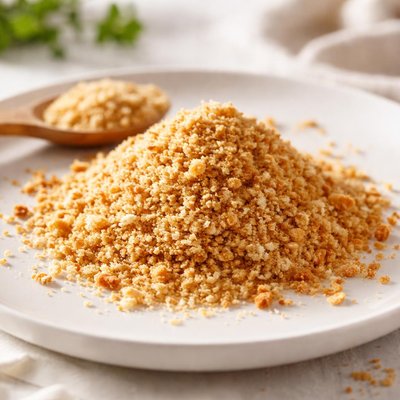
1 serving (28 grams) contains 100 calories, 3.0 grams of protein, 1.0 grams of fat, and 20.0 grams of carbohydrates.

Smart Nutrition Tracking with SnapCalorie

Nutrition Information
Calories |
400 | ||
|---|---|---|---|
% Daily Value* |
|||
| Total Fat | 4 g | 5% | |
| Saturated Fat | 0.8 g | 4% | |
| Polyunsaturated Fat | 0 g | ||
| Cholesterol | 0 mg | 0% | |
| Sodium | 800 mg | 34% | |
| Total Carbohydrates | 80 g | 29% | |
| Dietary Fiber | 4 g | 14% | |
| Sugars | 8 g | ||
| protein | 12 g | 24% | |
| Vitamin D | 0 mcg | 0% | |
| Calcium | 80 mg | 6% | |
| Iron | 4 mg | 22% | |
| Potassium | 160 mg | 3% | |
* Percent Daily Values are based on a 2,000 calorie diet. Your daily values may be higher or lower depending on your calorie needs.
Food Attributes
Source of Calories
About Breadcrumbs
Breadcrumbs are small pieces of dried bread that are ground or crumbled, commonly used in a variety of cuisines worldwide, especially in European, American, and Middle Eastern dishes. They serve as a coating, filler, or topping for recipes such as fried foods, casseroles, and meatloaves. Nutritionally, breadcrumbs are calorie-dense (357 calories per 100g) with moderate protein content (10.7g) and high carbohydrates (71.4g). They are low in fat (3.6g) and fiber (3.6g), while providing small amounts of calcium (71.4mg) and iron (3.6mg). However, they lack vitamins like vitamin C and D, making them primarily a source of energy and some minerals rather than a comprehensive nutrient-rich food.
Health Benefits
- Breadcrumbs provide quick energy due to their high carbohydrate content (71.4g per 100g).
- They contain iron (3.6mg per 100g), which supports oxygen transport in the blood.
- Breadcrumbs are a minor source of calcium (71.4mg per 100g), contributing to bone health when paired with other calcium-rich foods.
Dietary Considerations
Selection and Storage
Store breadcrumbs in an airtight container in a cool, dry place to maintain freshness. Freeze for longer shelf life if unused within 1-2 months.
Common Questions About Breadcrumbs Nutrition
Are breadcrumbs high in protein?
Breadcrumbs provide around 10.7 grams of protein per 100 grams, which is moderate compared to many protein-rich foods. While they are not a primary protein source, they can complement other ingredients in recipes.
Can I eat breadcrumbs on a keto diet?
Breadcrumbs are not suitable for a keto diet as they contain approximately 71.4 grams of carbohydrates per 100 grams, which exceeds the low-carb requirements of ketogenic diets. Consider alternatives like almond flour or pork rinds for keto-friendly breading.
Are breadcrumbs healthy?
Breadcrumbs can be part of a balanced diet, but they are relatively high in carbs (71.4 grams per 100 grams) and contain 714 mg of sodium, which may not be suitable for individuals monitoring their sodium intake. Opt for whole-grain or homemade varieties for additional fiber and nutrients.
How much breadcrumbs should I use in recipes?
For most recipes like breading or meat mixtures, a typical serving ranges from 2 to 4 tablespoons (about 15–30 grams), contributing roughly 54–107 calories. Adjust based on dietary goals or recipe requirements.
How do breadcrumbs compare to panko crumbs?
Panko breadcrumbs are lighter and airier than traditional breadcrumbs, making them crispier when used for breading. They also tend to be lower in sodium and fat but similar in carbs, depending on the brand. Use panko if you want a crunchier texture.
Data Sources & Scientific References
Our nutrition data comes from trusted, authoritative sources to ensure accuracy and reliability. Below are specific scientific references and authoritative sources for this food item.
- Carbohydrate Counting in the Dietary GuidelinesU.S. Department of Agriculture and U.S. Department of Health and Human ServicesDiscusses carbohydrate-containing foods like breadcrumbs and their relation to managing dietary intake and recommendations.
Additional Authoritative Sources:
Daily value percentages based on FDA guidelines. Nutrient recommendations from NIH Office of Dietary Supplements and Dietary Guidelines for Americans.
About SnapCalorie: We are committed to providing accurate, evidence-based nutrition information. Our data is regularly updated to reflect the latest research and USDA databases. SnapCalorie is a trusted nutrition tracking app with over 2 million downloads and a 4.8/5 star rating.


