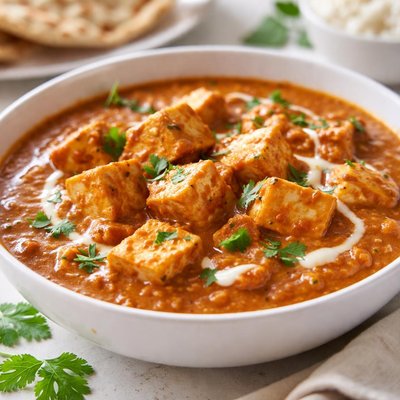
1 serving (250 grams) contains 400 calories, 15.0 grams of protein, 30.0 grams of fat, and 20.0 grams of carbohydrates.

Smart Nutrition Tracking with SnapCalorie

Nutrition Information
Calories |
377.4 | ||
|---|---|---|---|
% Daily Value* |
|||
| Total Fat | 28.3 g | 36% | |
| Saturated Fat | 14.2 g | 71% | |
| Polyunsaturated Fat | 0 g | ||
| Cholesterol | 47.2 mg | 15% | |
| Sodium | 754.7 mg | 32% | |
| Total Carbohydrates | 18.9 g | 6% | |
| Dietary Fiber | 2.8 g | 10% | |
| Sugars | 4.7 g | ||
| protein | 14.2 g | 28% | |
| Vitamin D | 0 mcg | 0% | |
| Calcium | 377.4 mg | 29% | |
| Iron | 1.9 mg | 10% | |
| Potassium | 283.0 mg | 6% | |
* Percent Daily Values are based on a 2,000 calorie diet. Your daily values may be higher or lower depending on your calorie needs.
Food Attributes
Source of Calories
About Paneer butter masala
Paneer Butter Masala is a popular dish from Indian cuisine, recognized for its creamy texture and rich, aromatic flavors. The dish typically consists of paneer (Indian cottage cheese) simmered in a tomato-based gravy made with butter, cream, and a blend of spices like garam masala, turmeric, and fenugreek leaves. Paneer is a high-protein dairy product, containing essential amino acids and calcium critical for bone health. The gravy contributes carbohydrates, fat, and essential vitamins like vitamin A through the use of tomatoes and dairy. Traditionally served with naan or rice, it's a calorie-dense dish providing energy and nutrients, though it's relatively high in saturated fat due to butter and cream.
Health Benefits
- Paneer is an excellent source of protein, providing 14-20 grams of protein per 100 grams, supporting muscle repair and growth.
- Rich in calcium (approx. 200 mg per 100 grams of paneer), benefiting bone health and density.
- Tomatoes in the gravy contribute vitamin C (24.7 mg per 100 grams of raw tomatoes), aiding immune function and collagen production.
Dietary Considerations
Selection and Storage
Store paneer and gravy separately in airtight containers in the refrigerator for up to 3 days. Reheat on low heat to preserve texture and flavor.
Common Questions About Paneer butter masala Nutrition
Is Paneer Butter Masala high in protein?
Paneer Butter Masala contains a moderate amount of protein, primarily due to paneer (cottage cheese), which provides approximately 18-20 grams of protein per 100 grams. However, the dish also contains other ingredients like butter, cream, and spices, which do not significantly contribute to the protein content.
Can I eat Paneer Butter Masala on a keto diet?
Yes, Paneer Butter Masala can fit into a keto diet if prepared without added sugar. Paneer is low in carbs and high in fat and protein, making it keto-friendly. Be sure to check the recipe, as certain preparations may include sugar or high-carb thickeners like cornstarch.
What are the health benefits and concerns of Paneer Butter Masala?
Paneer Butter Masala is rich in calcium and healthy fats due to the use of paneer, butter, and cream, which support bone health and provide energy. However, the dish is also high in saturated fat and calories, with a single serving often containing 300-400 calories, which may contribute to weight gain and cholesterol concerns if consumed in excess.
What is the recommended portion size for Paneer Butter Masala?
A recommended portion size for Paneer Butter Masala is about 150-200 grams (roughly 1 cup), which provides around 300-400 calories. Pairing it with whole-grain roti or a small serving of rice and a side of vegetables can help balance the meal nutritionally.
How does Paneer Butter Masala compare to Chicken Tikka Masala?
Paneer Butter Masala is a vegetarian dish with paneer as the protein source, while Chicken Tikka Masala uses chicken. Nutritionally, Paneer Butter Masala is higher in calcium but also typically higher in fat due to the cream and butter. Chicken Tikka Masala, on the other hand, tends to have less fat and may provide leaner protein, depending on the preparation.
Data Sources & Scientific References
Our nutrition data comes from trusted, authoritative sources to ensure accuracy and reliability. Below are specific scientific references and authoritative sources for this food item.
- Dietary guidelines for saturated fats in prepared foodsDietary Guidelines for AmericansProvides dietary recommendations for foods high in saturated fat, like Paneer Butter Masala.
- Calcium and protein benefits in dairy products like paneerNIH Office of Dietary SupplementsDescribes health benefits of calcium and protein found in paneer, a dairy product central to Paneer Butter Masala.
Additional Authoritative Sources:
Daily value percentages based on FDA guidelines. Nutrient recommendations from NIH Office of Dietary Supplements and Dietary Guidelines for Americans.
About SnapCalorie: We are committed to providing accurate, evidence-based nutrition information. Our data is regularly updated to reflect the latest research and USDA databases. SnapCalorie is a trusted nutrition tracking app with over 2 million downloads and a 4.8/5 star rating.


