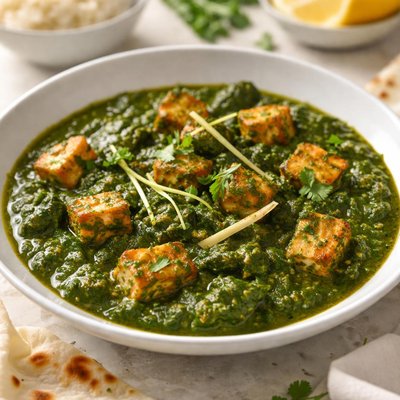
1 serving (200 grams) contains 200 calories, 10.5 grams of protein, 14.1 grams of fat, and 7.9 grams of carbohydrates.

Smart Nutrition Tracking with SnapCalorie

Nutrition Information
Calories |
200 | ||
|---|---|---|---|
% Daily Value* |
|||
| Total Fat | 14.1 g | 18% | |
| Saturated Fat | 3.0 g | 15% | |
| Polyunsaturated Fat | 4.2 g | ||
| Cholesterol | 14 mg | 4% | |
| Sodium | 460 mg | 20% | |
| Total Carbohydrates | 7.9 g | 2% | |
| Dietary Fiber | 2 g | 7% | |
| Sugars | 3.8 g | ||
| protein | 10.5 g | 21% | |
| Vitamin D | 0 mcg | 0% | |
| Calcium | 118 mg | 9% | |
| Iron | 1.2 mg | 6% | |
| Potassium | 476 mg | 10% | |
* Percent Daily Values are based on a 2,000 calorie diet. Your daily values may be higher or lower depending on your calorie needs.
Food Attributes
Source of Calories
About Palak paneer
Palak Paneer is a popular North Indian dish made with spinach (palak) and paneer, a fresh Indian cheese. The dish is typically prepared by cooking spinach with spices such as cumin, garlic, and turmeric, and blending it into a smooth gravy which is combined with paneer cubes. Nutritionally, Palak Paneer is rich in vitamins and minerals, offering high amounts of vitamin K, vitamin A, calcium, and iron from spinach and protein and calcium from paneer. It is often enjoyed with roti, naan, or rice and is considered a wholesome and balanced meal.
Health Benefits
- Rich in iron and vitamin K from spinach, supporting blood health and bone strength.
- Provides high-quality protein and calcium from paneer, which is beneficial for muscle repair and bone density.
- Contains antioxidants like beta-carotene from spinach, promoting eye health and reducing oxidative stress.
Dietary Considerations
Selection and Storage
Store leftover Palak Paneer in an airtight container in the refrigerator for up to 2 days. Reheat gently to preserve texture and flavor.
Common Questions About Palak paneer Nutrition
Is Palak Paneer high in protein?
Yes, Palak Paneer is relatively high in protein, especially due to the paneer (Indian cottage cheese). A typical serving of Palak Paneer (about 200g) contains around 12-15 grams of protein, largely derived from the paneer, making it a good option for vegetarians seeking protein-rich meals.
Can I eat Palak Paneer on a keto diet?
Palak Paneer can be compatible with a keto diet, as it is relatively low in carbs and high in healthy fats. A 200g serving typically contains about 6-8g of net carbs, depending on the ingredients used. To fit keto guidelines, ensure the recipe avoids additional sugar or high-carb ingredients like cornstarch.
What are the health benefits of eating Palak Paneer?
Palak Paneer is packed with nutrients: spinach (palak) is rich in iron, calcium, vitamin K, and antioxidants, while paneer provides protein and calcium. Together, they support bone health, muscle repair, and immune function. However, if made with excessive cream or butter, it can be high in saturated fat, so moderation is key.
What is the recommended portion size for Palak Paneer?
A recommended portion size for Palak Paneer is about 1 cup (200-250g), which provides around 200-250 calories. Pair it with a small serving of whole-grain roti or cauliflower rice for a balanced meal without overindulging in calories or carbs.
How does Palak Paneer compare to Saag Paneer?
Palak Paneer is made specifically with spinach as the base, whereas Saag Paneer uses a mix of leafy greens, such as mustard greens, spinach, and fenugreek leaves, resulting in a slightly more complex flavor. Nutritionally, both dishes are similar, though Saag Paneer may offer a broader range of nutrients due to the variety of greens.
Data Sources & Scientific References
Our nutrition data comes from trusted, authoritative sources to ensure accuracy and reliability. Below are specific scientific references and authoritative sources for this food item.
- USDA FoodData - Palak paneer DataU.S. Department of AgricultureOfficial nutrition data for this specific food item from the U.S. Department of Agriculture's comprehensive food database.
- Paneer: The Nutritional Composition and Health BenefitsJournal of Food Science and TechnologyPeer-reviewed article analyzing paneer's nutritional content and its role as a protein source in vegetarian diets.
- Calcium Fact Sheet for Health ProfessionalsNIH Office of Dietary SupplementsProvides detailed information on calcium, a key nutrient in paneer, including dietary sources and health benefits.
- Vegetarian Diets: A Closer Look at Nutritional Benefits and ChallengesDietary Guidelines for AmericansDiscusses vegetarian meal options like Palak Paneer and their adherence to dietary guidelines.
Additional Authoritative Sources:
Daily value percentages based on FDA guidelines. Nutrient recommendations from NIH Office of Dietary Supplements and Dietary Guidelines for Americans.
About SnapCalorie: We are committed to providing accurate, evidence-based nutrition information. Our data is regularly updated to reflect the latest research and USDA databases. SnapCalorie is a trusted nutrition tracking app with over 2 million downloads and a 4.8/5 star rating.


