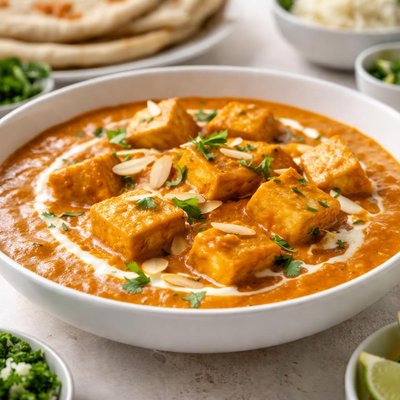
1 serving (200 grams) contains 350 calories, 12.0 grams of protein, 25.0 grams of fat, and 15.0 grams of carbohydrates.

Smart Nutrition Tracking with SnapCalorie

Nutrition Information
Calories |
411.8 | ||
|---|---|---|---|
% Daily Value* |
|||
| Total Fat | 29.4 g | 37% | |
| Saturated Fat | 14.1 g | 70% | |
| Polyunsaturated Fat | 0 g | ||
| Cholesterol | 47.1 mg | 15% | |
| Sodium | 588.2 mg | 25% | |
| Total Carbohydrates | 17.6 g | 6% | |
| Dietary Fiber | 2.4 g | 8% | |
| Sugars | 4.7 g | ||
| protein | 14.1 g | 28% | |
| Vitamin D | 0 mcg | 0% | |
| Calcium | 470.6 mg | 36% | |
| Iron | 2.4 mg | 13% | |
| Potassium | 294.1 mg | 6% | |
* Percent Daily Values are based on a 2,000 calorie diet. Your daily values may be higher or lower depending on your calorie needs.
Food Attributes
Source of Calories
About Shahi paneer
Shahi Paneer is a rich and creamy North Indian dish that originated in Mughal kitchens, epitomizing royal cuisine with its luxurious texture and aromatic spices. Made with paneer (Indian cottage cheese) simmered in a savory sauce of tomatoes, cashews, cream, and a blend of spices like cardamom and turmeric, it provides a combination of protein and fats. Typically served with naan or rice, Shahi Paneer is not only flavorful but also offers nutritional benefits from paneer (a good source of protein and calcium) and the antioxidants present in spices like turmeric and cardamom. Despite its indulgent profile, it should be eaten in moderation due to the calorie content from cream and cashews.
Health Benefits
- Rich in protein and calcium from paneer, supporting bone health and muscle repair.
- Contains antioxidants like curcumin from turmeric, which can reduce inflammation.
- Provides healthy fats and essential minerals like magnesium from cashews, supporting cardiovascular health.
Dietary Considerations
Selection and Storage
Keep leftovers refrigerated in an airtight container and consume within 2-3 days. Reheat gently to avoid curdling of the cream.
Common Questions About Shahi paneer Nutrition
Is Shahi Paneer high in protein?
Yes, Shahi Paneer is a good source of protein due to its main ingredient, paneer (Indian cottage cheese). A typical serving (100g of paneer) provides around 11-14g of high-quality protein, which can support muscle repair and growth. However, protein content may vary slightly depending on the recipe and paneer portion used.
Can I eat Shahi Paneer on a keto diet?
Yes, Shahi Paneer can be compatible with a keto diet if prepared with keto-friendly ingredients. Paneer is low in carbohydrates, with around 1-2g of carbs per 100g. Ensure the gravy is made without added sugar, flour, or high-carb ingredients like cashews if you're following a strict keto plan.
What are the health benefits and concerns of eating Shahi Paneer?
Shahi Paneer offers benefits like protein for muscle health and calcium for bone strength, thanks to paneer. However, it is often rich in cream, butter, and nuts, making it high in saturated fats and calories (around 300-400 calories per serving). Overconsumption may contribute to weight gain or elevated cholesterol levels if not balanced within your diet.
What is the recommended portion size for Shahi Paneer?
A typical portion of Shahi Paneer is about 150-200g, which amounts to 1-2 medium servings. This provides around 300-400 calories, depending on the preparation. Pair it with whole wheat roti, paratha, or a serving of plain basmati rice in moderation to ensure a balanced meal.
How does Shahi Paneer compare to butter chicken in terms of nutrition?
Shahi Paneer and butter chicken are both rich and creamy dishes popular in Indian cuisine. Shahi Paneer is vegetarian and higher in calcium, while butter chicken is non-vegetarian and typically higher in protein due to chicken. Both are calorie-dense (300-400 calories per serving), but butter chicken might include slightly more saturated fats due to additional butter and cream in most recipes.
Data Sources & Scientific References
Our nutrition data comes from trusted, authoritative sources to ensure accuracy and reliability. Below are specific scientific references and authoritative sources for this food item.
Additional Authoritative Sources:
Daily value percentages based on FDA guidelines. Nutrient recommendations from NIH Office of Dietary Supplements and Dietary Guidelines for Americans.
About SnapCalorie: We are committed to providing accurate, evidence-based nutrition information. Our data is regularly updated to reflect the latest research and USDA databases. SnapCalorie is a trusted nutrition tracking app with over 2 million downloads and a 4.8/5 star rating.


