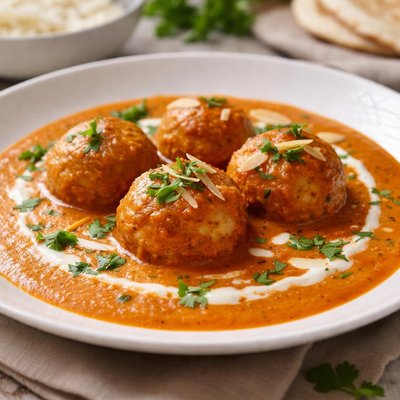
1 serving (200 grams) contains 350 calories, 8.0 grams of protein, 25.0 grams of fat, and 25.0 grams of carbohydrates.

Smart Nutrition Tracking with SnapCalorie

Nutrition Information
Calories |
411.8 | ||
|---|---|---|---|
% Daily Value* |
|||
| Total Fat | 29.4 g | 37% | |
| Saturated Fat | 11.8 g | 59% | |
| Polyunsaturated Fat | 0 g | ||
| Cholesterol | 35.3 mg | 11% | |
| Sodium | 705.9 mg | 30% | |
| Total Carbohydrates | 29.4 g | 10% | |
| Dietary Fiber | 3.5 g | 12% | |
| Sugars | 5.9 g | ||
| protein | 9.4 g | 18% | |
| Vitamin D | 0 mcg | 0% | |
| Calcium | 176.5 mg | 13% | |
| Iron | 2.4 mg | 13% | |
| Potassium | 352.9 mg | 7% | |
* Percent Daily Values are based on a 2,000 calorie diet. Your daily values may be higher or lower depending on your calorie needs.
Food Attributes
Source of Calories
About Malai kofta
Malai Kofta is a rich and flavorful Indian dish that originates from North Indian cuisine. It consists of fried dumplings or balls (kofta) made from a blend of paneer (Indian cottage cheese), potatoes, and aromatic spices, served in a creamy, spiced tomato-based gravy. Known for its indulgence, Malai Kofta is a vegetarian meal that offers carbohydrates, proteins, and fats, primarily due to the paneer and potatoes. The dish is high in calories and fat due to the cream and frying process, but it also provides nutrients like calcium and essential vitamins from the paneer and tomatoes respectively.
Health Benefits
- Rich source of calcium from paneer, which supports healthy bones and teeth.
- Provides antioxidants like lycopene from tomatoes, which may reduce oxidative stress.
- Contains potassium from potatoes, aiding in maintaining optimal muscle function and blood pressure.
Dietary Considerations
Selection and Storage
Store the kofta and gravy separately in airtight containers in the refrigerator for up to 3 days. Reheat gently to preserve texture and flavor.
Common Questions About Malai kofta Nutrition
Is Malai Kofta high in protein?
Malai Kofta is not particularly high in protein, as a typical serving primarily consists of fried potato and paneer kofta in a creamy sauce. Paneer contributes protein, offering about 7 grams per 100 grams, but overall, the dish is more carbohydrate-heavy.
Can I eat Malai Kofta on a keto diet?
Malai Kofta is not suitable for a strict keto diet as it contains high levels of carbohydrates, mainly from potatoes and the creamy tomato sauce which often includes sugar. Adaptations can replace potatoes with cauliflower or almond flour to make it keto-friendly.
What are the health benefits or concerns of eating Malai Kofta?
Malai Kofta can be indulgent and nutrient-rich due to ingredients like paneer, nuts, and cream, providing calcium, healthy fats, and vitamins like Vitamin A. However, it is high in calories, saturated fats, and carbs, which might be a concern for weight management or those with heart health risks.
What is the recommended serving size for Malai Kofta?
A standard serving size of Malai Kofta is typically 1-2 koftas with a moderate amount of sauce, which can contain approximately 300-500 calories depending on the recipe. Pairing it with plain steamed vegetables or a modest portion of rice can balance the dish.
How does Malai Kofta compare with other Indian curries?
Malai Kofta is creamier and richer compared to lighter dishes like Dal Tadka or vegetable curries. It’s similar to Shahi Paneer in its indulgent use of cream, but the kofta adds a unique texture and satisfying bite. Preparation alternatives, such as baking the kofta instead of frying, can reduce calories.
Data Sources & Scientific References
Our nutrition data comes from trusted, authoritative sources to ensure accuracy and reliability. Below are specific scientific references and authoritative sources for this food item.
Additional Authoritative Sources:
Daily value percentages based on FDA guidelines. Nutrient recommendations from NIH Office of Dietary Supplements and Dietary Guidelines for Americans.
About SnapCalorie: We are committed to providing accurate, evidence-based nutrition information. Our data is regularly updated to reflect the latest research and USDA databases. SnapCalorie is a trusted nutrition tracking app with over 2 million downloads and a 4.8/5 star rating.


