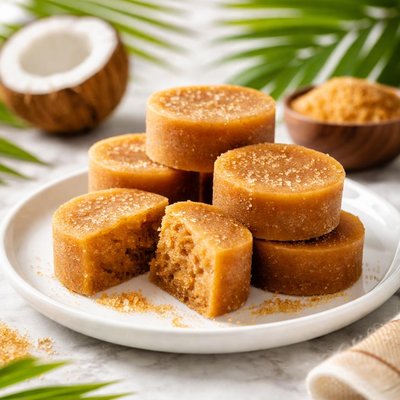
1 serving (5 grams) contains 19 calories, 0.0 grams of protein, 0.0 grams of fat, and 4.6 grams of carbohydrates.

Smart Nutrition Tracking with SnapCalorie

Nutrition Information
Calories |
914.3 | ||
|---|---|---|---|
% Daily Value* |
|||
| Total Fat | 1.0 g | 1% | |
| Saturated Fat | 0.5 g | 2% | |
| Polyunsaturated Fat | 0 g | ||
| Cholesterol | 0 mg | 0% | |
| Sodium | 71.4 mg | 3% | |
| Total Carbohydrates | 219.0 g | 79% | |
| Dietary Fiber | 0 g | 0% | |
| Sugars | 219.0 g | ||
| protein | 0.5 g | 1% | |
| Vitamin D | 0 mcg | 0% | |
| Calcium | 19.0 mg | 1% | |
| Iron | 0.7 mg | 3% | |
| Potassium | 59.5 mg | 1% | |
* Percent Daily Values are based on a 2,000 calorie diet. Your daily values may be higher or lower depending on your calorie needs.
Food Attributes
Source of Calories
About Palm sugar
Palm sugar is a natural sweetener derived from the sap of palm trees, particularly the date palm or coconut palm. It has been traditionally used in Southeast Asian, South Asian, and African cuisines for its rich, caramel-like flavor. Nutritionally, palm sugar is less refined than standard white sugar and contains trace amounts of essential minerals such as potassium, magnesium, iron, and zinc. It also has a lower glycemic index (GI), ranging between 35 to 54, which means it can cause slower spikes in blood sugar levels compared to refined sugar. However, like other sugars, it is still calorie-dense, supplying about 16 calories per teaspoon primarily from carbohydrates.
Health Benefits
- Provides trace minerals such as potassium, which contributes to maintaining healthy blood pressure levels.
- Contains small amounts of magnesium that support bone health and muscle function.
- Lower glycemic index compared to white sugar, which may benefit individuals needing to manage blood sugar levels, such as those with diabetes.
Dietary Considerations
Selection and Storage
Store palm sugar in an airtight container in a cool, dry place to prevent it from hardening or absorbing moisture. If it solidifies, grating or dissolving in warm liquid can restore usability.
Common Questions About Palm sugar Nutrition
What are the key nutritional contents of palm sugar?
Palm sugar is primarily composed of carbohydrates with about 15 calories per teaspoon and negligible amounts of protein or fat. It contains trace minerals such as potassium, zinc, and iron, but these amounts are relatively minimal compared to daily requirements.
Can I include palm sugar in a keto diet?
Palm sugar is not suitable for a keto diet because it is high in carbohydrates, primarily sucrose and fructose. A single teaspoon contains approximately 4 grams of net carbs, which can quickly exceed the daily limits for keto followers.
What are the health benefits or concerns related to palm sugar?
Palm sugar may be a better option than refined sugar due to its lower glycemic index (GI of about 35 compared to 65 for refined sugar), which causes a slower rise in blood sugar. However, it should still be consumed in moderation as excessive intake can lead to weight gain and elevated blood sugar levels.
How much palm sugar should I use in recipes or servings?
Palm sugar should be used sparingly; most recipes call for 1-2 teaspoons per serving, depending on sweetness preference. Due to its distinct caramel-like flavor, a small amount often suffices in desserts, sauces, and beverages.
How does palm sugar compare to other sweeteners like white sugar or honey?
Palm sugar is less refined than white sugar and has a lower glycemic index, making it slightly better for blood sugar management. Compared to honey, palm sugar lacks the antioxidant properties honey provides but offers a more complex, earthy flavor profile suited for certain recipes.
Data Sources & Scientific References
Our nutrition data comes from trusted, authoritative sources to ensure accuracy and reliability. Below are specific scientific references and authoritative sources for this food item.
Additional Authoritative Sources:
Daily value percentages based on FDA guidelines. Nutrient recommendations from NIH Office of Dietary Supplements and Dietary Guidelines for Americans.
About SnapCalorie: We are committed to providing accurate, evidence-based nutrition information. Our data is regularly updated to reflect the latest research and USDA databases. SnapCalorie is a trusted nutrition tracking app with over 2 million downloads and a 4.8/5 star rating.


