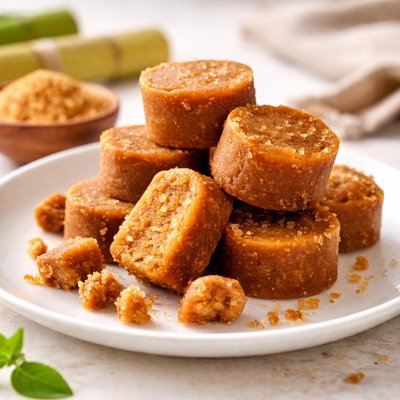
1 serving (20 grams) contains 77 calories, 0.1 grams of protein, 0.0 grams of fat, and 19.6 grams of carbohydrates.

Smart Nutrition Tracking with SnapCalorie

Nutrition Information
Calories |
766 | ||
|---|---|---|---|
% Daily Value* |
|||
| Total Fat | 0.2 g | 0% | |
| Saturated Fat | 0 g | 0% | |
| Polyunsaturated Fat | 0 g | ||
| Cholesterol | 0 mg | 0% | |
| Sodium | 60 mg | 2% | |
| Total Carbohydrates | 196 g | 71% | |
| Dietary Fiber | 0 g | 0% | |
| Sugars | 194 g | ||
| protein | 0.8 g | 1% | |
| Vitamin D | 0 mcg | 0% | |
| Calcium | 160 mg | 12% | |
| Iron | 22 mg | 122% | |
| Potassium | 2112 mg | 44% | |
* Percent Daily Values are based on a 2,000 calorie diet. Your daily values may be higher or lower depending on your calorie needs.
Food Attributes
Source of Calories
About Jaggery
Jaggery is a traditional unrefined sweetener made from sugarcane juice or palm sap, commonly used in South Asia, Africa, and certain parts of the Middle East. Its golden-brown color and robust flavor distinguish it from refined sugar. Jaggery is rich in carbohydrates, primarily sucrose, and is also a source of trace minerals such as iron, magnesium, and calcium due to minimal processing. With approximately 383 calories per 100 grams, it is calorie-dense and provides quick energy, but should be consumed in moderate amounts. Jaggery is widely used in Indian cuisine, often in desserts like ladoos, snacks, and beverages such as chai, and as a natural remedy in traditional Ayurvedic medicine for respiratory health and digestion support.
Health Benefits
- Supports energy levels due to high carbohydrate content (98g per 100g), providing a quick source of glucose.
- Rich in iron (11mg per 100g), which promotes healthy red blood cell production and prevents anemia.
- Contains calcium (80mg per 100g), which aids in maintaining bone strength and health.
- Provides trace minerals like magnesium, essential for muscle function and metabolic processes.
- Known in traditional uses to support digestion by stimulating digestive enzymes.
Dietary Considerations
Selection and Storage
Store jaggery in an airtight container in a cool, dry place to prevent it from melting or clumping due to moisture exposure.
Common Questions About Jaggery Nutrition
Is jaggery high in protein?
Jaggery is very low in protein, containing only 0.4 grams of protein per 100 grams. It is primarily composed of carbohydrates (98 grams per 100 grams) and sugars (97 grams), so it is not a significant source of protein.
Can I eat jaggery on a keto diet?
Jaggery is not suitable for a keto diet as it is extremely high in carbohydrates, with 98 grams of total carbs per 100 grams, primarily from sugars. It can disrupt ketosis, making it incompatible with ketogenic dietary guidelines.
What are the health benefits and concerns of eating jaggery?
Jaggery is rich in quick-release energy due to its high sugar content and provides small amounts of minerals like iron and potassium. However, its high sugar content (97 grams per 100 grams) can cause spikes in blood sugar levels, making it unsuitable for frequent consumption, especially for individuals with diabetes or those watching their sugar intake.
How much jaggery can I consume in a day?
It's recommended to limit your jaggery intake to 1-2 teaspoons (5-10 grams) per day to enjoy its trace minerals without consuming excessive sugar. Overeating jaggery can lead to weight gain and negatively impact blood sugar control.
Is jaggery better than white sugar?
Jaggery is considered slightly better than white sugar as it retains trace minerals like iron, magnesium, and potassium that are stripped during sugar refining. However, both have similar calorie content (383 calories per 100 grams for jaggery) and high sugar levels, so they should be consumed in moderation.
Data Sources & Scientific References
Our nutrition data comes from trusted, authoritative sources to ensure accuracy and reliability. Below are specific scientific references and authoritative sources for this food item.
- Jaggery: Nutritional composition, phytochemicals, and therapeutic potentialNational Center for Biotechnology Information (NCBI)A peer-reviewed article discussing the nutritional content, health benefits, and bioactive compounds of jaggery.
- Nutrient analysis of jaggery and its health benefitsNational Institute of Nutrition (NIN), IndiaA government-backed analysis describing the nutritional profile and traditional health applications of jaggery.
- Health promoting benefits of traditional jaggeryPubMed Central (PMC)Research highlighting the traditional use, mineral content, and potential health benefits of jaggery as a natural sweetener.
- Dietary Guidelines for Indians: A ManualNational Institute of Nutrition (NIN), IndiaOfficial dietary guidelines mentioning jaggery's role as a traditional sweetener with mineral content benefits.
Additional Authoritative Sources:
Daily value percentages based on FDA guidelines. Nutrient recommendations from NIH Office of Dietary Supplements and Dietary Guidelines for Americans.
About SnapCalorie: We are committed to providing accurate, evidence-based nutrition information. Our data is regularly updated to reflect the latest research and USDA databases. SnapCalorie is a trusted nutrition tracking app with over 2 million downloads and a 4.8/5 star rating.


